
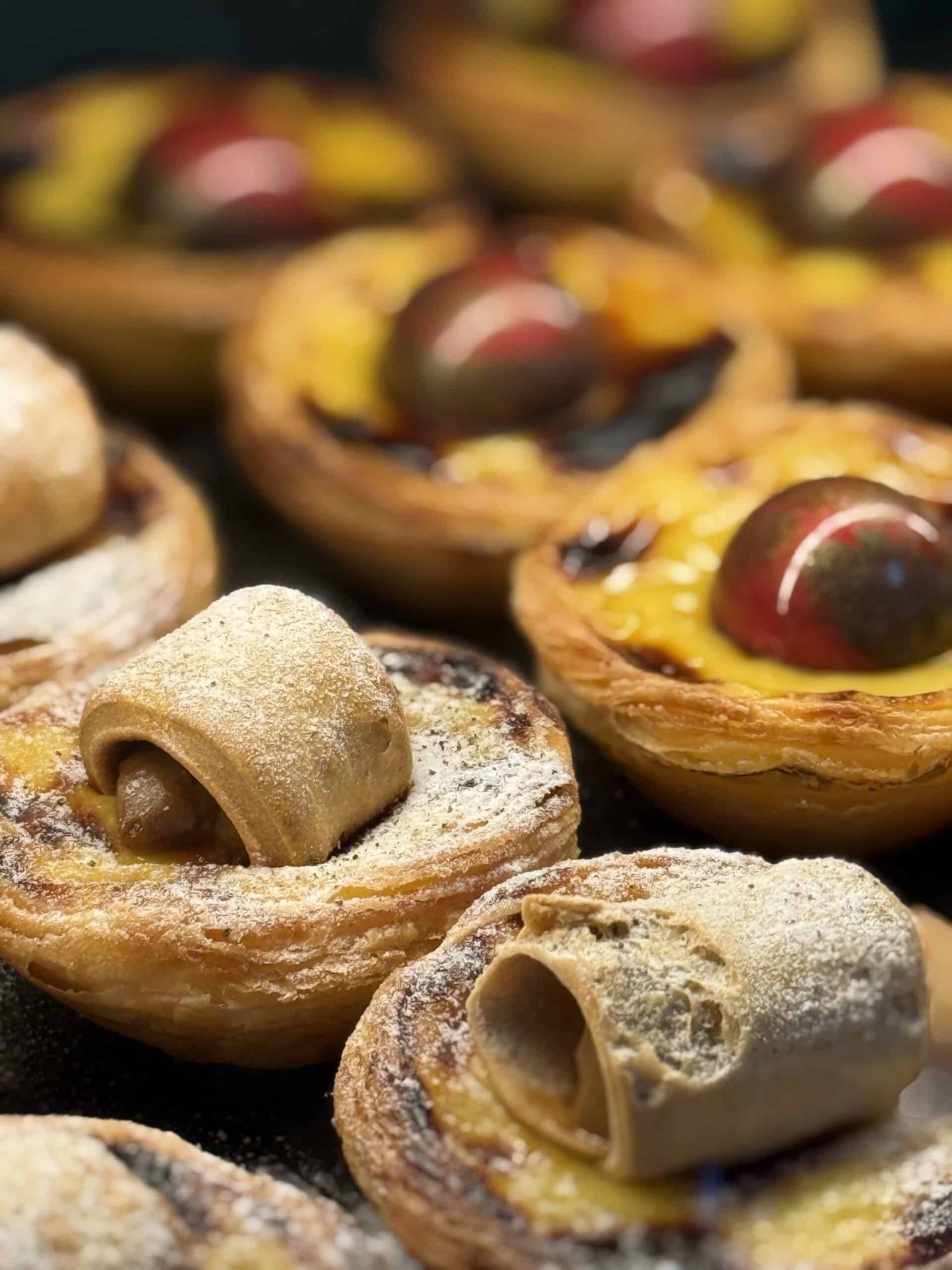
How to Make Pastel de Nata: Easy Portuguese Egg Tarts
If there’s one pastry you absolutely must try in Portugal, it’s pastel de nata. With its flaky, buttery crust, creamy custard filling, and slightly caramelized top, it’s easy to understand why these little Portuguese egg tarts are so popular.
During my time in Lisbon, I decided to go beyond tasting them and joined a hands-on baking masterclass at Nat’elier. Learning how to make these pastries gave me a whole new appreciation for the process, especially the techniques involved in creating that perfectly crispy pastry.
While the traditional recipe takes a little more patience, you can recreate a delicious version at home with just a handful of ingredients. Here’s a simple pastel de nata recipe inspired by my experience in Portugal.
This post contains affiliate links. If you make a booking or purchase through one of these links, I may earn a small commission at no additional cost to you. Your support helps me continue creating honest, firsthand travel guides—thank you! Read my full affiliate disclosure for more information.
How to Make Pastel de Nata at Home
Making Portuguese custard tarts is easier than you might think, especially if you use ready-made puff pastry. Although traditional pastéis de nata are made with carefully layered homemade dough, this simplified version is perfect for anyone who wants to try baking them without spending hours in the kitchen.
Preparation time: 25 minutes
Cooking time: 15–20 minutes
Servings: 12 Portuguese egg tarts
Difficulty: Easy to moderate
Ingredients You’ll Need
For the pastry:
- 1 sheet of all-butter puff pastry (approximately 250–300 g)
- A little flour for dusting
For the custard:
- 250 ml (1 cup) whole milk
- 100 ml heavy cream
- 100 g (½ cup) granulated sugar
- 4 large egg yolks
- 20 g cornstarch
- 1 cinnamon stick
- 1 strip of lemon peel
- ½ teaspoon vanilla extract (optional)
For serving:
- Ground cinnamon
- Powdered sugar (optional)
You’ll also need a metal muffin tin, a saucepan, a whisk, and a rolling pin. Traditional pastel de nata molds are ideal, but a regular muffin tin works for this homemade version.
Step-by-Step Pastel de Nata Recipe
1. Prepare the Puff Pastry
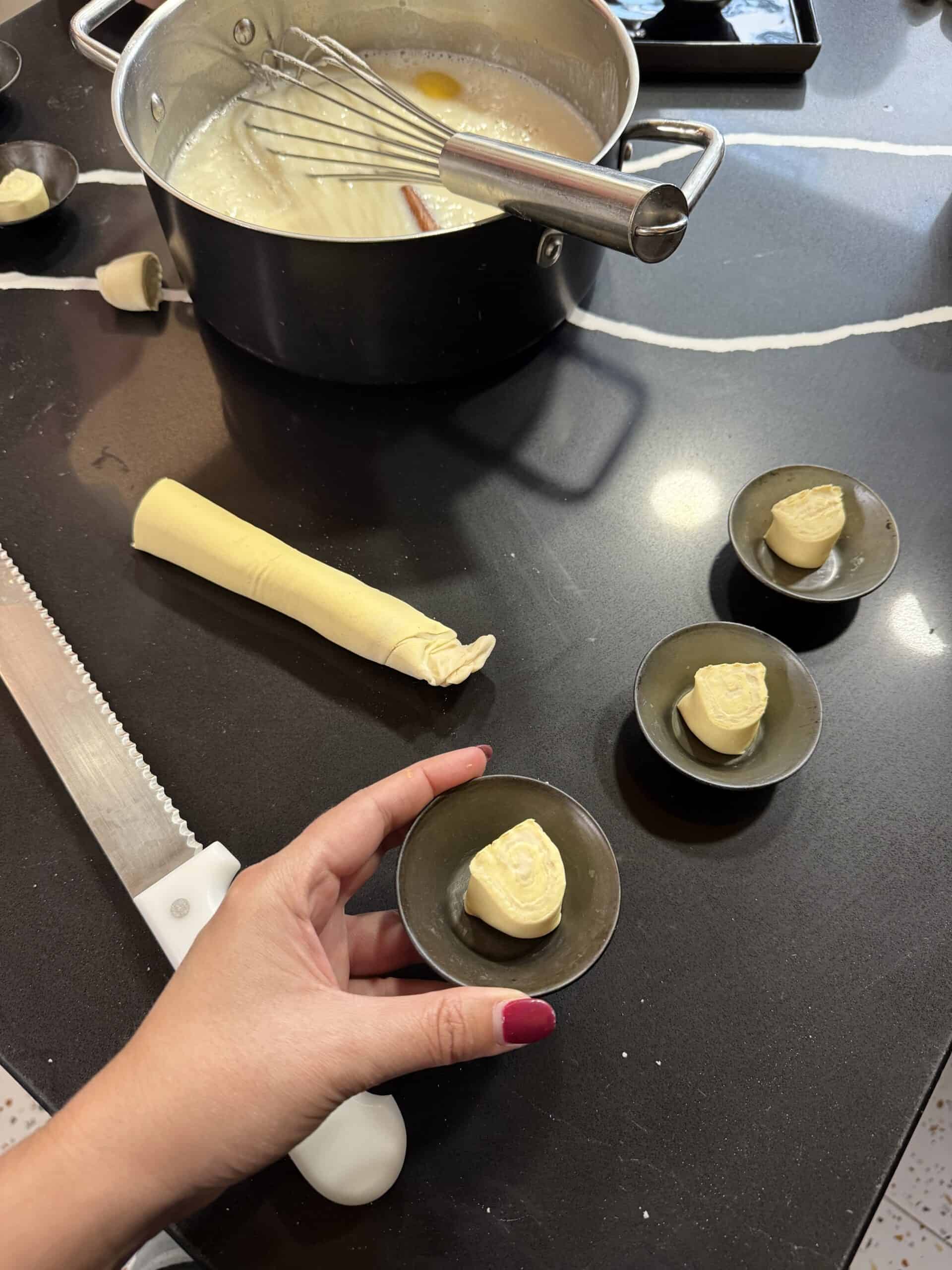
Lightly flour your work surface and unroll the puff pastry. Roll it into a tight cylinder, then cut it into 12 equal pieces.
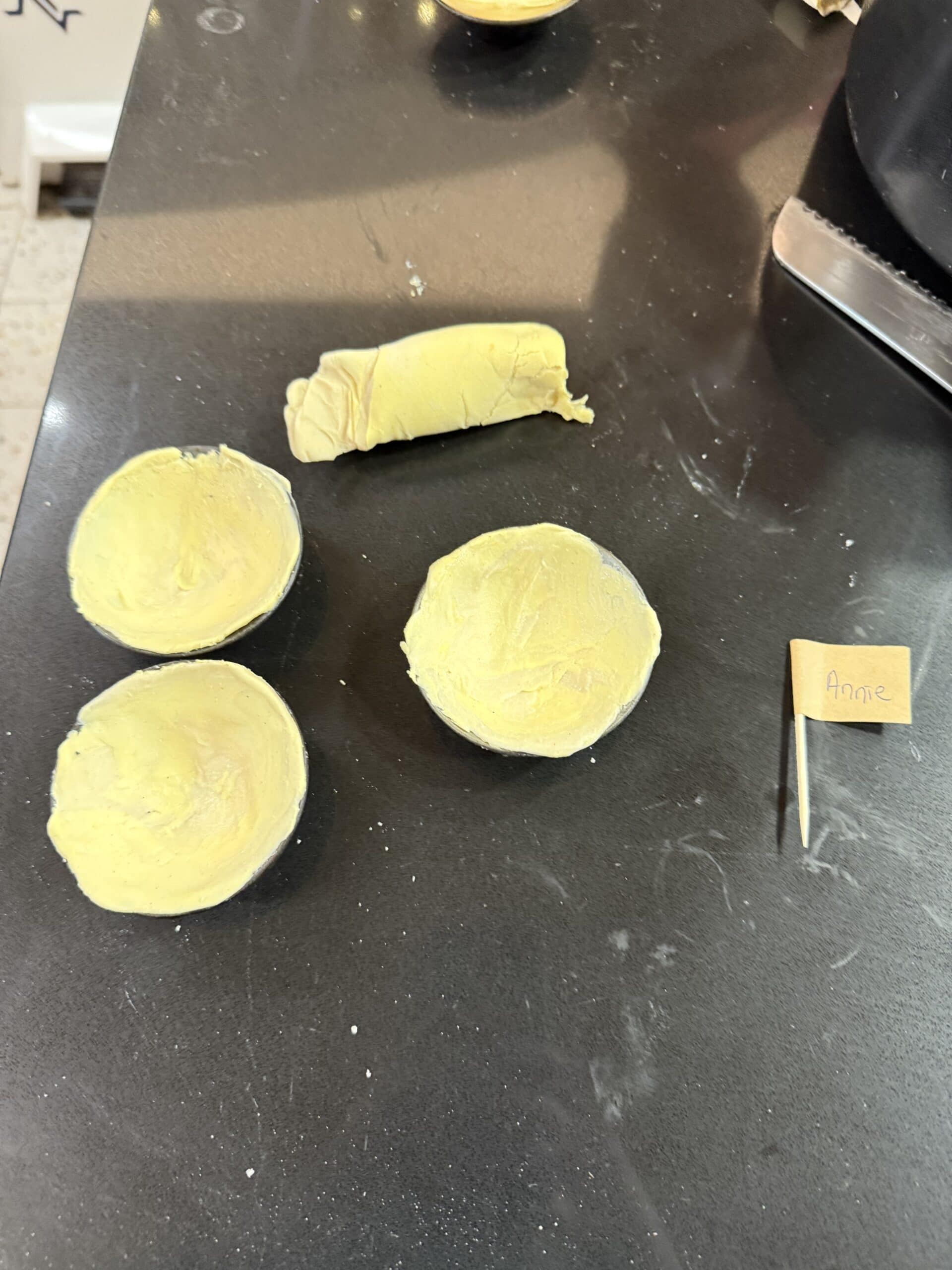
Place each piece into a muffin cup with the spiral facing upward. Using your thumbs, gently press the dough from the center outward, stretching it along the bottom and up the sides to create a thin pastry shell.
Once all the shells are shaped, place the muffin tin in the refrigerator while you prepare the custard. Keeping the dough cold helps the pastry maintain its delicate layers during baking.
2. Make the Custard Filling
In a bowl, whisk together the sugar, cornstarch, and egg yolks until smooth. Meanwhile, heat the milk, cream, cinnamon stick, and lemon peel in a saucepan over medium heat until steaming.
Remove the cinnamon stick and lemon peel, then slowly add a little warm milk to the egg mixture while whisking. Gradually incorporate the remaining milk before returning everything to the saucepan.
Cook over medium-low heat, stirring continuously, until the custard thickens slightly but remains pourable. Remove from the heat, add the vanilla if using, and strain through a fine sieve for a smooth finish.
The important thing is not to overcook the custard, since it will continue cooking in the oven.
3. Fill and Bake the Portuguese Egg Tarts
Preheat your oven to 250°C (480°F), or the highest safe setting available if your oven doesn’t reach that temperature.
Remove the pastry shells from the refrigerator and carefully fill each one about three-quarters full with custard.
Bake for approximately 15–20 minutes, keeping an eye on them toward the end. The pastries are ready when the crust is golden and crispy, and the custard has developed those characteristic dark caramelized spots on top.
Don’t worry if they look slightly burnt in places. That’s actually part of what gives traditional pastéis de nata their distinctive appearance!
4. Let Them Cool and Enjoy!
Allow your Portuguese egg tarts to cool for approximately 15 minutes before removing them from the muffin tin.
Sprinkle with a little cinnamon or powdered sugar, if you like, and enjoy them slightly warm with a coffee.
That’s it! A little taste of Portugal, straight from your own kitchen.

My Experience Making Pastel de Nata at Nat’elier in Lisbon
One of my favourite ways to experience a destination is through its food. And while trying local dishes is always part of the adventure, I particularly enjoy experiences that allow me to learn something along the way.
That’s what led me to Nat’elier’s pastel de nata masterclass during my stay in Lisbon.
Nat’elier specializes in Portuguese custard tarts, and its hands-on masterclass teaches participants the techniques behind making them from scratch. The experience was developed by pastry chef João Batalha, who specializes in these traditional pastries.
What makes the class particularly interesting is discovering how much technique goes into something that looks so simple. From layering the dough to preparing the custard and shaping the pastry, each step contributes to that signature crispy exterior and creamy center.
And of course, getting to enjoy freshly baked pastéis de nata at the end is a pretty great reward!

If you’re planning a trip to Lisbon, I’d definitely recommend including a cooking experience like this in your itinerary. It’s a fun way to discover Portuguese food culture and bring home a skill you can actually use.
I also featured this experience in my 3 Days in Lisbon itinerary, along with some of my favourite places and activities around the city.
What Makes Pastel de Nata So Special?
Pastéis de nata are one of Portugal’s most iconic pastries, with roots commonly traced to the Jerónimos Monastery in Belém, Lisbon. The famous Pastéis de Belém bakery began selling its version in 1837, and the pastry eventually became popular throughout the country.
What makes these Portuguese egg tarts different from an ordinary custard tart is the contrast in textures. The pastry should be thin, flaky, and crispy, while the filling remains rich and creamy. Those dark spots on top come from baking the custard at high temperatures, giving it its characteristic caramelized finish.
Today, you’ll find pastéis de nata in bakeries and cafés all across Portugal. They’re commonly enjoyed with an espresso and a sprinkle of cinnamon, making them the perfect little treat during a day of exploring.
Tips for Making the Best Portuguese Custard Tarts
A few small details can make a big difference when baking pastel de nata at home.
Keep your puff pastry cold. If it becomes too warm while you’re shaping it, put it back in the refrigerator for a few minutes. Cold pastry is easier to handle and helps create flaky layers.
Use a hot oven. High heat is essential for getting the pastry crispy and creating the caramelized surface. Home ovens vary, so keep a close eye on your tarts during the final minutes.
Don’t overcook the custard. It should be smooth and slightly thickened before baking, not as firm as pudding. The oven will finish cooking it.
Enjoy them fresh. Pastéis de nata taste best shortly after baking, when the pastry is still crispy. If you have leftovers, refrigerate them and reheat briefly in the oven.
Frequently Asked Questions About Pastel de Nata
Can I Make Pastel de Nata With Store-Bought Puff Pastry?
Absolutely! While traditional recipes involve making the pastry from scratch, ready-made puff pastry is an excellent shortcut for home bakers. Choose an all-butter variety for the best flavour and texture.
What’s the Difference Between Pastel de Nata and Pastéis de Nata?
It’s simply singular versus plural in Portuguese. Pastel de nata refers to one custard tart, while pastéis de nata refers to several.
Do I Need Special Molds?
Not necessarily. Traditional metal pastel de nata molds are designed for these pastries, but a standard metal muffin tin works for a homemade version. Avoid silicone molds if possible, as they don’t conduct heat as effectively.
Can I Make Portuguese Egg Tarts Ahead of Time?
Yes, although they’re best enjoyed fresh. You can prepare the pastry shells in advance and keep them refrigerated until you’re ready to bake. Leftover baked tarts can also be stored in the refrigerator for up to two days and reheated in the oven.
Bringing a Little Taste of Portugal Home
One of the things I love about travelling is discovering experiences that stay with me long after I’ve returned home. Sometimes it’s a beautiful place, an unexpected adventure, or simply a new skill learned along the way.
My pastel de nata masterclass at Nat’elier was one of those experiences. It reminded me that getting to know a destination can be as simple as stepping into a kitchen and learning something new.
Whether you’re planning a trip to Lisbon or just feeling inspired to try a new recipe, I hope you enjoy making these Portuguese egg tarts at home.
And if Portugal is on your travel list, don’t miss my 3 Days in Lisbon itinerary or my guide to the 9 Best Day Trips from Lisbon for more inspiration.

For more ideas to plan your trip, explore my Portugal travel guides, with firsthand itineraries, coastal escapes and practical tips from my month exploring the region.