3 Days in Lisbon: The Perfect First-Timer Itinerary
Lisbon is a city best explored on foot, even if its steep hills will give your legs a workout! Between colourful tiled buildings, narrow cobblestone streets, incredible viewpoints and freshly baked pastéis de nata, Portugal’s capital has a charm that’s difficult to resist.
I explored Lisbon at the end of November, when Christmas decorations were appearing and the shopping streets were buzzing with activity. I spent my time wandering through Baixa and Chiado, getting lost in Alfama’s historic streets, and enjoying the atmosphere rather than rushing between attractions.
This 3 days in Lisbon itinerary follows that approach. The first two days cover some of the city’s most beautiful neighbourhoods, while the third is yours to customize: visit Sintra’s fairytale palaces, escape to the coast in Cascais, or discover another side of Lisbon if the weather turns rainy.
This post contains affiliate links. If you make a booking or purchase through one of these links, I may earn a small commission at no additional cost to you. Your support helps me continue creating honest, firsthand travel guides—thank you! Read my full affiliate disclosure for more information.

How to Spend 3 Days in Lisbon: Itinerary Overview
Three days in Lisbon gives you enough time to explore the historic centre, admire some of the city’s best viewpoints, experience Portuguese food culture and potentially enjoy a day trip.
On Day 1, start in Baixa and Chiado, wandering through historic squares, lively shopping streets and charming cafés. Make time for a pastel de nata cooking class and enjoy some of Lisbon’s beautiful viewpoints along the way.
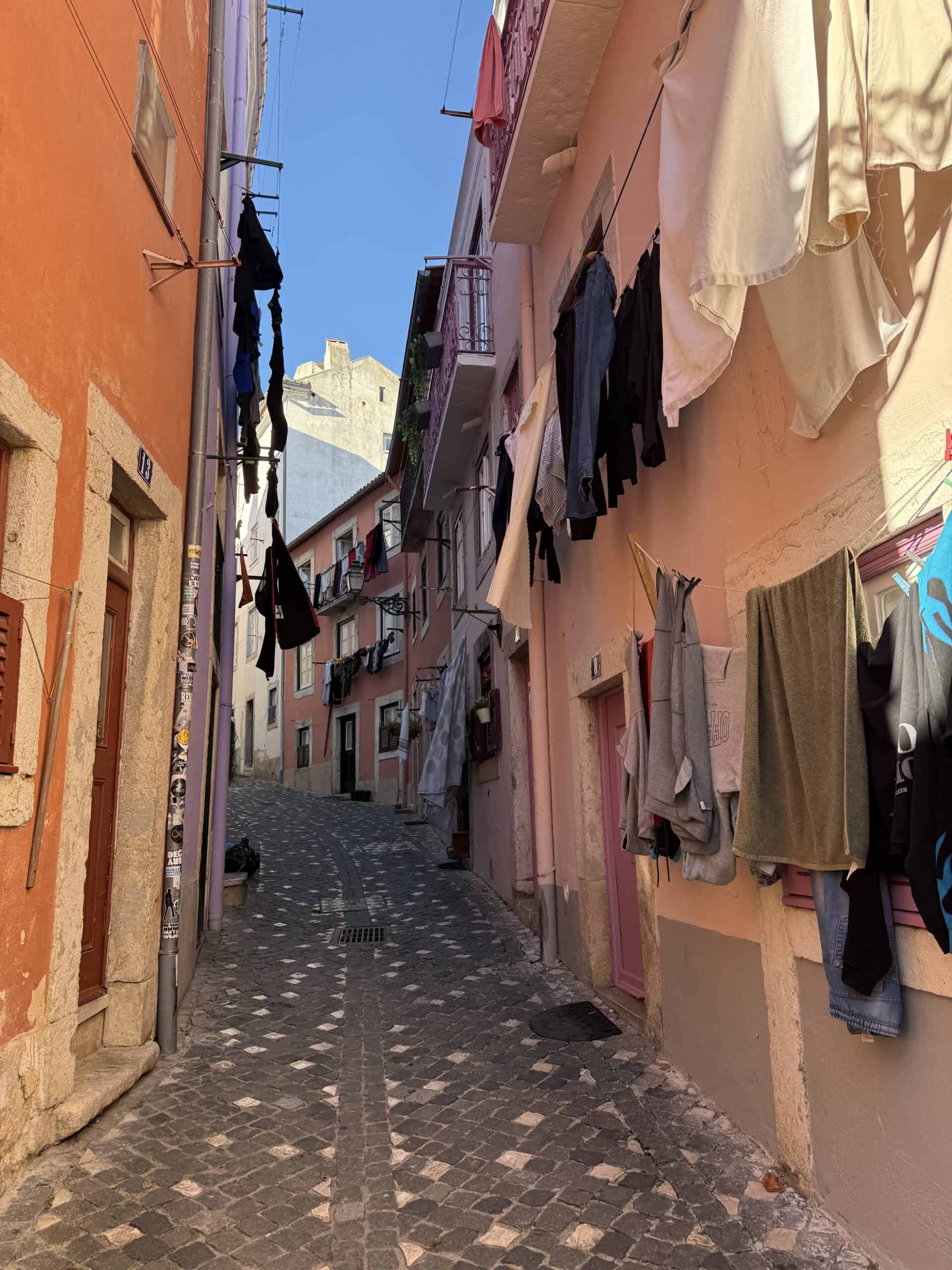
On Day 2, explore Alfama, one of Lisbon’s oldest and most charming neighbourhoods. Get lost in its narrow cobblestone streets, admire the colourful tiles and laundry hanging from balconies, and discover spectacular miradouros overlooking the city.
On Day 3, choose your own adventure! Visit Sintra for fairytale castles and gardens, escape to Cascais for a relaxing day by the ocean, or stay in Lisbon and explore the Oceanário if the weather turns rainy.
My recommendation: Spend at least two days exploring Lisbon before heading elsewhere. Both Sintra and Cascais deserve enough time to enjoy properly, and you don’t want to sacrifice Lisbon itself simply to fit another destination into your itinerary.
Day 1: Explore Baixa, Chiado & Central Lisbon
I started exploring Lisbon at the end of November, right in the middle of the Christmas shopping season. The streets were lively, storefronts were decorated for the holidays, and the festive atmosphere made it a wonderful introduction to Portugal’s capital.
I was travelling from Cascais, so my day began at Cais do Sodré train station in Lisbon. From there, I made my way toward Baixa, stopping at the colourful Pink Street along the way. Even outside the holiday season, Baixa and Chiado are excellent places to explore, filled with historic architecture, traditional cafés, shops and beautiful streets.
Start in Baixa: Lisbon’s Grand Squares and Streets
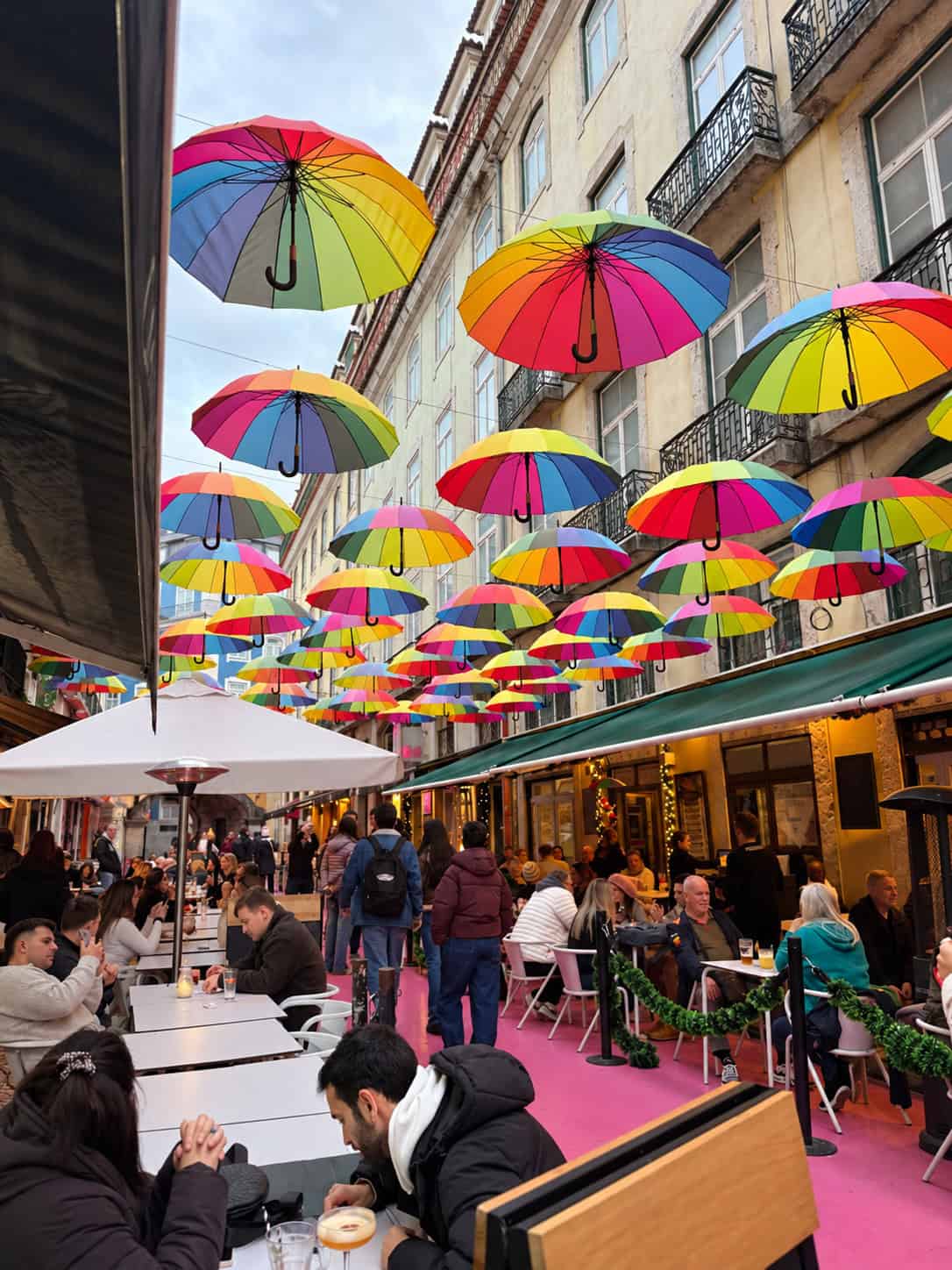
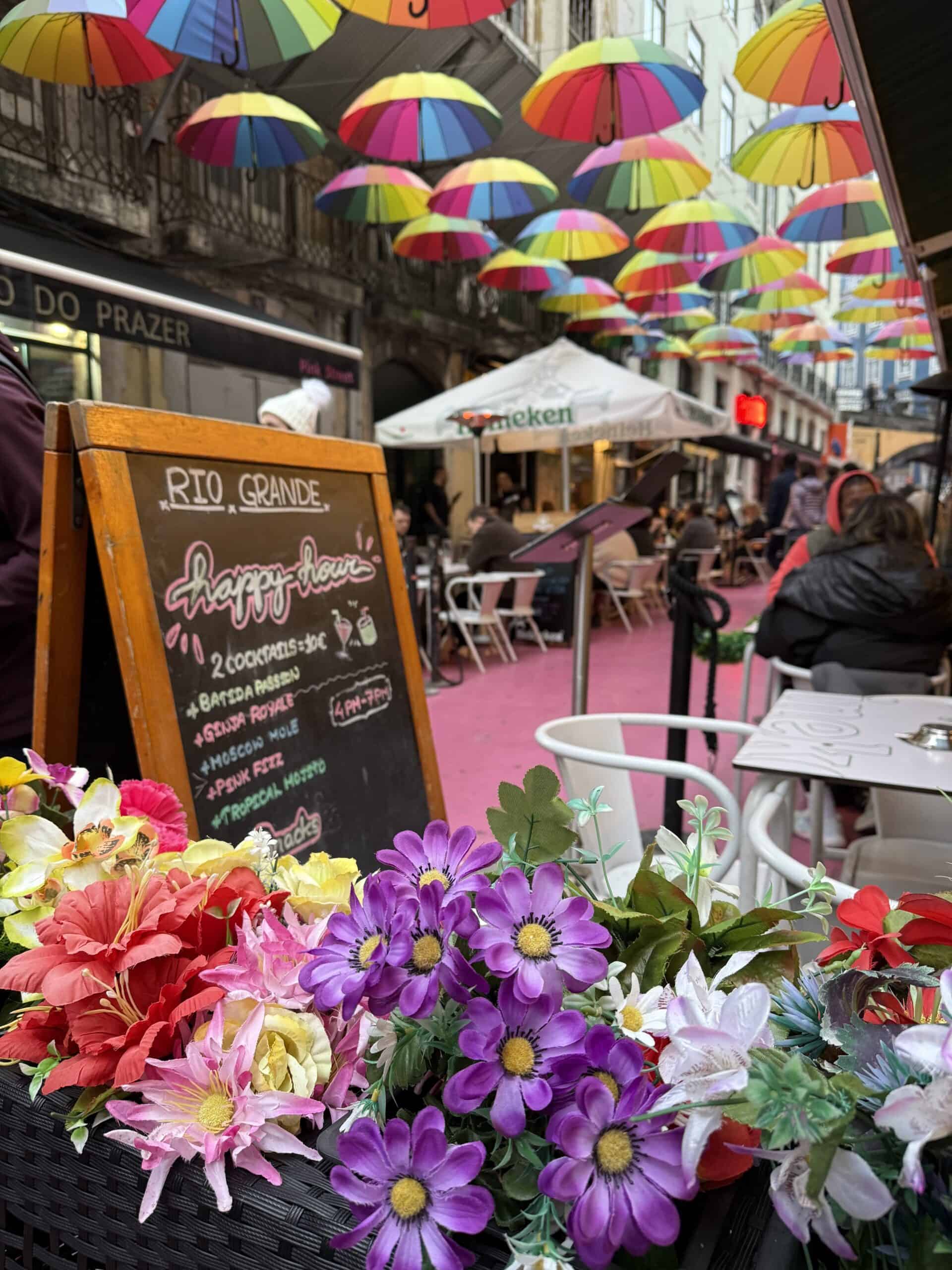
Before heading into Baixa, I stopped at Rua Nova do Carvalho, better known as Pink Street, just a short walk from Cais do Sodré station. With its bright pink pavement, colourful umbrellas hanging overhead and lively outdoor terraces, it’s a fun little detour and a great spot for pictures.
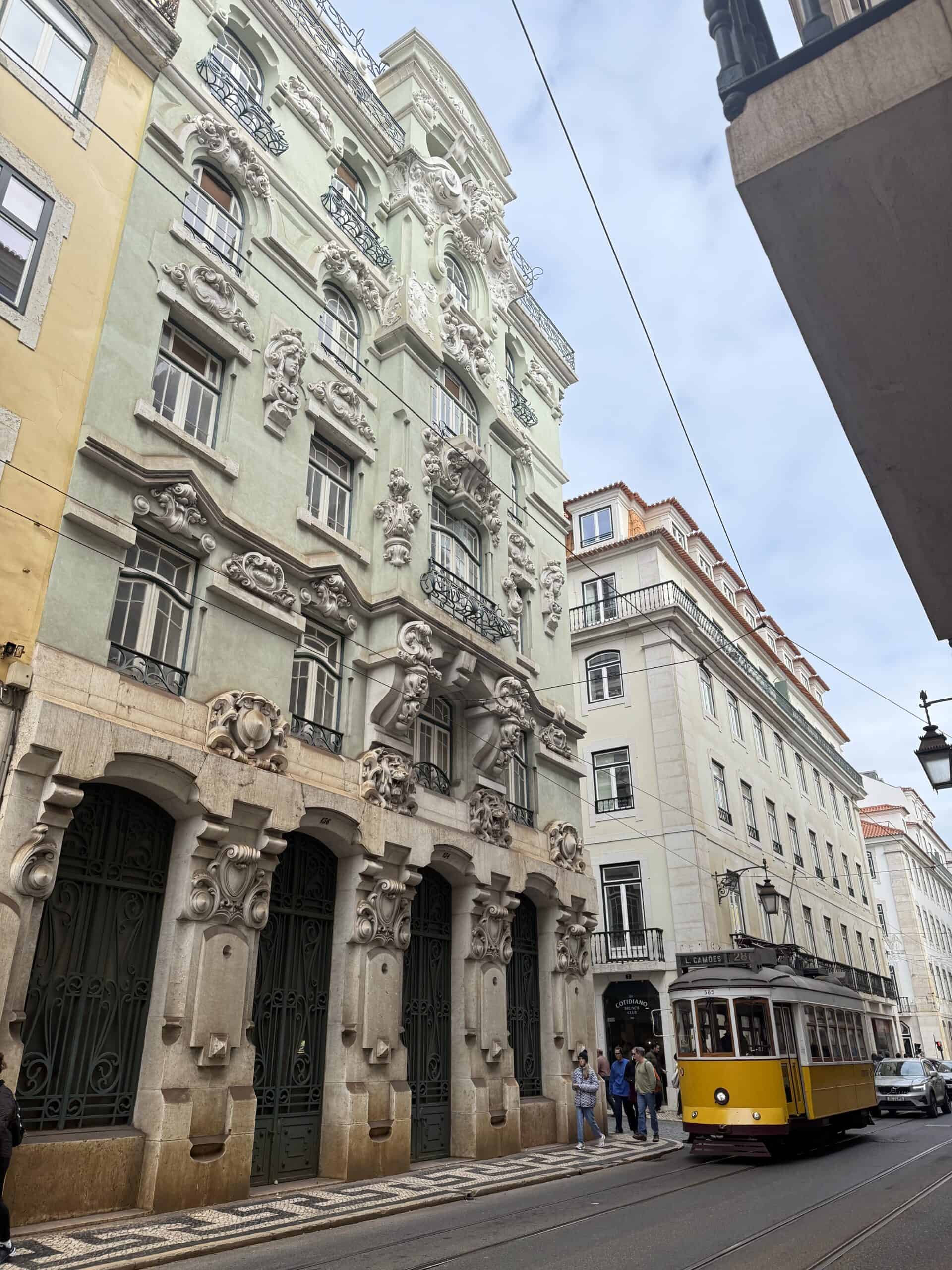
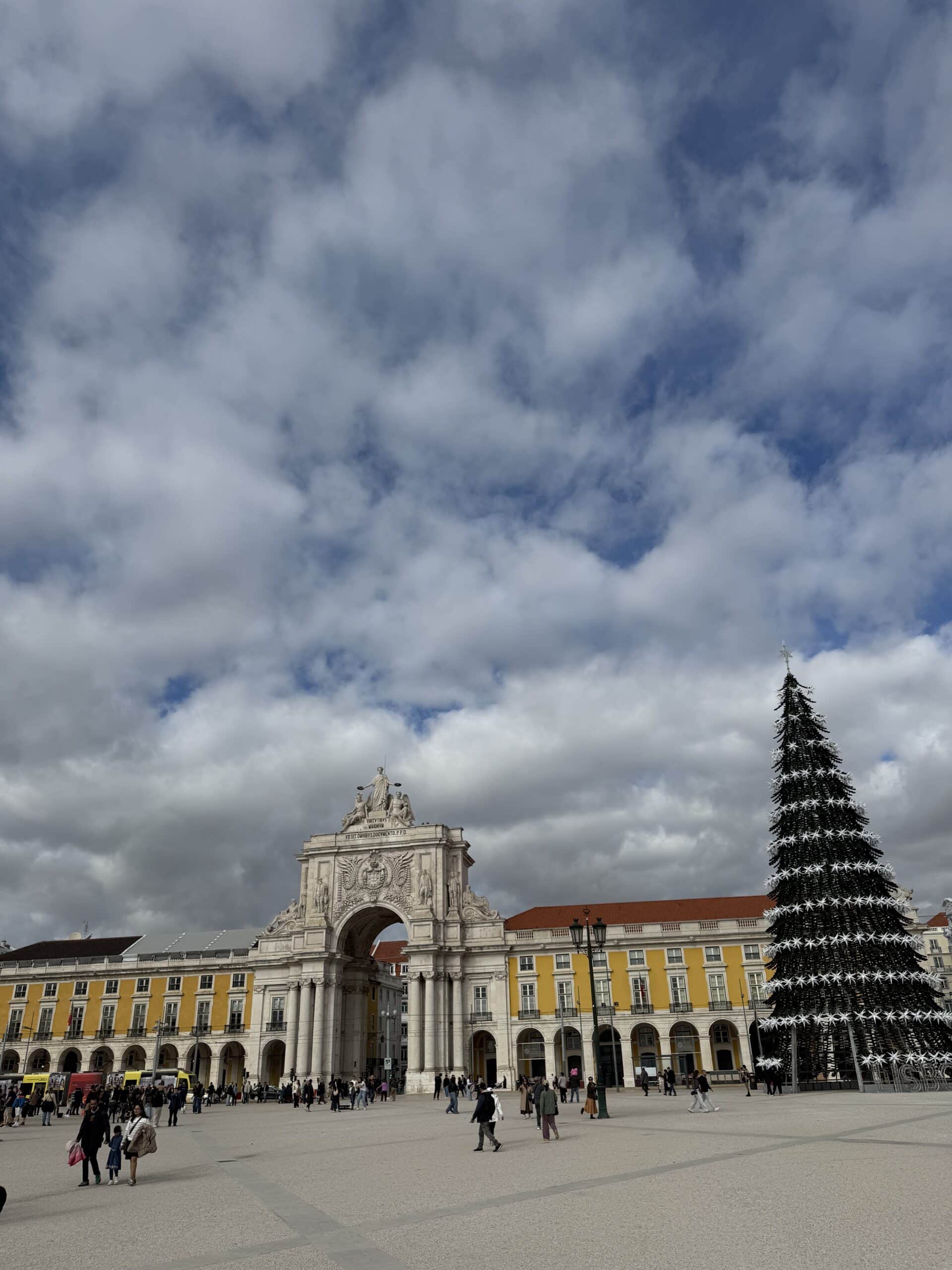
From there, continue toward Praça do Comércio, the enormous waterfront square surrounded by elegant yellow buildings overlooking the Tagus River. Walk through the Arco da Rua Augusta and follow Rua Augusta, a lively pedestrian street lined with shops, restaurants and outdoor terraces.
You’ll now be in the heart of Baixa, Lisbon’s downtown district, where grand squares and broad avenues contrast with the narrow streets you’ll discover in Alfama. Much of Baixa was rebuilt following the devastating earthquake of 1755, which explains its more organized layout.
Make your way toward Rossio Square (Praça Dom Pedro IV), known for its distinctive wave-patterned pavement and historic architecture.
Wander Through Chiado’s Shops, Cafés and Historic Streets
From Baixa, make your way uphill toward Chiado, one of Lisbon’s most elegant neighbourhoods. Its streets combine traditional cafés, historic bookstores, boutiques and international shops, making it a lovely area to explore without a strict itinerary.
Take a Pastel de Nata Cooking Class at Nat’elier
One of my favourite experiences in Lisbon was taking the Pastel de Nata Masterclass at Nat’elier, located right in the city centre. I absolutely loved it!
Pastéis de nata are Portugal’s famous custard tarts, with crispy, flaky pastry and a creamy filling. You’ll find them in bakeries throughout the country, but learning how to make them yourself is an entirely different experience.


During the hands-on workshop, you learn how to prepare the pastry and custard filling, assemble the tarts and bake them. And, of course, you get to enjoy the results! There’s something particularly satisfying about tasting a warm pastel de nata you’ve made yourself.


My tip: Book the masterclass in advance and allow approximately two hours for the experience. Its central location makes it easy to combine with a day exploring Baixa and Chiado.
Discover the Santa Justa Lift and São Pedro de Alcântara Viewpoint
While exploring central Lisbon, look out for the Elevador de Santa Justa, an impressive iron elevator connecting Baixa with the higher Carmo area. Even if you don’t ride it, the architecture is worth seeing.

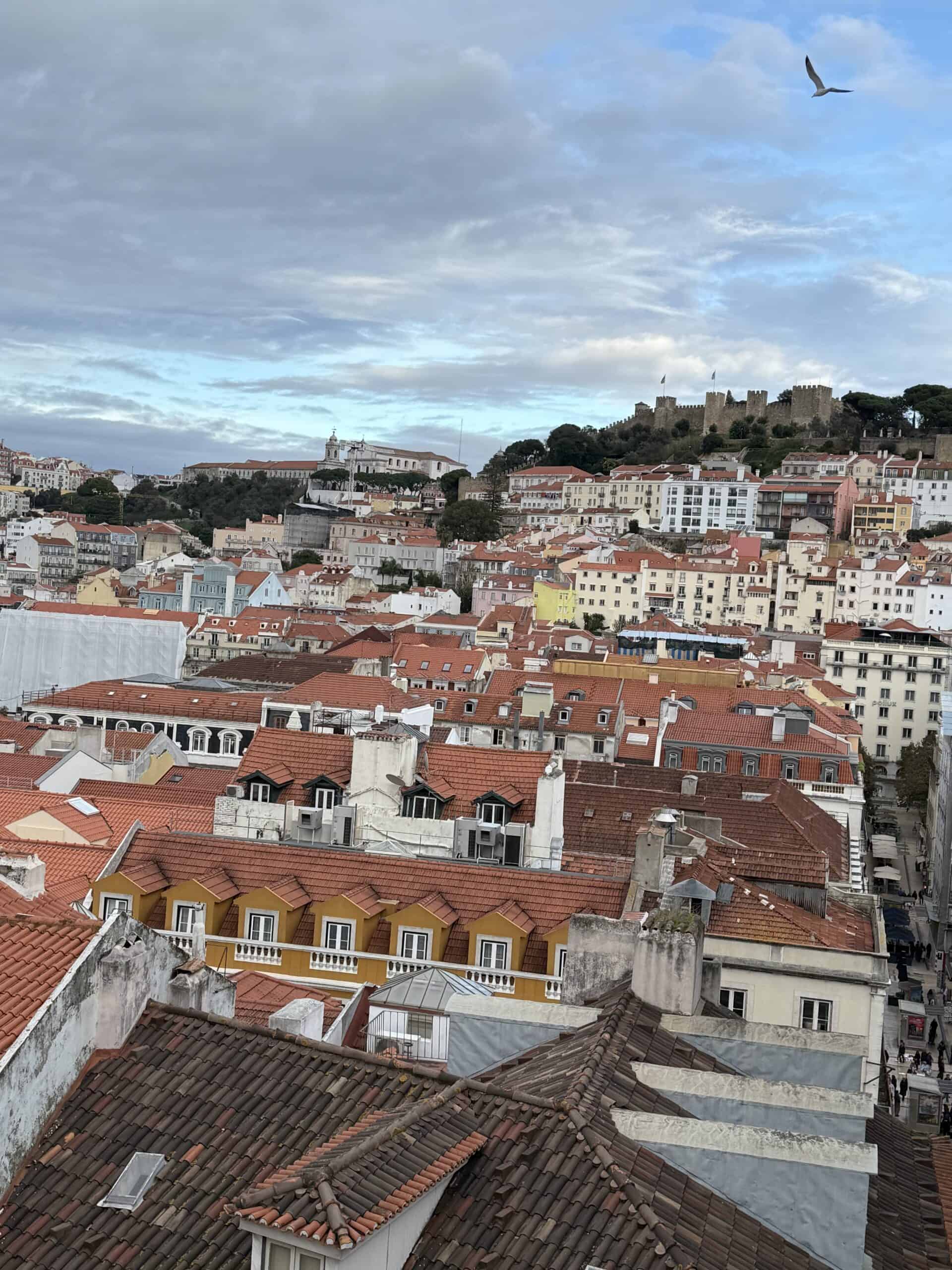
For beautiful views over the city, head to Miradouro de São Pedro de Alcântara, a landscaped terrace overlooking central Lisbon and Castelo de São Jorge. It’s a lovely place to appreciate the city’s hills and colourful rooftops before continuing your walk.
Visiting Lisbon During the Christmas Season
If you’re visiting Lisbon in late November or December, you’ll experience a particularly festive atmosphere. When I explored Baixa and Chiado on November 29, the streets were full of shoppers, holiday decorations and seasonal activity.
One of the highlights of the season is the Mercado de Natal do Rossio (Rossio Christmas Market), located at Praça Dom Pedro IV, right in the heart of Baixa. The market brings a festive atmosphere to the square, with wooden stalls offering Christmas decorations, gifts, local products and seasonal treats. It’s an easy stop to include while exploring central Lisbon.


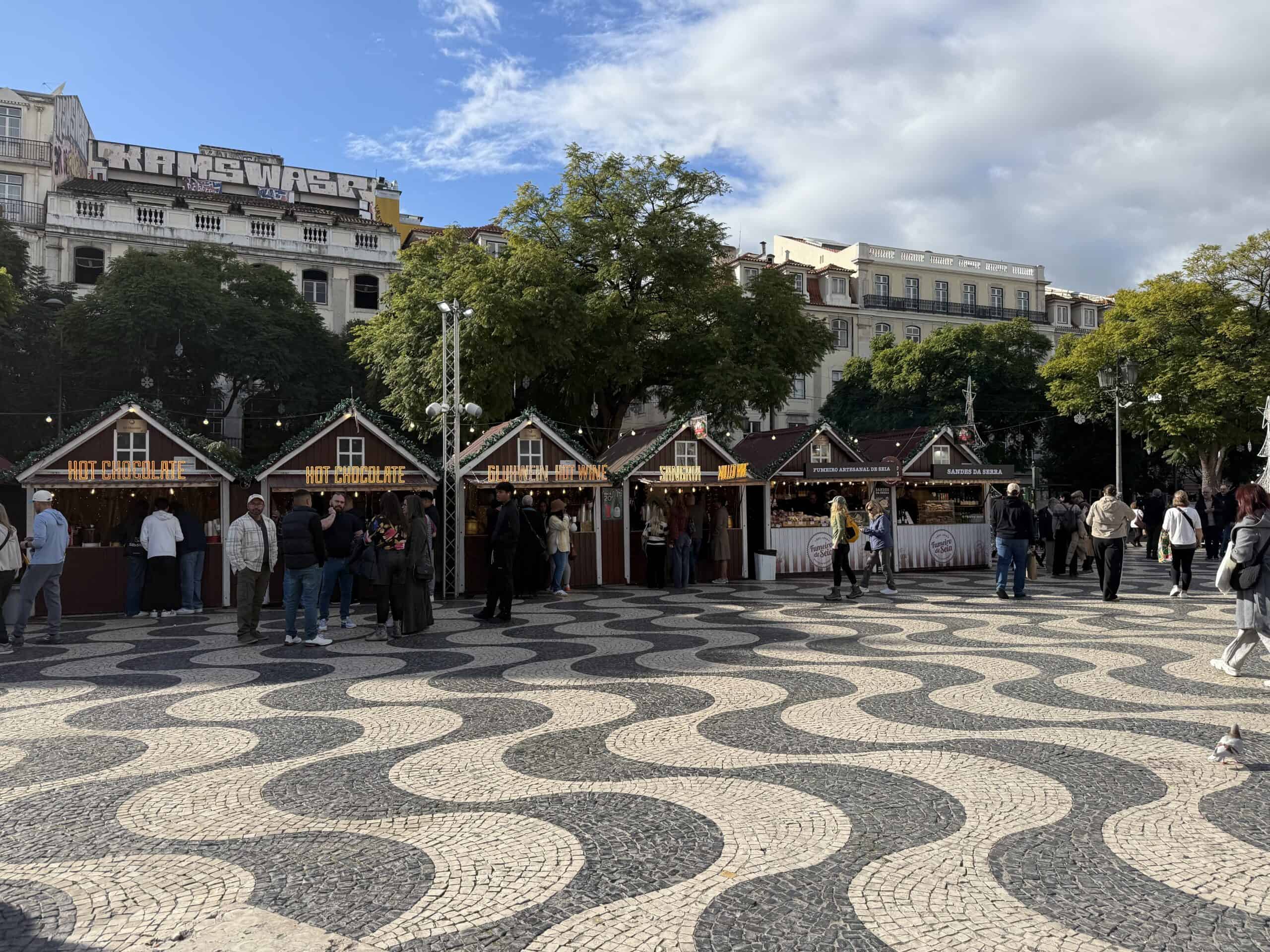
Late November also coincides with Black Friday promotions, making it an interesting time to explore Lisbon’s shopping districts. Between the illuminated streets, festive displays and Christmas market, the holiday season adds another layer of charm to the city.
Planning tip: Check the Christmas market’s opening dates before visiting, since schedules vary each year. Even without a market, the seasonal decorations make central Lisbon especially enjoyable.
Day 2: Get Lost in Alfama, Lisbon’s Most Charming Neighbourhood
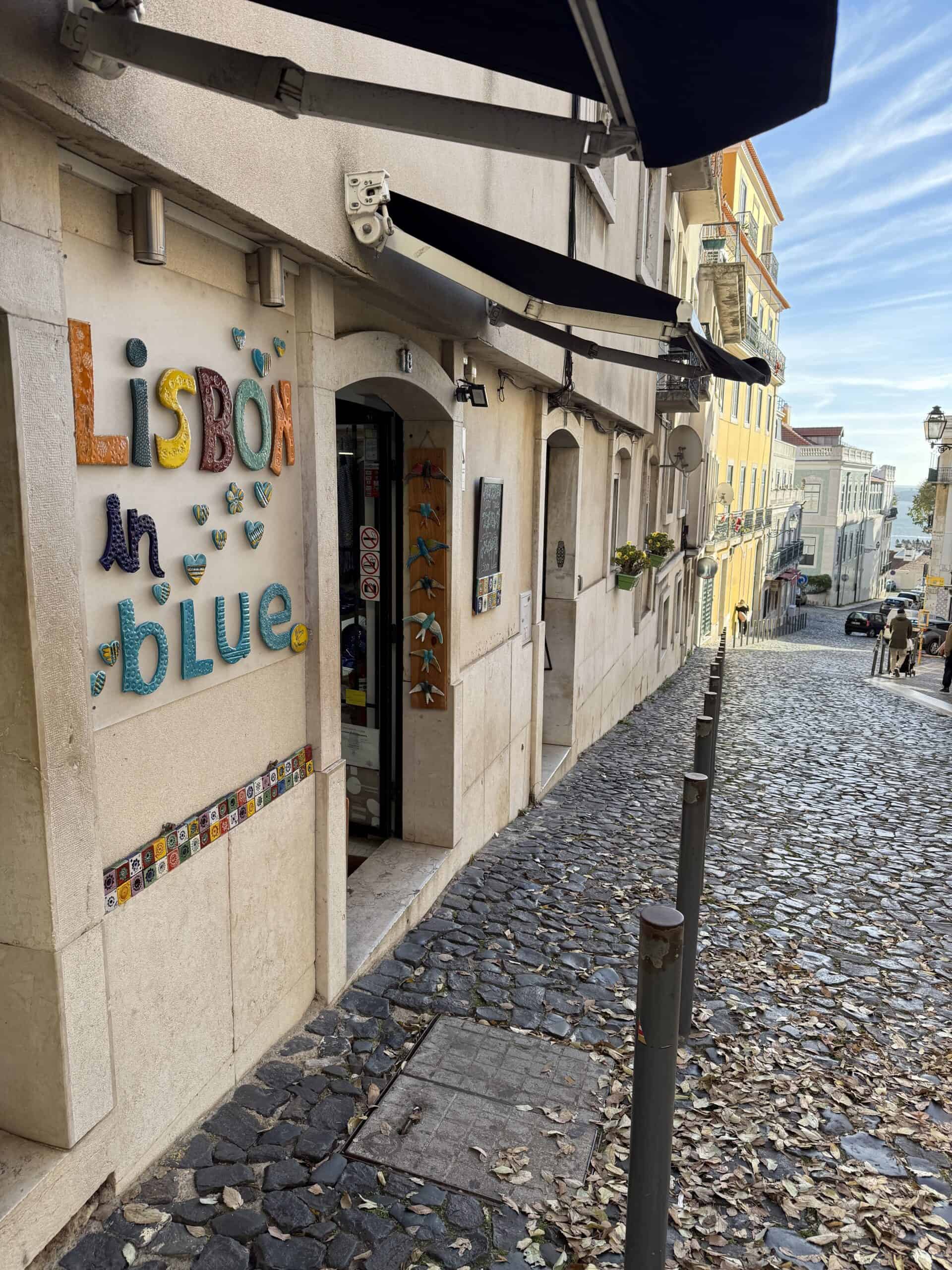
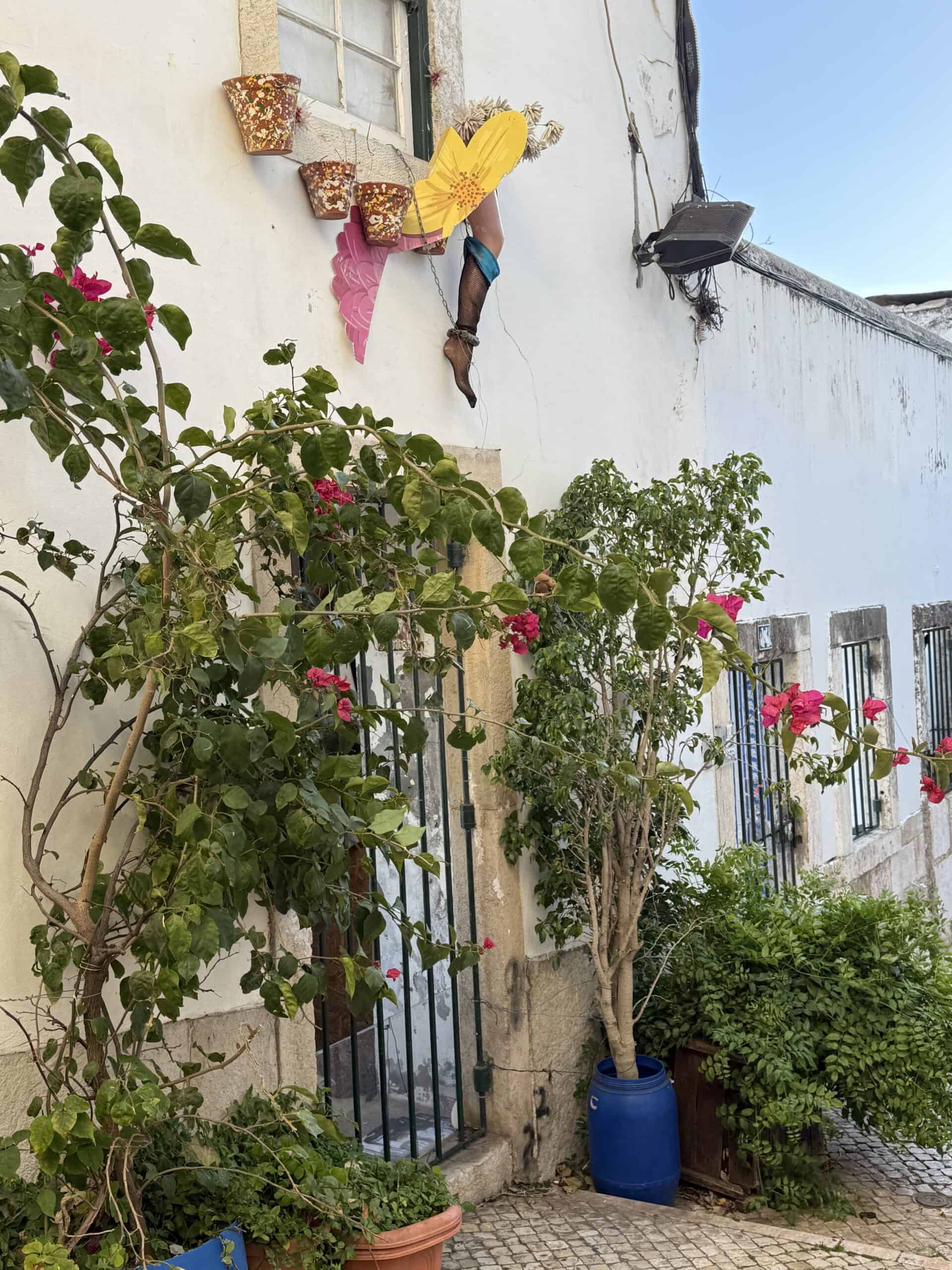
Day 2 is all about Alfama, one of Lisbon’s oldest and most charming neighbourhoods. Unlike Baixa’s grand avenues, Alfama is a maze of narrow cobblestone streets, colourful buildings and hidden staircases. It’s the perfect place to wander without a strict schedule, stopping at beautiful viewpoints along the way.
Wander Alfama’s Narrow Streets Without a Strict Plan
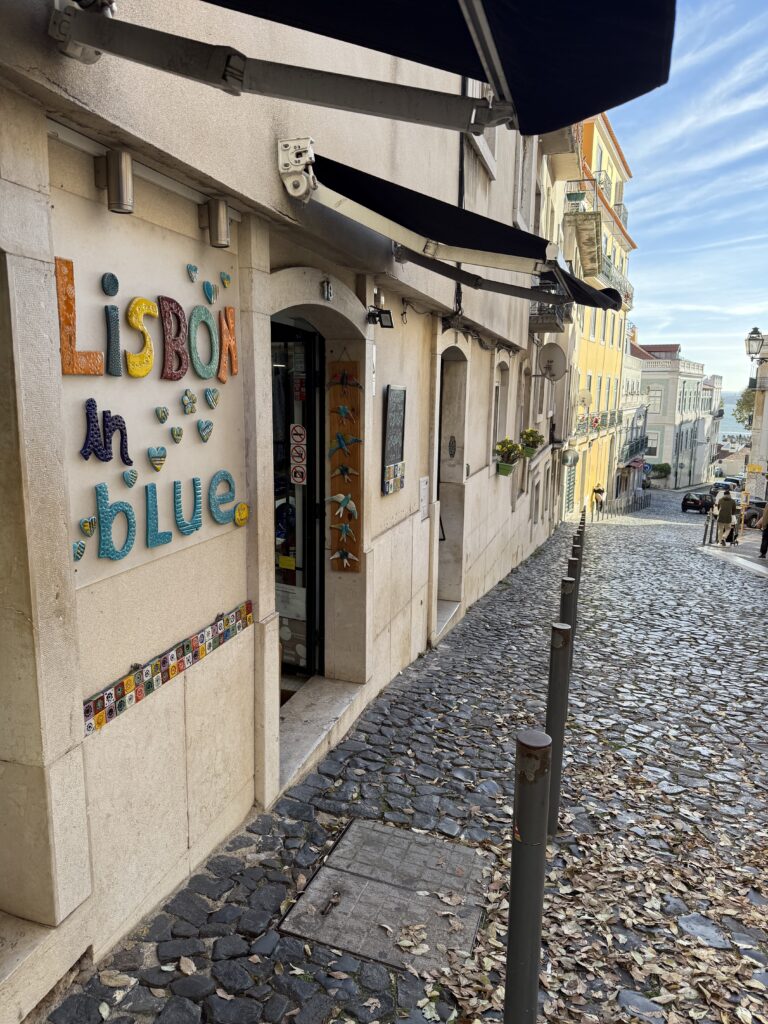
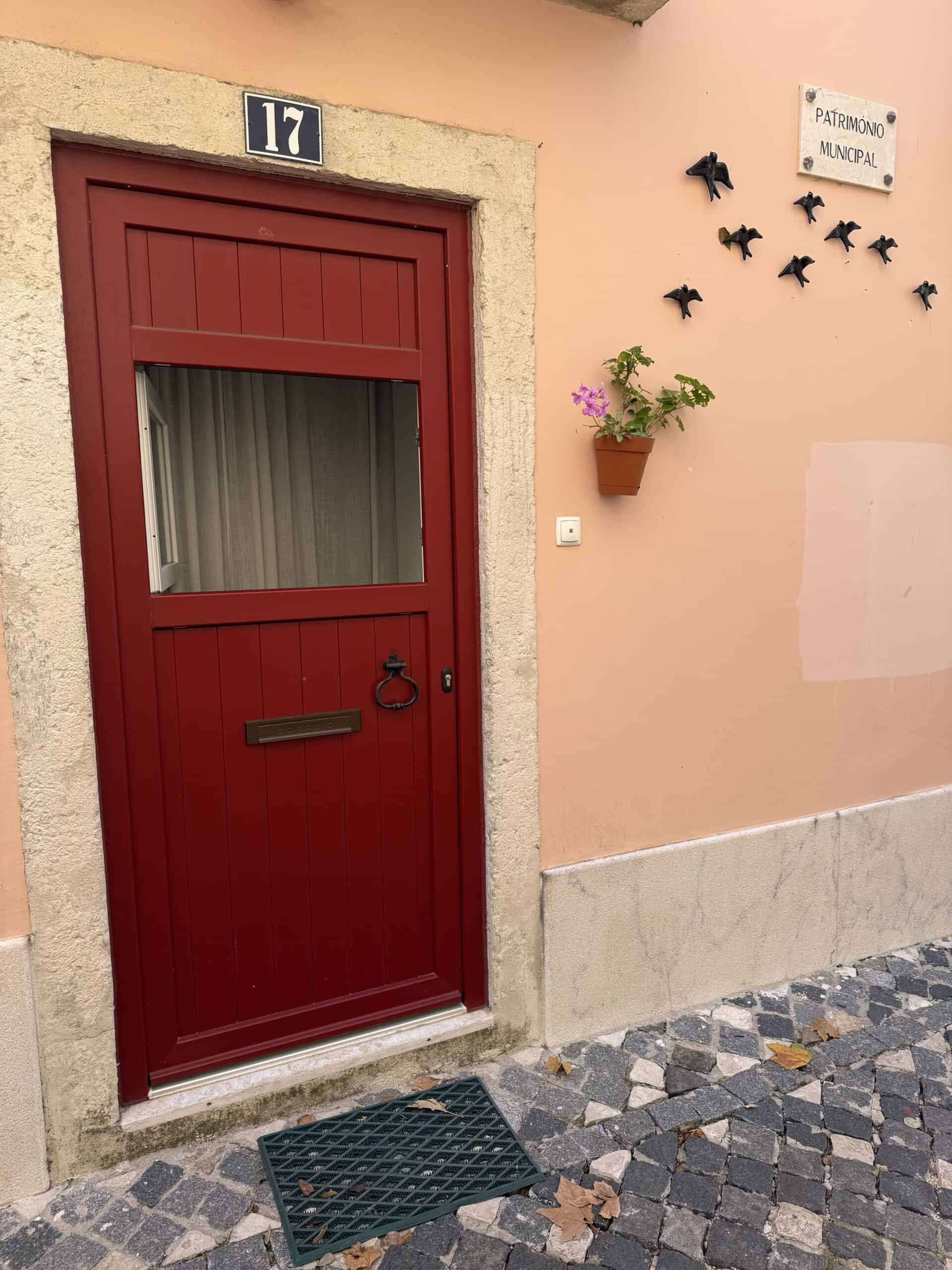
One of my favourite things about exploring Alfama was simply getting lost in its streets. Around every corner, you’ll find traditional Portuguese tiles known as azulejos, laundry hanging from balconies, small squares and little details that make the neighbourhood feel so authentic.
What Is a Miradouro?
A miradouro is a Portuguese viewpoint, usually an elevated terrace or public space overlooking the surrounding area. Thanks to Lisbon’s many hills, you’ll find incredible views of red rooftops, historic buildings and the Tagus River throughout the city. Many are completely free to visit!
Here are four viewpoints worth considering during your visit.
1. Miradouro de Santa Luzia
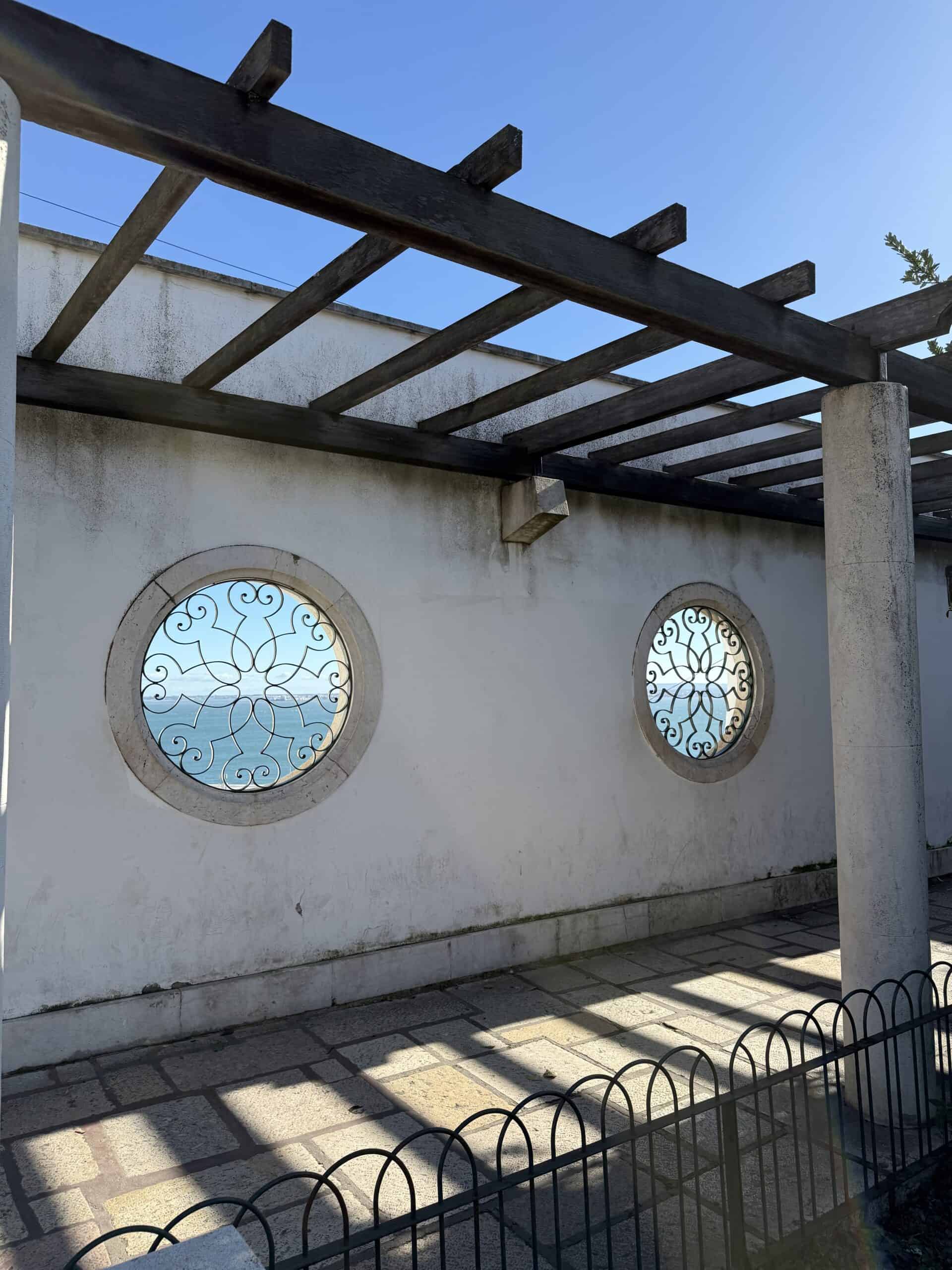
One of Lisbon’s prettiest viewpoints, Miradouro de Santa Luzia is known for its blue-and-white tiled terrace, garden setting and beautiful views over Alfama. I particularly recommend taking time to appreciate the decorative tiles and the surrounding atmosphere.
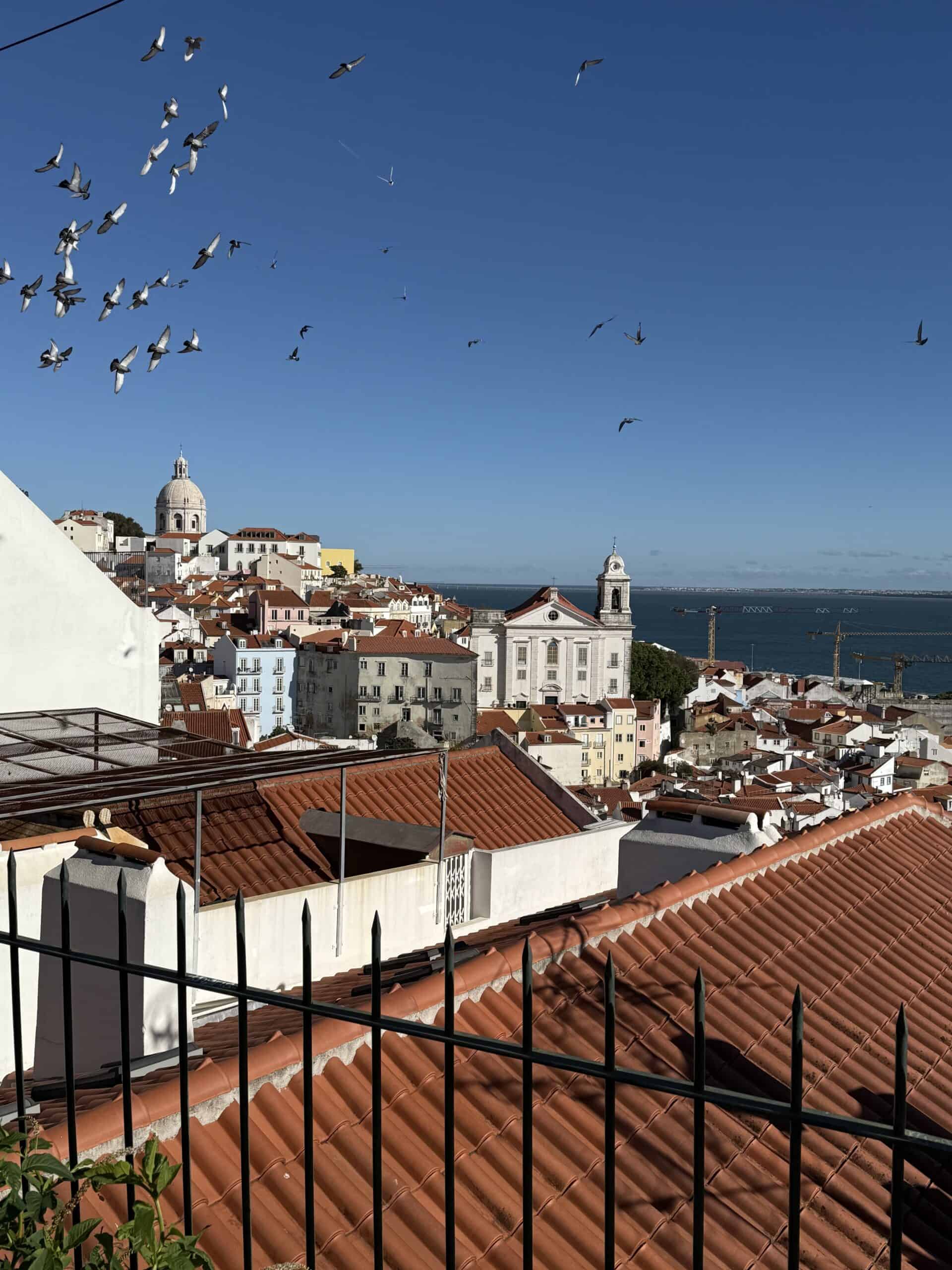
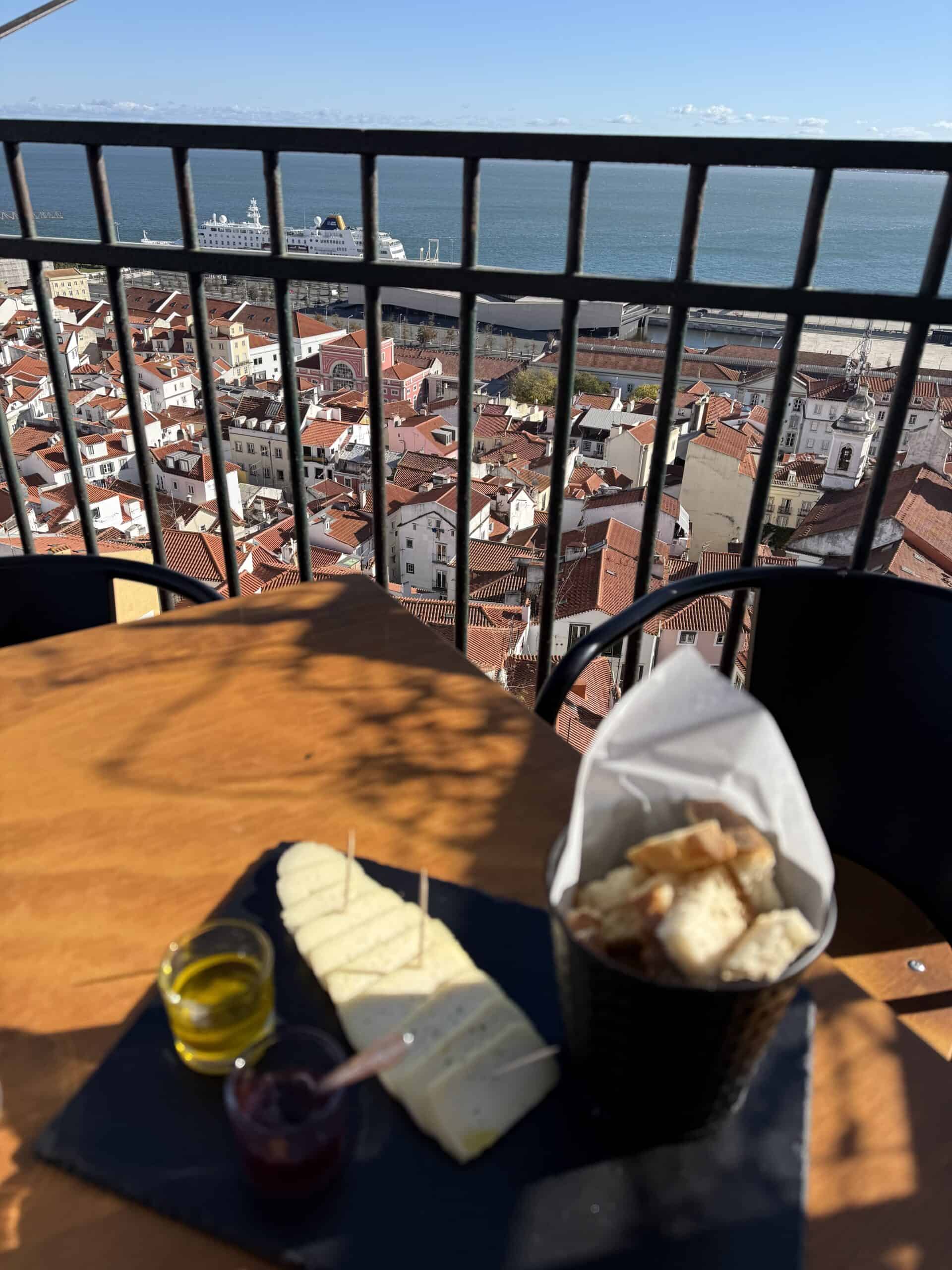
Right next to the viewpoint, I stopped at Terraço de Santa Luzia, a lovely terrace bar overlooking the rooftops of Alfama and the Tagus River. It was such a nice experience to sit outside, enjoy a drink and take in the scenery. If you have time, I definitely recommend stopping here rather than simply taking a picture and moving on.

2. Miradouro das Portas do Sol
Just a short walk from Santa Luzia, Miradouro das Portas do Sol offers a wider panorama over Alfama’s rooftops, churches and the Tagus River. Since they’re so close together, these two viewpoints are easy to combine.
3. Miradouro da Senhora do Monte
Located in nearby Graça, Miradouro da Senhora do Monte offers sweeping views across Lisbon, including São Jorge Castle and the city centre. It’s particularly beautiful in the late afternoon, although reaching it requires an additional uphill walk.
4. Torre da Igreja do Castelo de São Jorge
Right beside São Jorge Castle, Torre da Igreja do Castelo de São Jorge is a historic bell tower offering a different perspective over Lisbon. After climbing approximately 50 steps, you’ll reach a viewpoint overlooking the city’s rooftops and the Tagus River.


Unlike the other miradouros mentioned above, the tower requires an admission ticket. It’s a lovely option if you enjoy viewpoints with a little history.
Explore Around Castelo de São Jorge
While you’re in the area, consider visiting Castelo de São Jorge, Lisbon’s historic hilltop castle. Its grounds and defensive walls offer beautiful views, along with an opportunity to learn more about the city’s past.
If historic fortifications aren’t particularly your thing, you can skip the interior and continue exploring the surrounding streets instead.
Experience Alfama’s Fado Tradition
Alfama is also known for Fado, Portugal’s traditional music characterized by expressive singing and often melancholic melodies. If you’d like to experience another side of Portuguese culture, consider attending an evening performance at one of the neighbourhood’s Fado venues.
Alternatively, finish your day with dinner at a traditional restaurant and enjoy the atmosphere of Alfama after dark.
Day 3: Choose Your Lisbon Adventure
For your third day, I recommend choosing an experience based on your interests rather than following another fixed sightseeing itinerary.
After exploring Lisbon’s historic neighbourhoods, you might be craving the ocean, interested in Sintra’s magnificent palaces or looking for something enjoyable to do if the weather turns rainy.
Option 1: Visit Sintra for Castles, History and Fairytale Gardens
If you love colourful palaces, lush forests and fairytale gardens, Sintra is a wonderful choice for your third day. I particularly loved hiking through the forest to Pena Palace, surrounded by greenery that made the entire experience feel magical. Give yourself a full day to explore this UNESCO-listed destination.
For everything you need to plan your visit, read my Sintra Day Trip: A Realistic One-Day Guide.
Option 2: Escape to Cascais for a Day by the Ocean
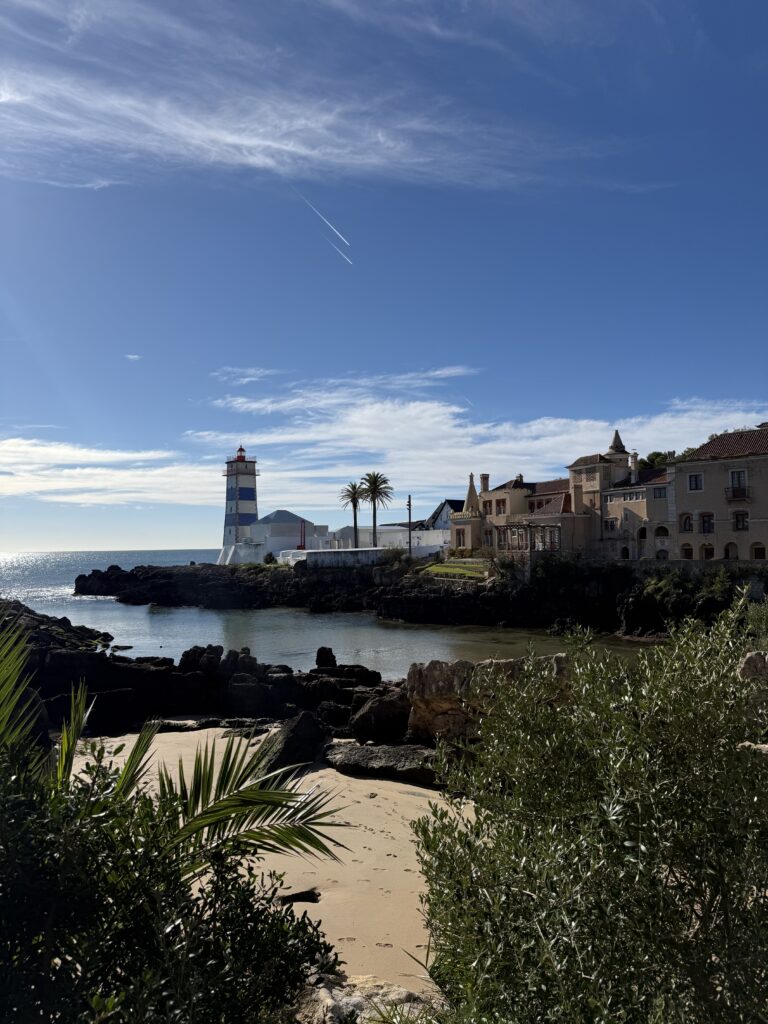
If you prefer coastal scenery, head to Cascais, just a 40-minute train ride from Lisbon. I spent an entire month based here and loved its relaxed atmosphere, beautiful beaches, waterfront cafés and scenic coastal walks. Don’t miss Boca do Inferno, where waves crash against dramatic rock formations.
Discover my favourite places in Things to Do in Cascais, Portugal: My Favourite Spots.
Option 3: A Rainy Day in Lisbon – Visit the Oceanário
If the weather turns rainy, you might prefer staying in Lisbon rather than committing to an outdoor day trip.
One option is the Oceanário de Lisboa, located in Parque das Nações. The aquarium features a large central tank and exhibits introducing visitors to different marine environments and species.

Allow approximately 1.5 to 2 hours for the visit. The surrounding Parque das Nações area also offers a different perspective of Lisbon, with modern architecture and a waterfront promenade you can enjoy if the weather improves.
My recommendation: Keep this option in mind when visiting during the cooler months or if the forecast calls for a particularly rainy day.
Check Oceanário de Lisboa’s official website for tickets and opening hours.
Looking for a different day out? My 9 best day trips from Lisbon include more coastal adventures, from hiking near Cabo da Roca to watching the waves in Nazaré.
What About Belém? Is It Worth Visiting?
Many Lisbon itineraries dedicate half a day to Belém, a district west of the historic centre known for its monuments and Portuguese maritime history.
Its most famous attractions include Jerónimos Monastery, Belém Tower, the Padrão dos Descobrimentos monument and Pastéis de Belém, the historic bakery famous for its traditional custard tarts.
Personally, I chose to dedicate more time to exploring Baixa, Chiado and Alfama rather than making Belém a priority. However, if you’re especially interested in history and architecture, it’s certainly worth considering.
You could visit Belém on your third day instead of taking a day trip, or add it as a half-day activity if you have more time in Lisbon. Since it’s outside the central neighbourhoods, I recommend grouping its main attractions together.
Where to Stay in Lisbon for 3 Days
Choosing the right neighbourhood can make a difference when visiting Lisbon for a short trip, especially since its hills can make seemingly short distances surprisingly tiring.
| Neighbourhood | Best For | What to Expect |
|---|---|---|
| Baixa | First-time visitors | Central, convenient and well connected |
| Chiado | Cafés, shopping and atmosphere | Elegant streets, restaurants and central location |
| Alfama | Historic charm | Narrow streets, traditional architecture and steeper walks |
| Príncipe Real | Boutique atmosphere | Restaurants, gardens and a quieter neighbourhood feel |
My recommendation: Baixa or Chiado are practical bases for a three-day visit. Both provide convenient access to central Lisbon and public transportation for day trips.
Practical Tips for Spending 3 Days in Lisbon
Check the weather: Pack layers and a rain jacket during the cooler months. I visited in late November and loved the festive atmosphere!
Wear comfortable shoes: Lisbon’s steep hills, staircases and cobblestone streets can be tiring, especially when exploring Alfama. Good walking shoes are essential!
Use public transportation: Explore central Lisbon on foot, but take advantage of trams, the metro, Uber or Bolt for longer distances. Trains also make day trips to Sintra and Cascais easy.
Keep a power bank in your day bag for maps, photos and transport apps; my travel tech essentials guide includes the one I use when I’m out exploring for hours.
Don’t overplan: Lisbon is best enjoyed at a relaxed pace. Leave time to wander, discover hidden streets and enjoy the viewpoints.
Book popular experiences ahead: Reserve activities like the Nat’elier pastel de nata masterclass and Sintra’s palaces in advance.
Frequently Asked Questions About 3 Days in Lisbon
Is 3 days enough in Lisbon?
Yes. Three days is enough to explore many of Lisbon’s highlights without rushing. I recommend spending two days discovering the historic neighbourhoods and using the third for a day trip or another experience in the city.
Should I Visit Sintra or Cascais from Lisbon?
Choose Sintra if you’re interested in palaces, history, gardens and hiking. Choose Cascais if you prefer ocean views, coastal walks, beaches and a more relaxed atmosphere. Both deserve a full day.
Is Lisbon Walkable?
Yes, particularly around Baixa, Chiado and Alfama. However, Lisbon’s hills and uneven cobblestone streets make comfortable walking shoes essential. Public transportation can help you avoid longer climbs.
Is Lisbon Worth Visiting in November or December?
Absolutely. My late-November visit was particularly enjoyable because of the Christmas shopping atmosphere and festive decorations. The weather can be cooler and wetter, so pack layers and check seasonal event dates before travelling.
What Should I Do in Lisbon When It Rains?
Consider visiting the Oceanário de Lisboa, exploring museums, spending time in traditional cafés or booking an indoor experience such as a pastel de nata cooking class.
Do I Need a Car for 3 Days in Lisbon?
No. Lisbon’s historic centre is best explored on foot, and the city has public transportation for longer journeys. Trains make it easy to visit Sintra or Cascais without renting a car.
Final Thoughts: Make Your 3 Days in Lisbon Your Own
Lisbon is one of those cities where the experience goes beyond its famous attractions. It’s in the narrow streets of Alfama, colourful tiles covering historic buildings, laundry hanging from balconies and beautiful views that appear at the top of another hill.
It’s also in the simple pleasures: learning to bake your own pastel de nata, wandering through Chiado or finding a quiet corner to appreciate the atmosphere.
My recommendation is to spend your first two days exploring Lisbon’s historic neighbourhoods, then choose your third day based on what excites you most. Whether that’s wandering through Sintra’s fairytale gardens, escaping to the coast in Cascais or discovering another side of Lisbon, leave yourself enough room to enjoy the experience.
Planning more of your Portugal adventure? Explore my Portugal travel guides for more itineraries, day trips and inspiration.