Is Whale Watching Worth It on Vancouver Island?
Whale watching is often described as one of the best things to do on Vancouver Island, and rightfully so. The waters surrounding the island are home to grey whales, humpbacks, orcas and an incredible variety of marine wildlife.
Unlike most attractions, however, there is no fixed experience. You cannot know which animals will appear, how close they will come or how long they will remain visible.
So, is whale watching worth it on Vancouver Island when nature controls the entire itinerary? In this guide, I will share my experience in Tofino, what to expect on the water and how to decide whether a tour belongs in your Vancouver Island road trip itinerary.
Is Whale Watching Worth It on Vancouver Island?
Yes, whale watching is worth it on Vancouver Island if you approach it as a complete wildlife experience rather than a guaranteed close encounter with a specific whale.
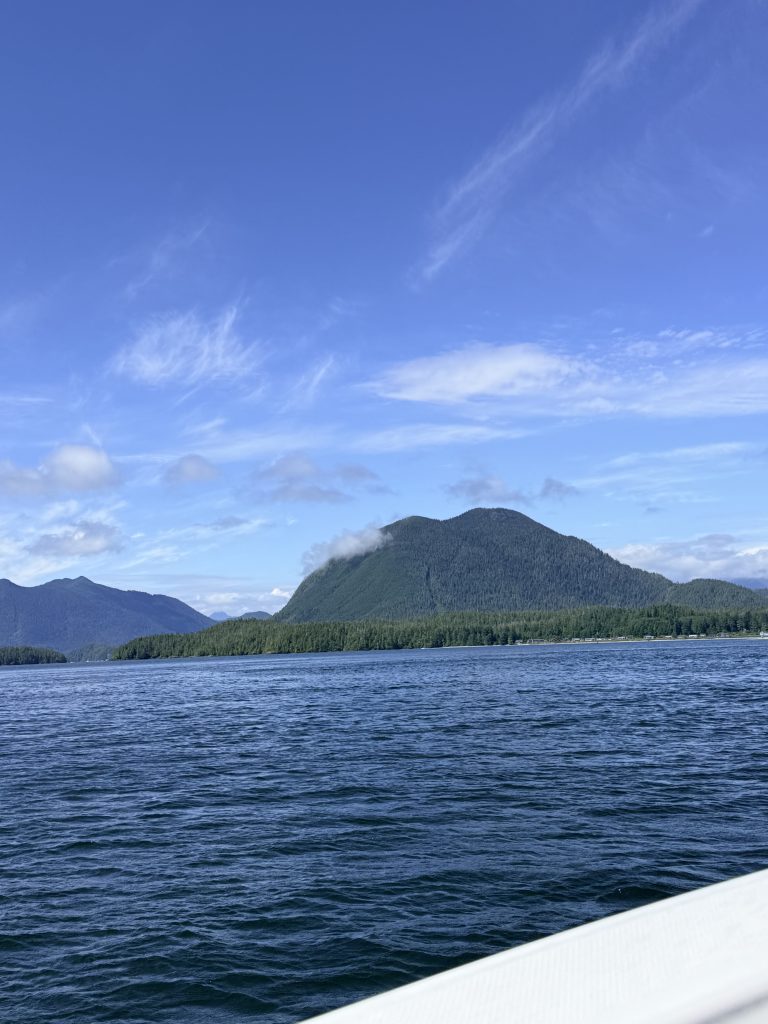
A whale may surface for only a few seconds or remain farther from the boat than you expected. No responsible operator can promise that you will see orcas, witness a breach or return with the exact photographs you imagined.
The experience becomes much more rewarding when you also value the coastal scenery, the boat ride, the knowledge of the guide and the possibility of seeing other marine wildlife.
If you would only feel satisfied after seeing a particular species at close range, a whale-watching tour may leave you disappointed. But if you are comfortable letting nature determine what the experience becomes, it can easily become a highlight of your Vancouver Island trip.
This post contains affiliate links. If you make a booking or purchase through one of these links, I may earn a small commission at no additional cost to you. Your support helps me continue creating honest, firsthand travel guides—thank you! Read my full affiliate disclosure for more information.
Best Places to Go Whale Watching on Vancouver Island
There is no single best departure point for everyone. The right location depends on your route, the season and whether whale watching is the main purpose of your trip or one part of a longer itinerary.
If you are travelling from Vancouver, my Vancouver Island ferry guide explains which crossing works best for Victoria, Nanaimo and the drive toward Tofino.

Victoria or Sooke
Victoria and Sooke are convenient choices for travellers staying in southern Vancouver Island. Victoria has several departures close to the Inner Harbour, making it especially practical if you are visiting without a car or only have a few days.
If Victoria is your base, my 2-day Victoria itinerary will help you combine the waterfront, Fisherman’s Wharf, the Royal BC Museum and Butchart Gardens without rushing.
Nanaimo
Nanaimo works well for central Vancouver Island trips and travellers arriving by ferry. Choosing a tour here can save you from driving across the island solely for whale watching.
Tofino or Ucluelet
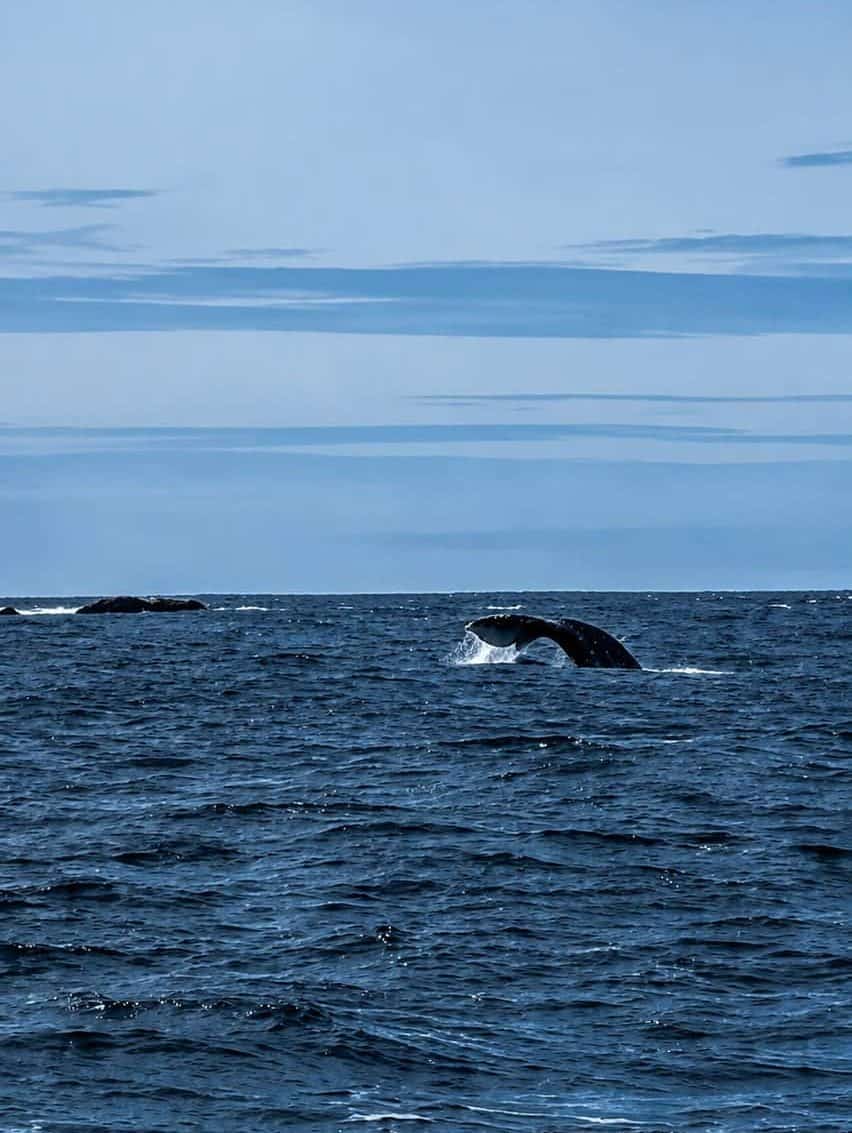
Choose Tofino or Ucluelet if your road trip already includes Vancouver Island’s west coast. This area is especially known for grey whales and combines wildlife viewing with the rugged scenery of Clayoquot Sound and the Pacific coast.
Conditions can feel wilder and more exposed than they do in the sheltered waters on the eastern side of the island. That is part of the appeal, but it also makes your choice of boat more important.
Still choosing your base? My guide to where to stay on Vancouver Island compares Tofino, Ucluelet, Sproat Lake and Victoria, including the campground I used near Pacific Rim.
Campbell River or Telegraph Cove
Campbell River is a strong base for central and northern Vancouver Island itineraries, while Telegraph Cove suits travellers who are deliberately building their trip around wildlife and Johnstone Strait.
Both require more travel time if the rest of your itinerary is concentrated around Victoria or Tofino. I would only go that far north if the region itself interests you, not because someone declared it the universal best place to see whales.
Choose the departure point that fits your route unless whale watching is your main reason for visiting the island. If you are staying on the mainland instead, my guide to the best boat tours in Vancouver includes a whale-watching option through the Salish Sea.
Best Time for Whale Watching on Vancouver Island
The main whale-watching season generally runs from spring through early fall, but the best month depends on the region and the species you hope to see.
March to May
Spring is particularly important along the west coast as grey whales migrate north past Tofino and Ucluelet. This can be an excellent time for sightings, although the weather may be cooler and more changeable than it is during summer.
June to August
Summer brings long daylight hours, frequent tour departures and generally more comfortable weather. It is also the busiest time to visit Vancouver Island, so popular departures can fill quickly.
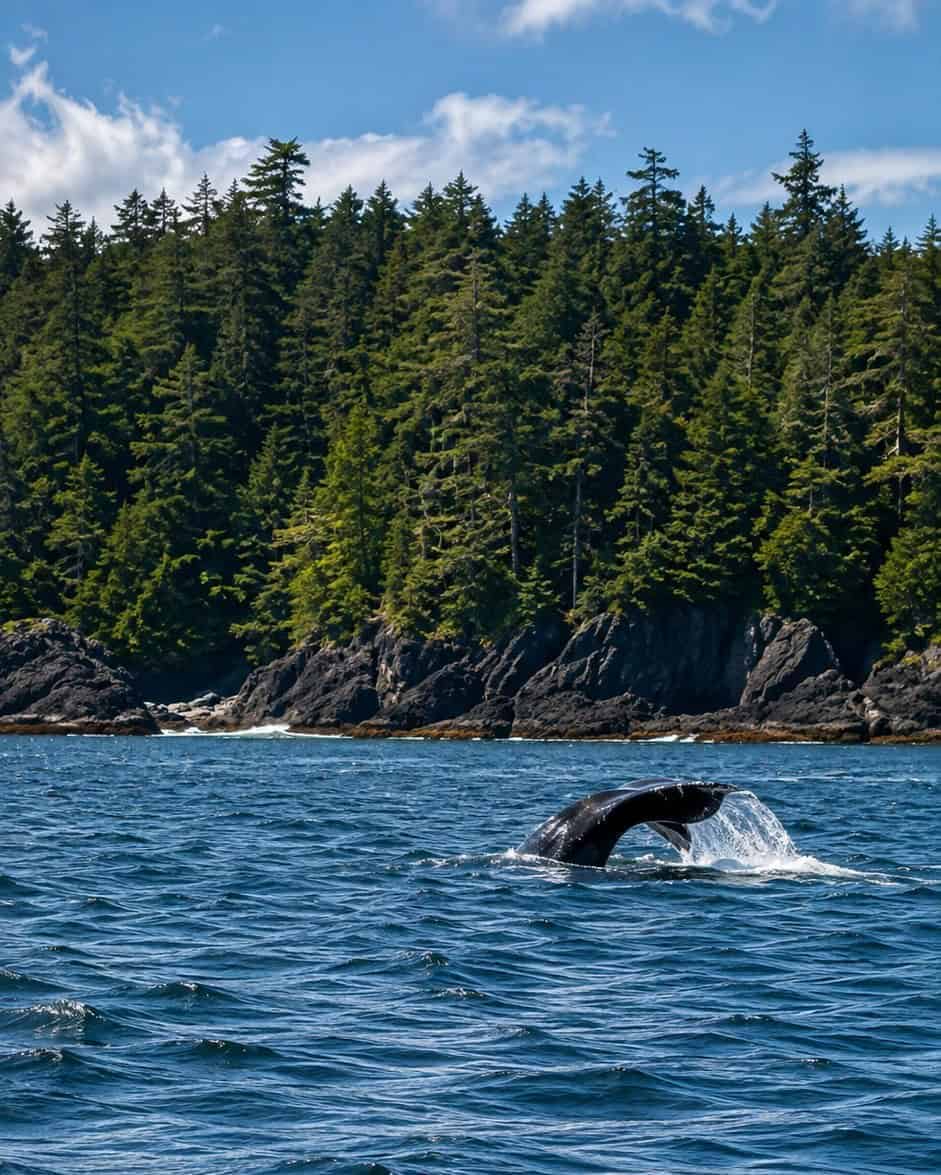
I visited Tofino on July 1 and saw three grey whales, showing that the spring migration is not the only opportunity to see them around Clayoquot Sound.
September to October
Early fall can still offer excellent whale-watching opportunities with fewer summer visitors. Conditions become more variable as the season progresses, and some operators begin reducing their departures.
There is also no guaranteed best time of day for sightings. Morning departures may sometimes have calmer water, but the weather matters more than the clock. If motion sickness is a concern, ask the operator which departure is expected to have the smoothest conditions.
What Whales Can You See Around Vancouver Island?
Several whale species can be seen around Vancouver Island, although the likelihood of encountering each one depends on where and when you travel.
Grey Whales
Grey whales are especially associated with the west coast around Tofino and Ucluelet. Many migrate past Vancouver Island during spring, while some remain in the area to feed during the warmer months. These were the whales I saw during my July tour.
Humpback Whales
Humpback whales are seen around several parts of Vancouver Island during the main whale-watching season. They are known for dramatic behaviours such as breaching and tail slapping, but witnessing either should be treated as good fortune—not an expectation.
Orcas
Orcas may be encountered around the Salish Sea, Johnstone Strait and other waters surrounding Vancouver Island.
Do not book a general whale-watching tour assuming you will definitely see them. A whale-sighting guarantee normally means seeing a whale, not the particular species on your wish list.
Other Marine Wildlife
Depending on the location, a tour may also encounter:
- Sea lions
- Harbour seals
- Sea otters
- Porpoises
- Bald eagles
- Coastal and pelagic birds
These animals are part of the experience, not consolation prizes. As I discovered in Tofino, an unexpected wildlife encounter can become the moment you remember most.
Open Boat or Covered Boat: Which Should You Choose?
The type of boat can change your experience almost as much as the wildlife.
Choose an Open Boat If You Want More Adventure
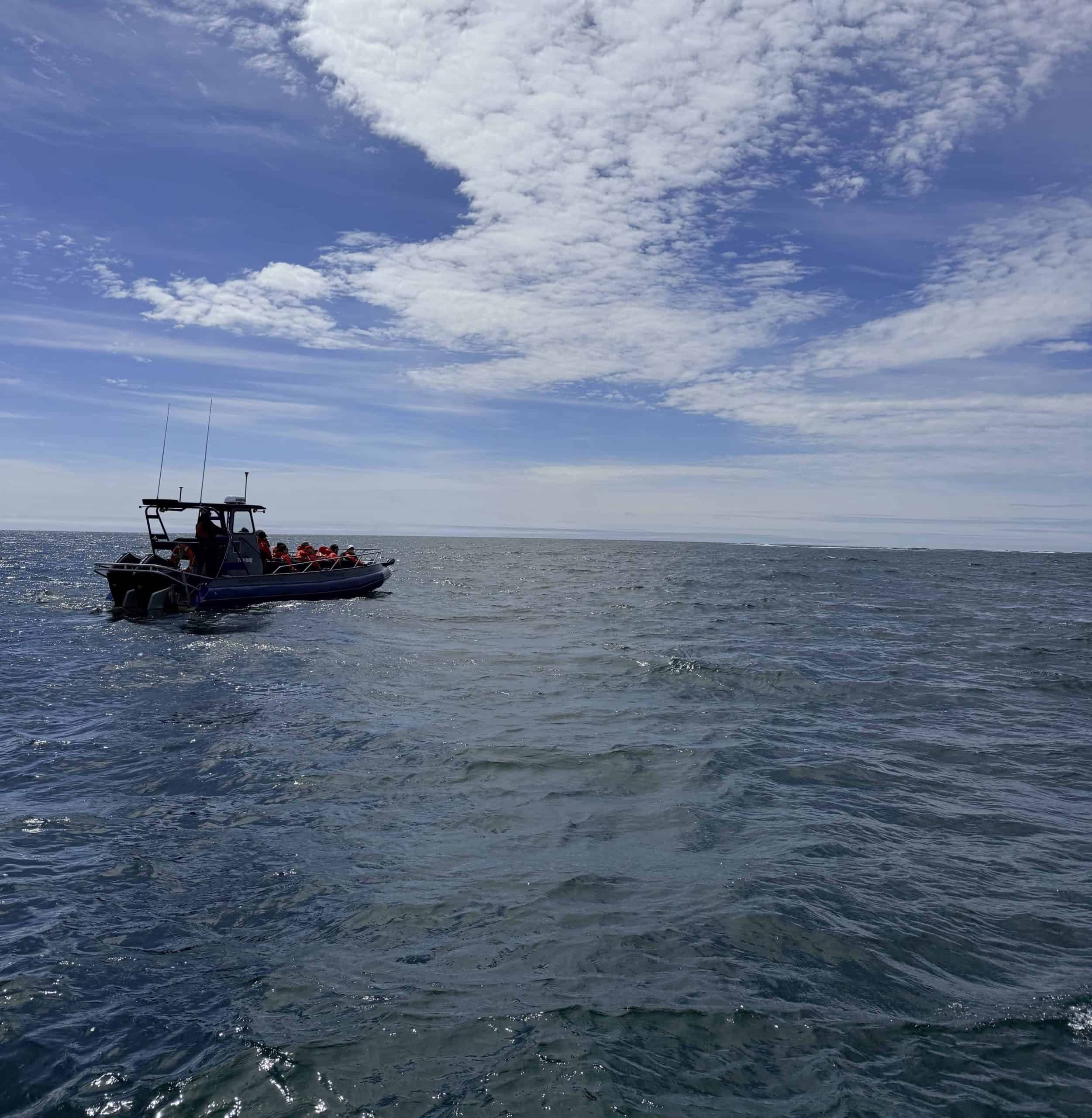
Open boats often carry smaller groups and provide unobstructed views in every direction. Sitting closer to the water can make the experience feel more immersive and is especially appealing to photographers.
The trade-off is greater exposure to wind, spray, cold temperatures and the movement of the boat. Open-ocean tours may not be suitable for pregnant travellers or people with serious back, neck or joint problems.
Choose a Covered Boat If Comfort Matters More
Covered or cabin boats provide better protection from wind and rain. They may also offer indoor seating and a washroom, making them more comfortable for families, mixed-age groups and travellers concerned about mobility or motion sickness. Groups may be larger, and the experience can feel less adventurous, but comfort matters when you are spending several hours on the water.
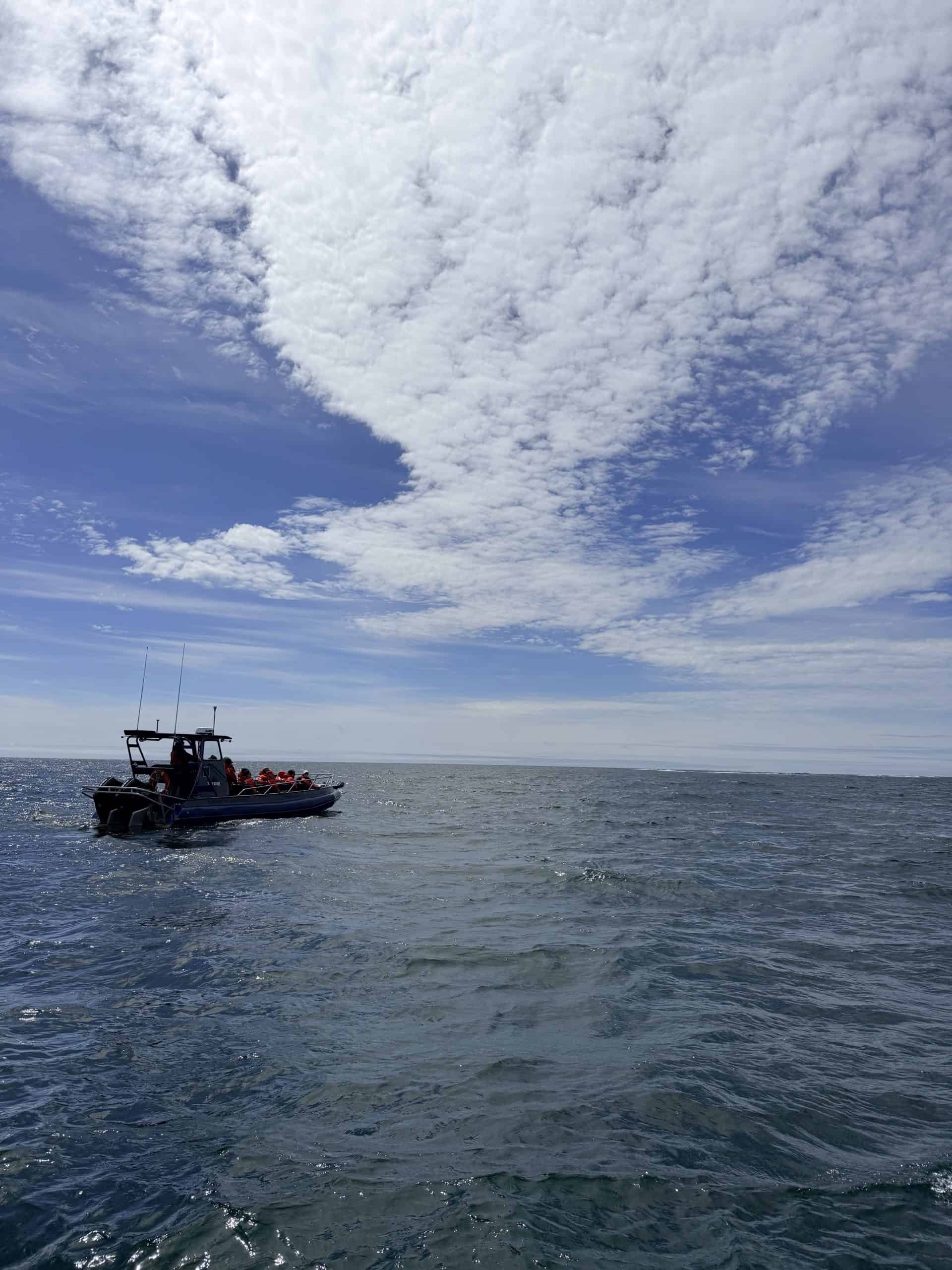
I chose The Whale Centre’s open boat because I wanted the smaller group and unobstructed views. It was the right choice for me, but the wind and cold were very real even on a sunny July day.
My Whale-Watching Experience in Tofino
I went whale watching in Tofino on July 1, 2026, as part of my week-long Vancouver Island road trip. I booked the Tofino Whale Watching Open Boat Tour with The Whale Centre. I paid $381 CAD for two people including tax.

The tour lasts approximately 2.5 hours and carries a maximum of 12 passengers. I appreciated the smaller group because everyone had room to see the wildlife and could easily hear our guide.
Before departure, we were given full-body Mustang flotation suits for warmth and protection from the ocean spray. Our guide was knowledgeable and added real value by helping us identify the wildlife and understand more about Clayoquot Sound.
What We Saw and the Moment I Remember Most
During the tour, we saw:
- Three grey whales
- Sea lions
- Sea otters
- Several birds
I had hoped to see orcas, even though I knew no tour could guarantee a particular species. They did not appear, but I was still thrilled to see three grey whales in the wild.
The biggest surprise came when one playful sea lion swam right beside our boat. It surfaced as if it had come over to say hello and then splashed us with water. It was spontaneous, funny and completely unexpected.

That moment captured why it is important to keep an open mind on a wildlife tour. I may not have seen the orcas I came for, but I left completely satisfied with what nature gave us instead.
What to Expect on a Tofino Open-Boat Tour
An open-boat tour is an exciting way to experience Vancouver Island’s coastline, but you need to be ready for the elements.
It Is Colder on the Water Than on Land
Do not let a sunny forecast fool you. The temperature dropped noticeably once our boat accelerated, and the offshore wind felt much colder than it did in Tofino.
The flotation suit made a significant difference, but I still recommend wearing comfortable layers underneath it. Your hands, face and head remain exposed, so bring gloves and a warm hat when temperatures are cooler. Wear warm socks and closed-toe shoes. Avoid loose hats that could disappear into the Pacific the moment the boat accelerates.
Expect Wind, Spray and Movement
An open boat gives you excellent views, but you will feel the wind, ocean spray and movement of the water. Some swell is normal around Tofino, and the ride may become fast or bumpy depending on the conditions.
Arrive Early and Use the Washroom
The open boats used for this tour do not have washrooms onboard. Use the facilities before checking in. The Whale Centre asks guests to arrive 30 minutes before departure to put on their flotation suits, sign the waiver and complete the safety briefing.
Wildlife Sightings Can Be Brief or Distant
Whales do not remain at the surface waiting to be photographed. You may first notice a blow, followed by a back or tail before the animal disappears below the surface again.
Your guide will help you watch for where it might surface next, but responsible operators must maintain regulated viewing distances.
If photographs matter to you, bring a camera with a zoom lens and use burst or continuous shooting mode.
What to Bring
For an open-boat tour, I recommend bringing:
- Warm layers
- Closed-toe shoes and warm socks
- Gloves and a warm hat
- Sunglasses and sunscreen
- Seasickness medication, if needed
- Binoculars
- A camera or phone with a secure strap
- A small waterproof pouch or dry bag
- Drinking water
Bring only what you need. Space is limited, and loose belongings can move or become wet once the boat accelerates.
Who Should Go Whale Watching on Vancouver Island?
Whale watching is likely worth it if you:
- Love wildlife and marine environments
- Appreciate the complete boat experience
- Understand that sightings are unpredictable
- Want to learn from an experienced guide
- Have at least half a day available
You may want to skip it if you:
- Expect a guaranteed orca encounter
- Need whales to approach the boat
- Become seriously seasick
- Have significant back, neck or mobility concerns
- Would be deeply disappointed by distant or brief sightings
Can You See Whales From Shore on Vancouver Island?
It is possible to see whales from shore, but sightings are much less predictable than they are on a guided tour. Whales may pass coastal headlands, lighthouses and open-water viewpoints around Vancouver Island. Bring binoculars and scan the horizon slowly, looking for a sudden misty blow above the water.
A shore sighting is a wonderful bonus, but I would not replace a guided tour with shore watching if seeing whales is one of your main priorities.
Using the Whale Locator App
Whale Locator is a community-powered app that displays recent whale and marine-mammal sightings on an interactive map.
Reports may include the species, location, direction of travel, behaviour and time of the sighting. The app also displays whale-watching vessel activity through AIS tracking and allows users to receive notifications for selected areas.
The app can show you where whales have recently been active, but it cannot predict where one will surface next. Reports also depend on community activity and coverage in your area.
How to Choose a Responsible Whale-Watching Tour
Seeing whales in the wild is a privilege, and getting closer does not automatically create a better experience. Responsible operators maintain the required viewing distances and allow whales to continue travelling, resting or feeding without being chased or blocked.
At the time of writing, Fisheries and Oceans Canada requires vessels in Pacific Canadian waters to remain at least:
- 100 metres from most whales, dolphins and porpoises
- 200 metres when they are resting or accompanied by a calf
- 200 metres from killer whales other than Southern Residents
- 1,000 metres from Southern Resident killer whales in designated southern British Columbia waters
Regulations and seasonal restrictions can change, so check the current guidance before your trip. Choose an operator that follows marine-mammal regulations, explains realistic viewing expectations and provides clear safety and no-sighting policies.
Final Verdict: Is Whale Watching Worth It on Vancouver Island?
Yes, whale watching was worth it for me.
The whales were the reason I booked my Tofino tour, but the day became memorable because of the complete experience: the open water, the coastal scenery, our knowledgeable guide and a playful sea lion that swam beside the boat and splashed us.
Book a tour for the opportunity to observe wildlife in its natural environment not for a guaranteed performance from one particular animal.
Remain open to whatever appears, and the moment that makes whale watching worthwhile may be the one you never expected.