Best Icefields Parkway Stops: Most Scenic Drive in Canada
I spent two months driving across Canada, and I saw just how wildly diverse this country is – mountains, coastlines, cities, badlands, endless prairies. I truly wouldn’t dismiss any of it. Every landscape had its own character, and every part of the journey gave me something different.
But the Icefields Parkway was something else entirely.
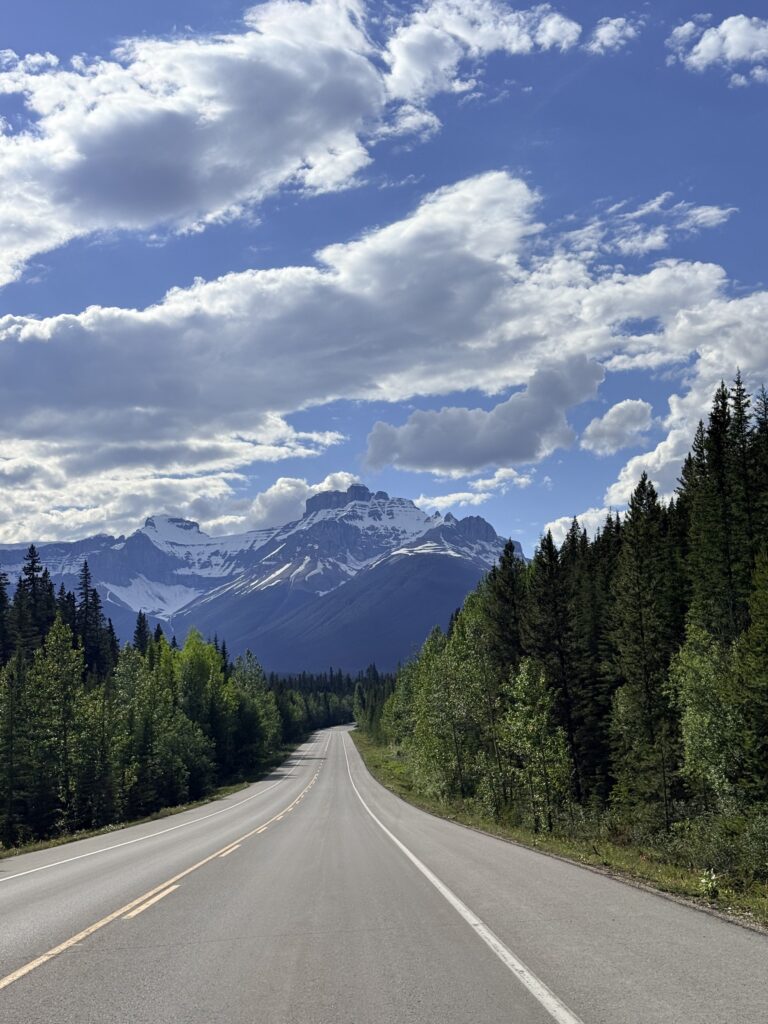
The Icefields Parkway stretching toward the snow-capped Canadian Rockies, one of those drives where the road itself is part of the experience.
For 230 kilometres, you’re driving through the Canadian Rockies with no cellular service – where do you even find that anymore? You’re essentially heading out into the wild… on a highway. Massive glaciers surround you, wildlife appears along the road, and almost every stop looks like it belongs on a postcard. I was in absolute awe the entire day, almost overwhelmed by how beautiful and powerful nature felt out there.
I drove the Icefields Parkway in one day, and below are my favourite stops along the way. But by no means should you limit yourself to these. Stop as often as you want, stay as long as you need, and give yourself time to actually take it all in. This is one of those drives where the journey really is the destination.
If you’re exploring Banff before continuing north, my 3-day Banff National Park itinerary takes you through the places I visited before driving the Icefields Parkway, including Canmore, Banff, Moraine Lake and Lake Louise.
This post contains affiliate links. If you make a booking or purchase through one of these links, I may earn a small commission at no additional cost to you. Your support helps me continue creating honest, firsthand travel guides—thank you! Read my full affiliate disclosure for more information.
Best Icefields Parkway Stops at a Glance
I drove the Icefields Parkway from Lake Louise to Jasper, so the stops below are listed from south to north.
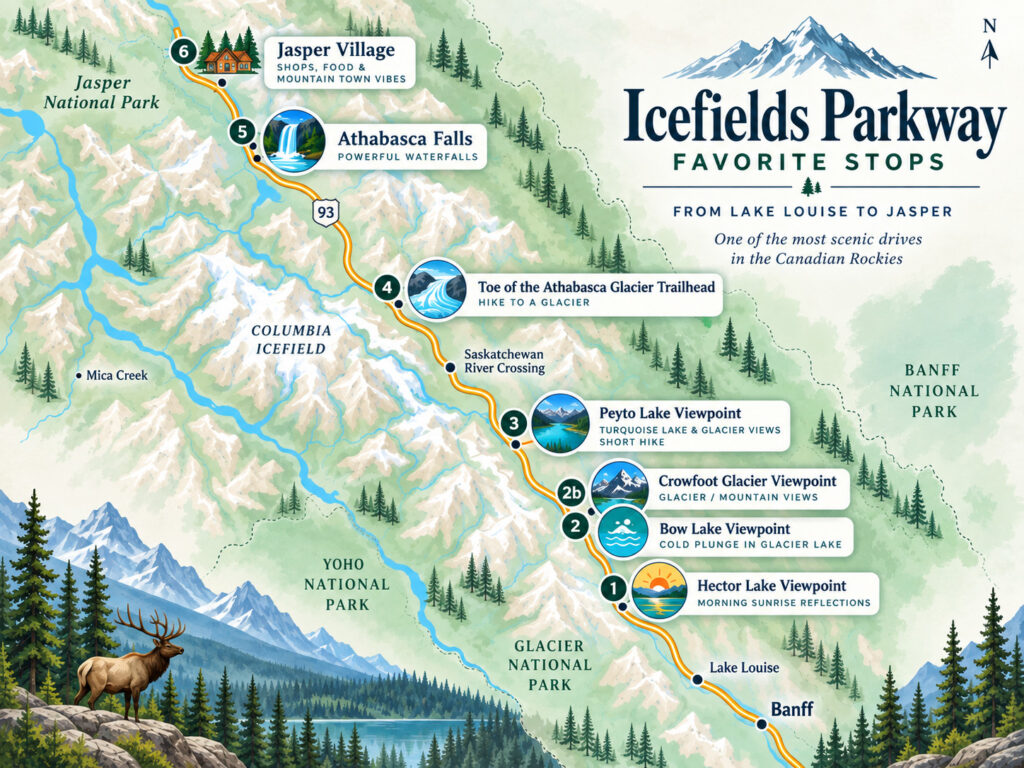
My favorite stops along the Icefields Parkway, from sunrise reflections at Hector Lake and a cold plunge at Bow Lake to glacier views, turquoise Peyto Lake, Athabasca Falls and Jasper Village.
You absolutely don’t need to stop everywhere along the way. These are the places I’d prioritize based on my own drive from quick roadside viewpoints to stops where you’ll want to get out and explore.
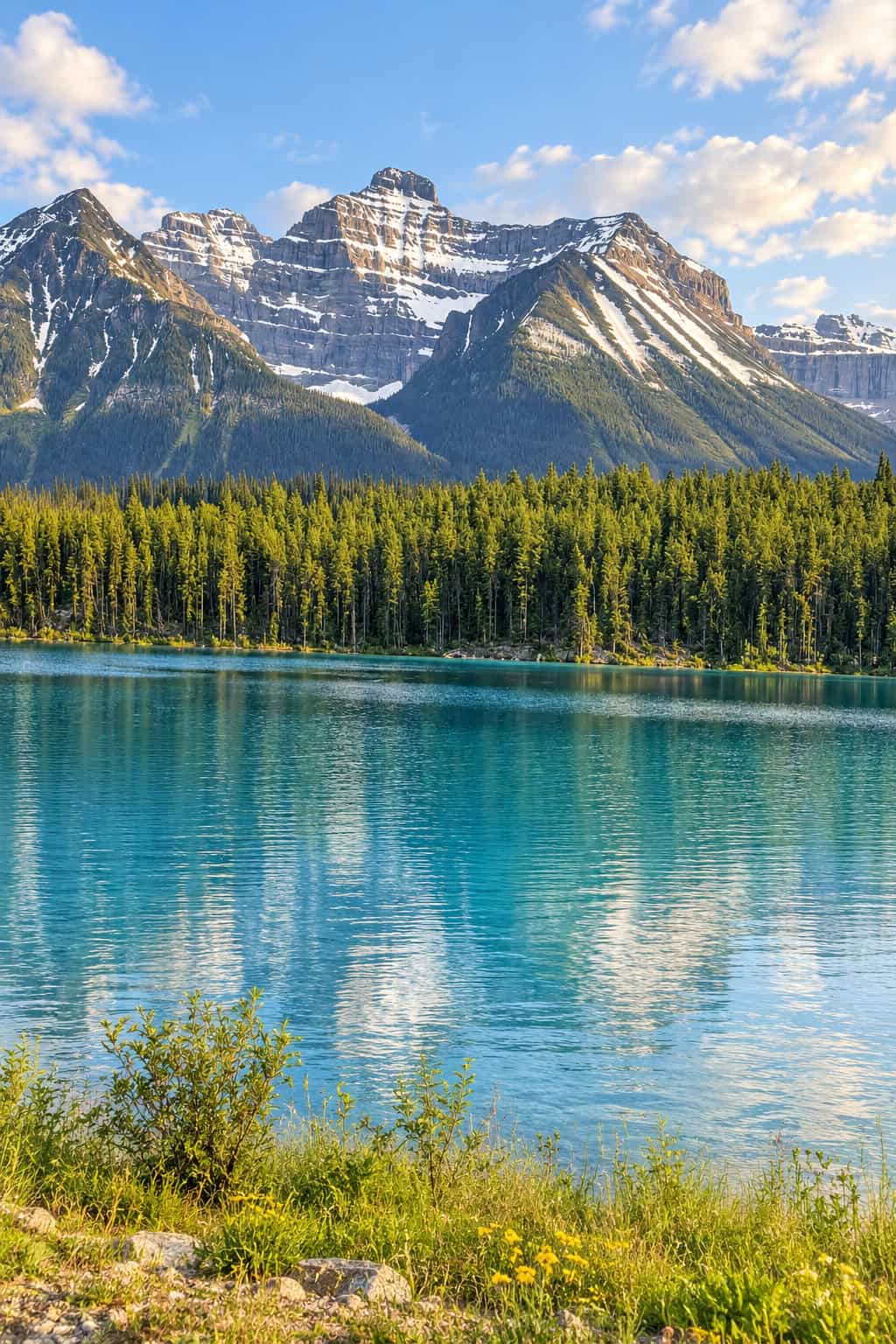
A peaceful morning stop where the early light reflects across Hector Lake, with the mountains mirrored in the water.
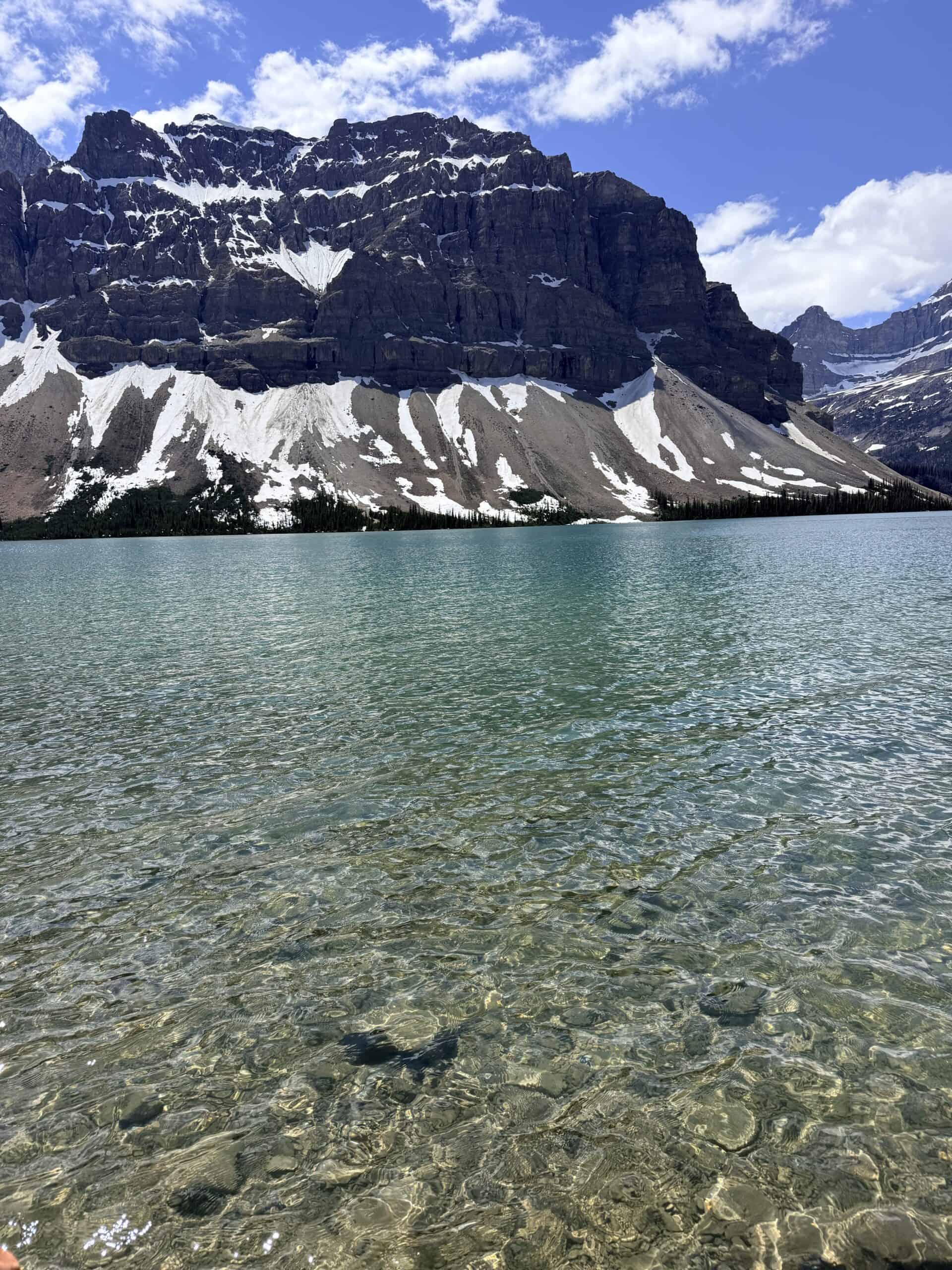
Two incredible stops, just minutes apart. Take time along the lakeshore at Bow Lake (yes, a cold plunge is an option!) and enjoy roadside views of Crowfoot Glacier.
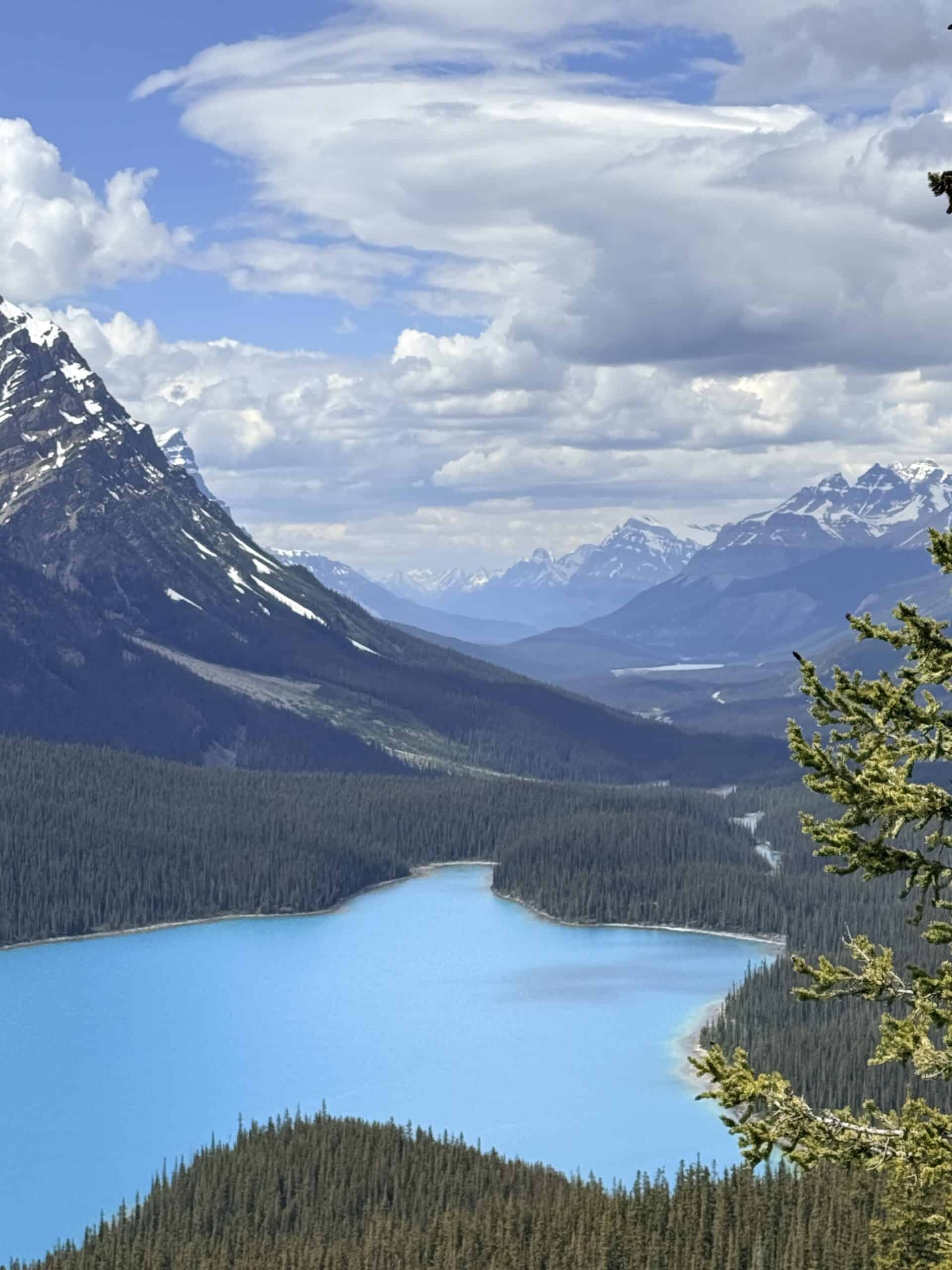
The famous turquoise Peyto Lake is a short hike from the parking lot and the view is unreal. Add extra time to hike farther into the mountains, where I was still walking through snow at the end of June.
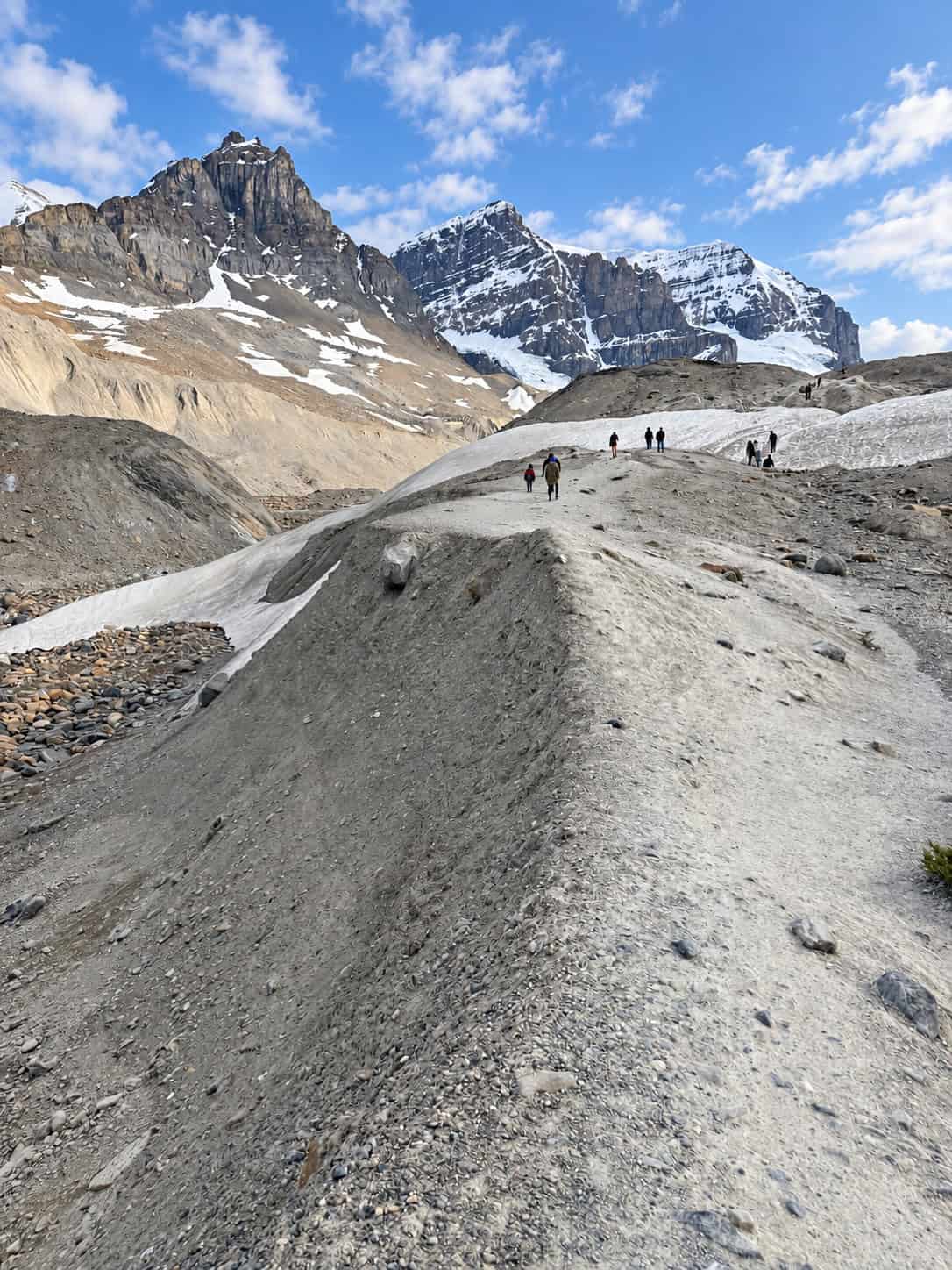
A chance to leave the highway behind and walk toward the toe of one of the Columbia Icefield’s glaciers.
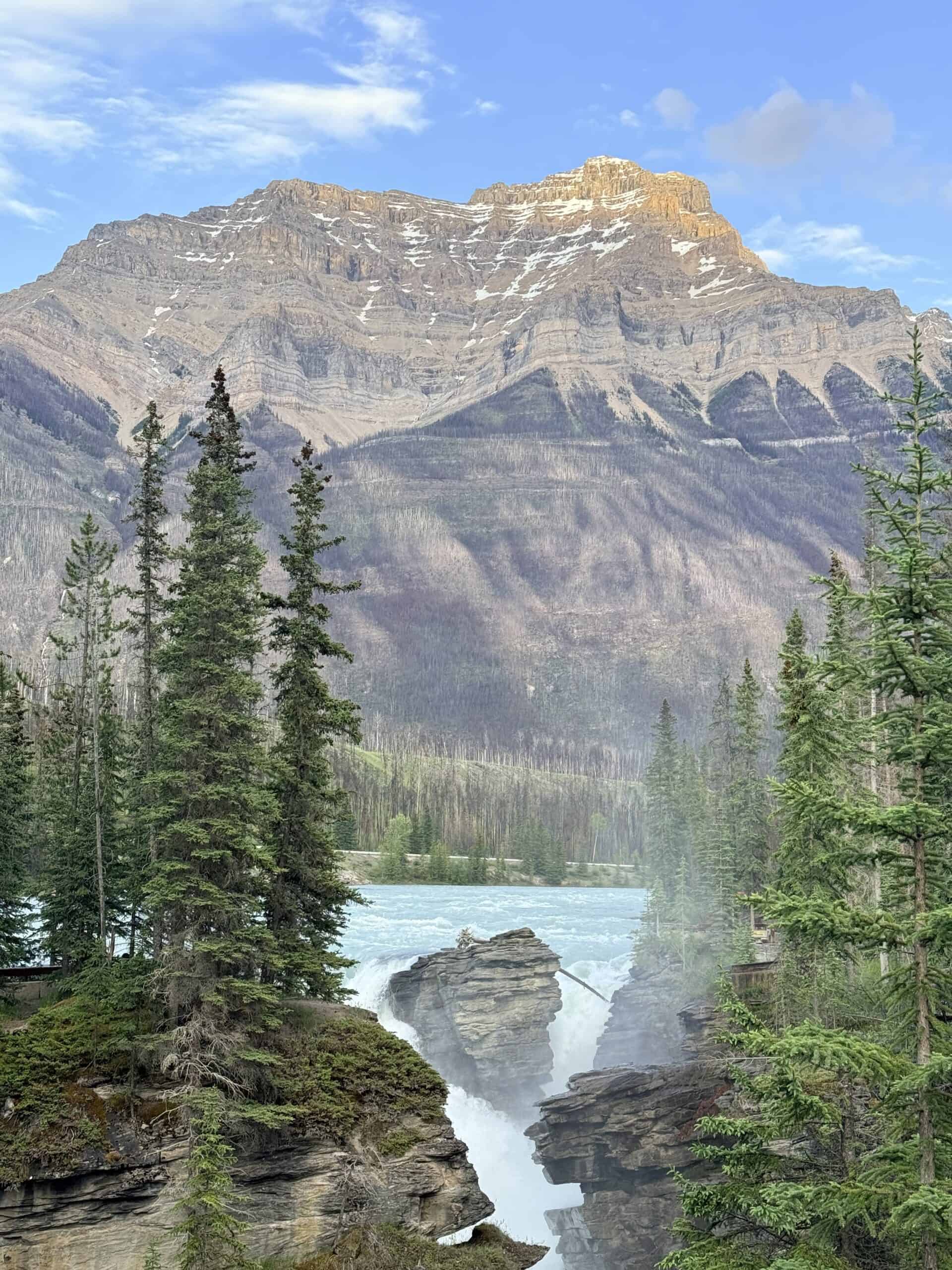
A powerful waterfall and an easy final nature stop before continuing toward Jasper.
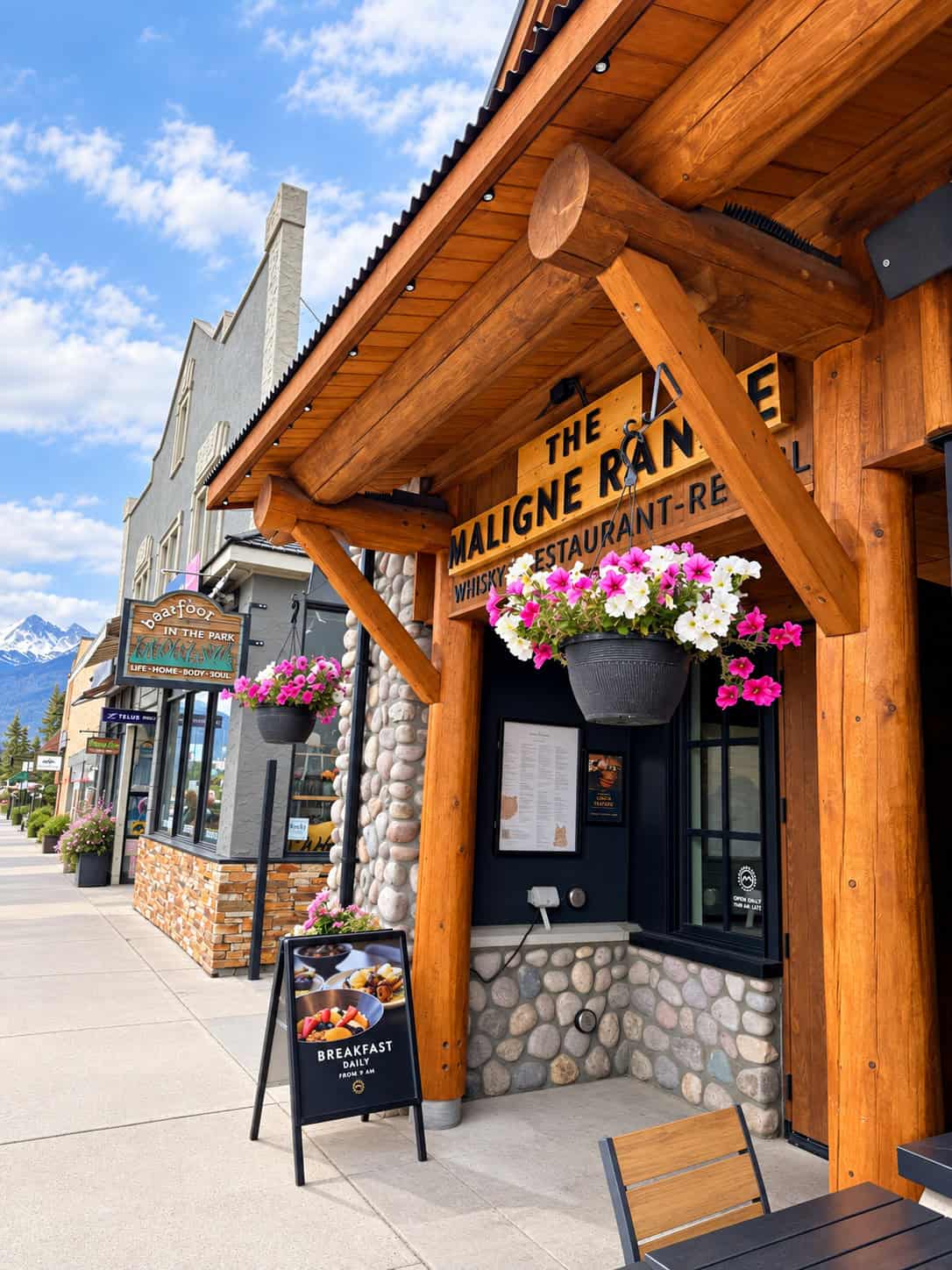
The end of the Icefields Parkway and a pretty great place to finally find food, cell service and civilization again.
My Favourite Icefields Parkway Stops from Banff to Jasper
There are dozens of places where you could stop along the Icefields Parkway, and honestly, part of the fun is pulling over when something catches your eye. But if I were planning this drive again, these are the six stops I’d build my day around.
1. Hector Lake Viewpoint
Hector Lake was one of my first stops of the morning, and the timing made it. The early morning light was reflecting across the lake, with the mountains mirrored in the water.
This is just a quick roadside viewpoint, no hike required. I wouldn’t plan a huge amount of time here, but if you’re driving the Icefields Parkway early in the morning, it’s absolutely worth pulling over.
Suggested time: 10–15 minutes.
2. Bow Lake & Crowfoot Glacier Viewpoint
Crowfoot Glacier and Bow Lake are only minutes apart, so I’d treat them as one stop when planning your day.
Crowfoot Glacier is an easy roadside pullout where you can take in the glacier without adding another hike. Then continue to Bow Lake, where I’d give yourself more time to actually get out and walk along the lakeshore.
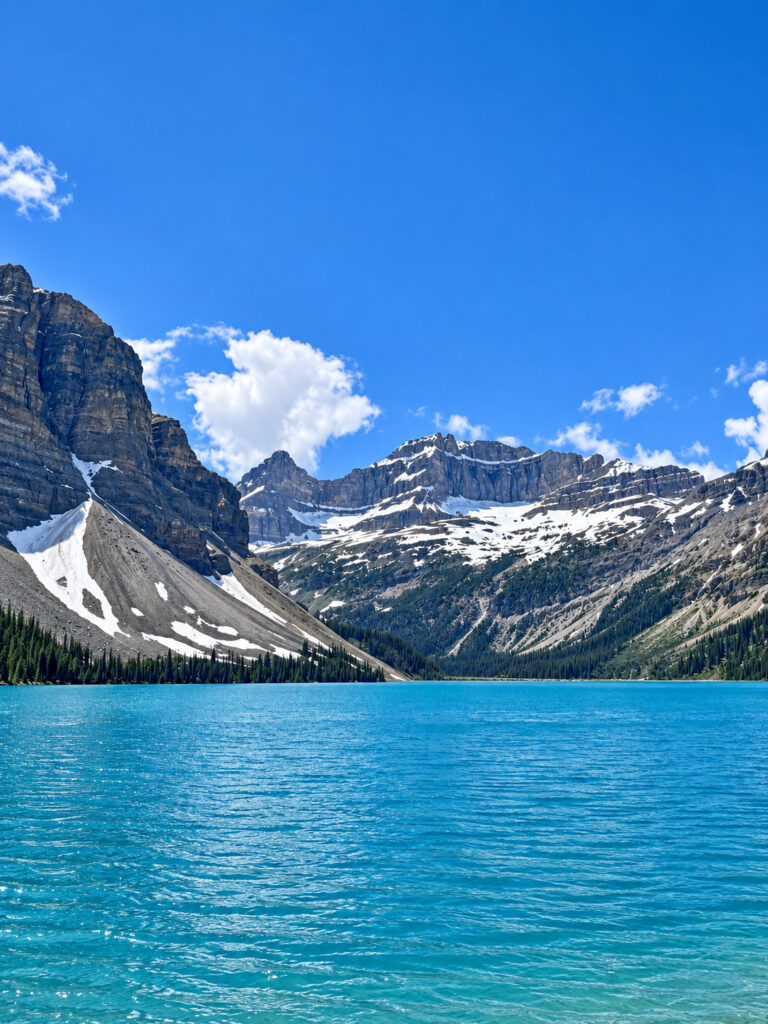
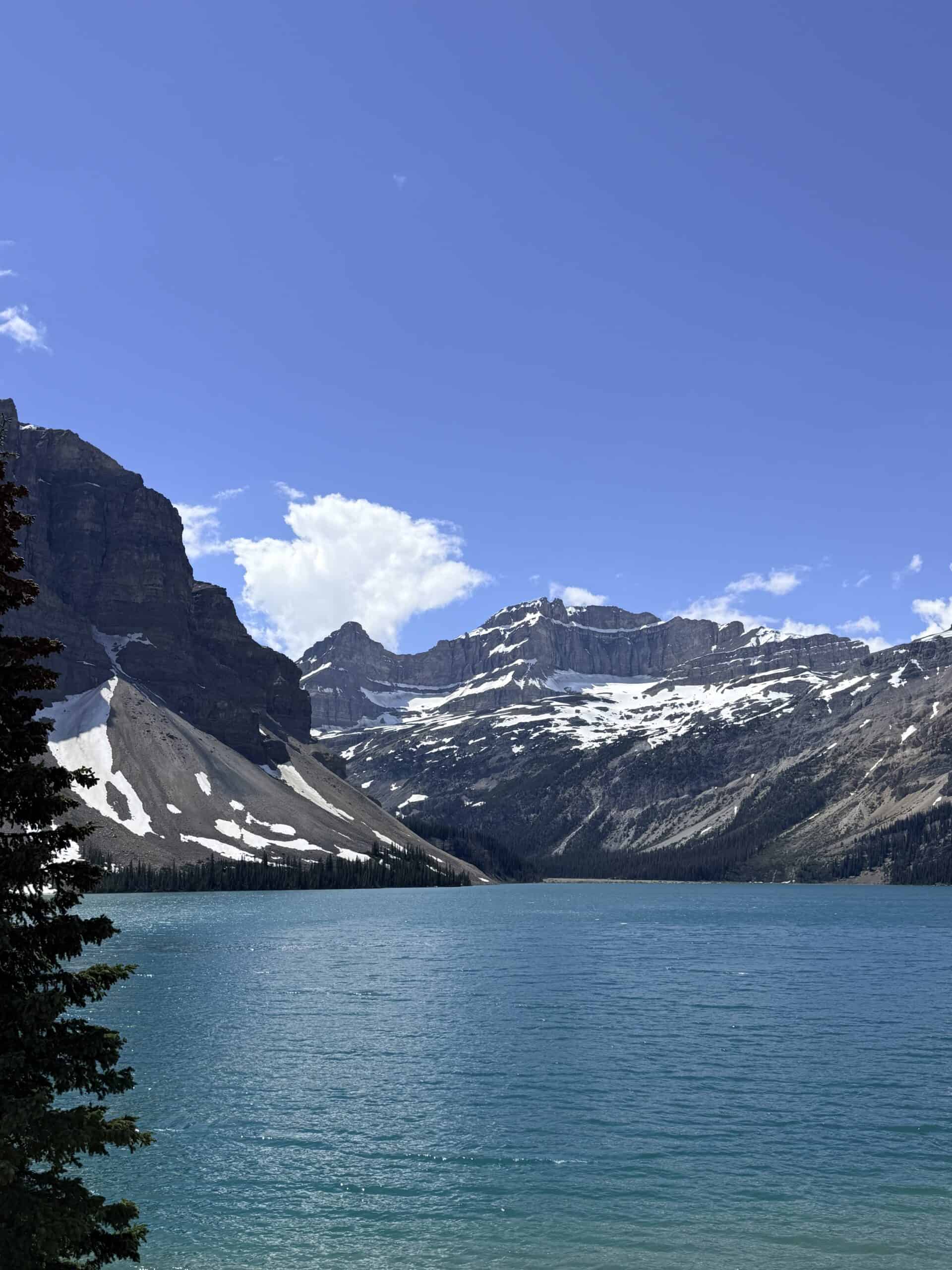
Bow Lake’s turquoise water and rugged mountain backdrop make it one of the most striking roadside stops along the Icefields Parkway.
And this is also where I decided that apparently looking at a glacier-fed lake wasn’t enough, I had to get into it.
I took a cold plunge in Bow Lake, and yes, it was exactly as cold as you would imagine. You definitely do not need to follow my example to enjoy this stop. Even without getting in the water, Bow Lake is somewhere I’d slow down, walk along the shore and just take in the surroundings.
Suggested time: 30–60 minutes.
3. Peyto Lake Viewpoint
Peyto Lake is probably one of the most recognizable views along the Icefields Parkway, that almost unreal turquoise lake surrounded by mountains and glaciers.
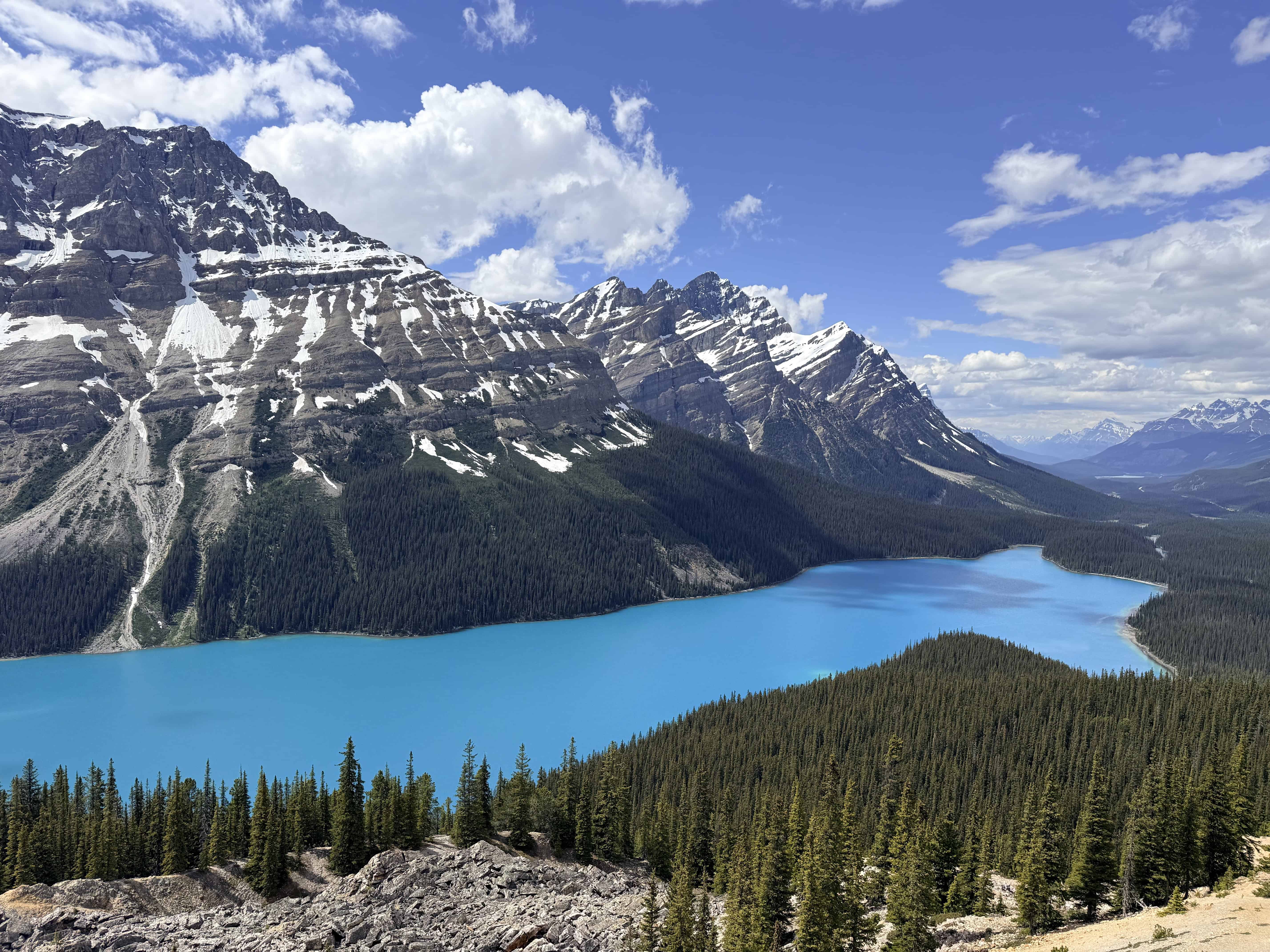
The iconic turquoise waters of Peyto Lake, seen from the viewpoint high above the Icefields Parkway.
The main viewpoint is reached by a relatively short walk from the parking area, and the view is absolutely worth it.
But if you have the time, don’t necessarily turn around there. I continued hiking farther into the mountains, and at the end of June I was still walking through snow higher up on the peaks. It turned a famous viewpoint into much more of an experience.

A snow-covered trail near the Peyto Lake viewpoint, surrounded by the dramatic peaks of the Canadian Rockies.
Suggested time: 30–45 minutes for the main viewpoint, with extra time if you continue hiking.
If you want to spend more time here, my complete Peyto Lake guide covers the viewpoint trail, parking, how long to allow and the simple science behind that incredible turquoise water.
4. Toe of the Athabasca Glacier
This was one of the stops that stayed with me most, not just because of the scenery, but because of what you see as you walk toward the glacier.
From the parking area, you’ll pass signs marking where the toe of the Athabasca Glacier reached in different years. As you keep walking, those markers get farther and farther behind you, and you start to understand just how much the glacier has retreated over the decades.
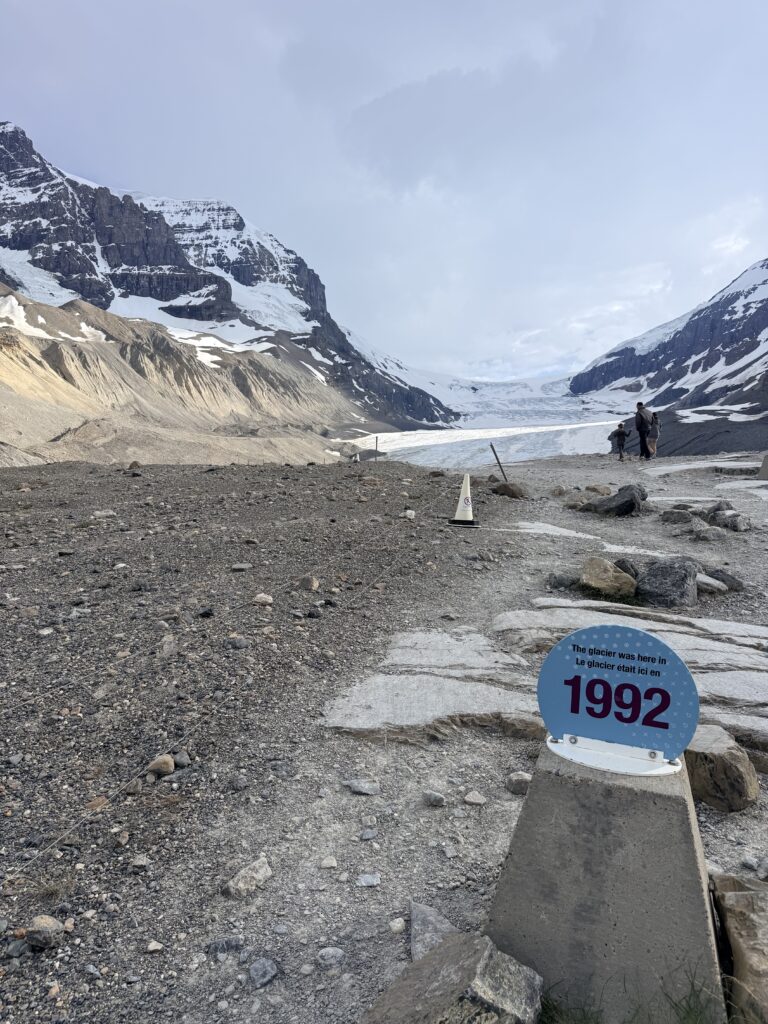
1992 glacier marker showing the former extent of Athabasca Glacier in Jasper National Park, Alberta.
Seeing that distance in person was pretty shocking. We hear about glaciers melting and the effects of climate change all the time, but standing there and physically walking through the space that used to be covered by ice made it feel much more real to me.
And then you finally reach the viewpoint, surrounded by exposed rock, ice and huge mountains. The entire experience gives you a completely different sense of the glacier -both its scale and how much it has changed. You do not need to book a glacier tour to walk to the designated viewing area.
Suggested time: 45–90 minutes, depending on how much you explore.
5. Athabasca Falls
Athabasca Falls was a much quicker stop for me, but I’d still include it on the drive.
This isn’t one of those waterfalls where the impressive part is simply how high it is. It’s the force of the water rushing through the narrow canyon that makes it worth seeing.
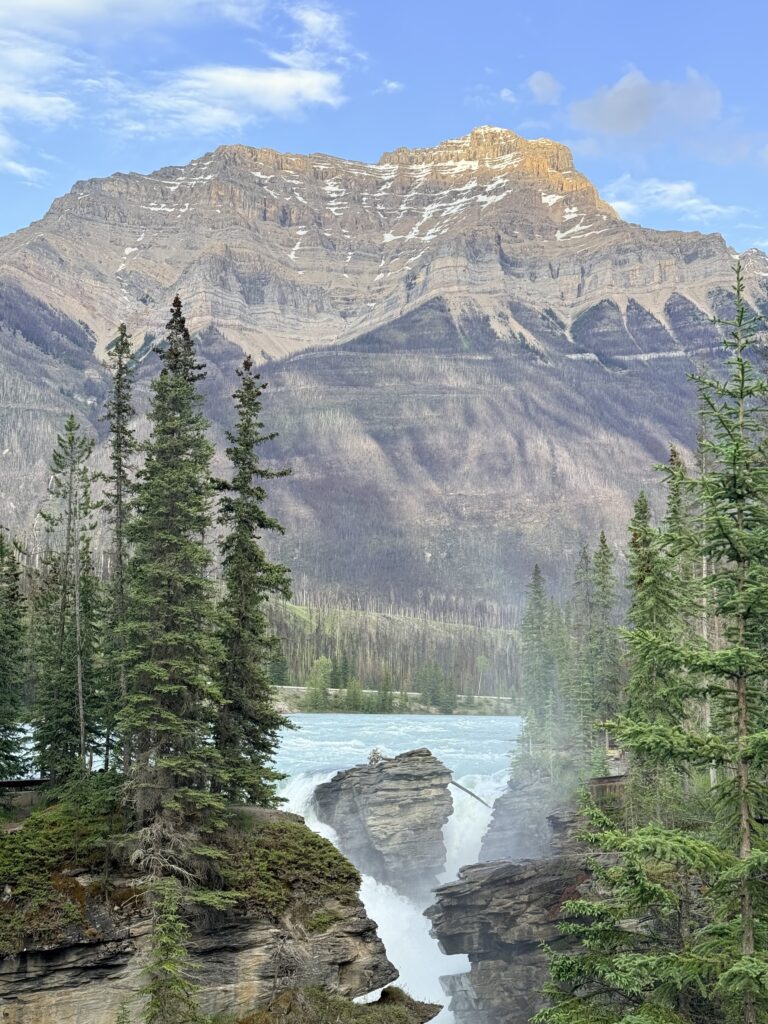
I only stopped briefly, but if you’re planning your own Icefields Parkway itinerary, I’d give yourself enough time to walk around the viewpoints rather than doing the rushed version I did.
Suggested time: 30–45 minutes.
6. Jasper
As you drive the final kilometres of the Icefields Parkway toward Jasper, the landscape starts to change. You’ll notice the impact of the massive 2024 Jasper Wildfire, which burned about 32,700 hectares and destroyed 30% of the structures in the town of Jasper.
It’s honestly pretty striking to drive through. But don’t let it discourage you from visiting Jasper. The community is still rebuilding, but the village is welcoming visitors and still has so much of its mountain-town charm.
I stayed at Whistlers Campground, and it felt completely different from the campgrounds I stayed at in Banff National Park. There’s very little vegetation left in some areas, so the effects of the wildfire are impossible to ignore. But hey – one unexpected upside? There’s not much standing between you and the wapiti anymore. I had some pretty incredible elk encounters around the campground.
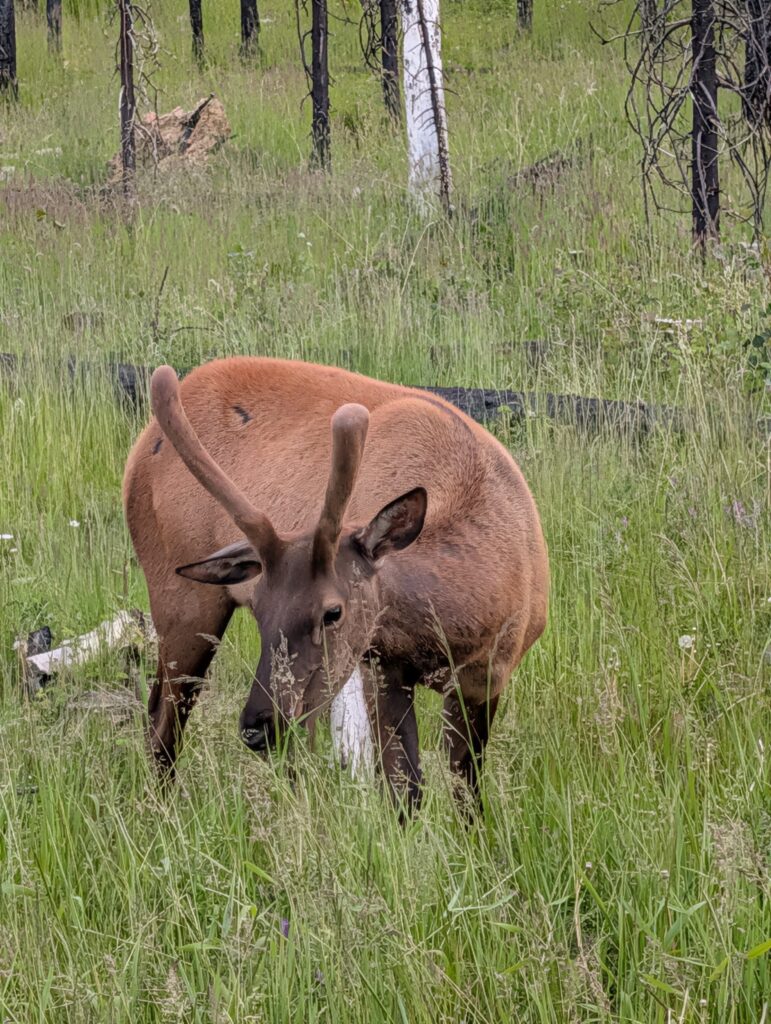

And definitely don’t just arrive in Jasper and call the drive finished. Head into the village, walk around, check out the little shops, grab something to eat and spend some time there. After an entire day surrounded by glaciers, lakes, waterfalls and mountains, Jasper is a pretty special place to end the Icefields Parkway and visiting now is also a way to support a community that is still rebuilding after an incredibly difficult few years.
Other Icefields Parkway Stops Worth Watching For
These six were the stops that stood out most from my drive, but they’re definitely not the only places worth pulling over. One of the best things about the Icefields Parkway is that you don’t need to turn every viewpoint into a scheduled attraction.
Along the way, keep an eye out for Waterfowl Lakes, Howse Pass Viewpoint and Beauty Creek. I stopped at several smaller viewpoints like these throughout the drive, sometimes only for a few minutes. They’re exactly why I recommend leaving some empty space in your itinerary instead of scheduling the day down to the minute.
I’d also add Sunwapta Falls if you have the time. It’s another worthwhile waterfall stop on the northern portion of the Parkway and an easy one to combine with Athabasca Falls as you make your way toward Jasper.
The point isn’t to stop at every single pullout. Choose your must-sees, then leave enough room to stop when the landscape makes you want to. That was a huge part of what made this drive so special for me.
Wildlife Encounters Along the Icefields Parkway
This is something else that really stayed with me from the Icefields Parkway. You can plan your lakes, viewpoints and hikes, but wildlife is the part you can’t schedule.
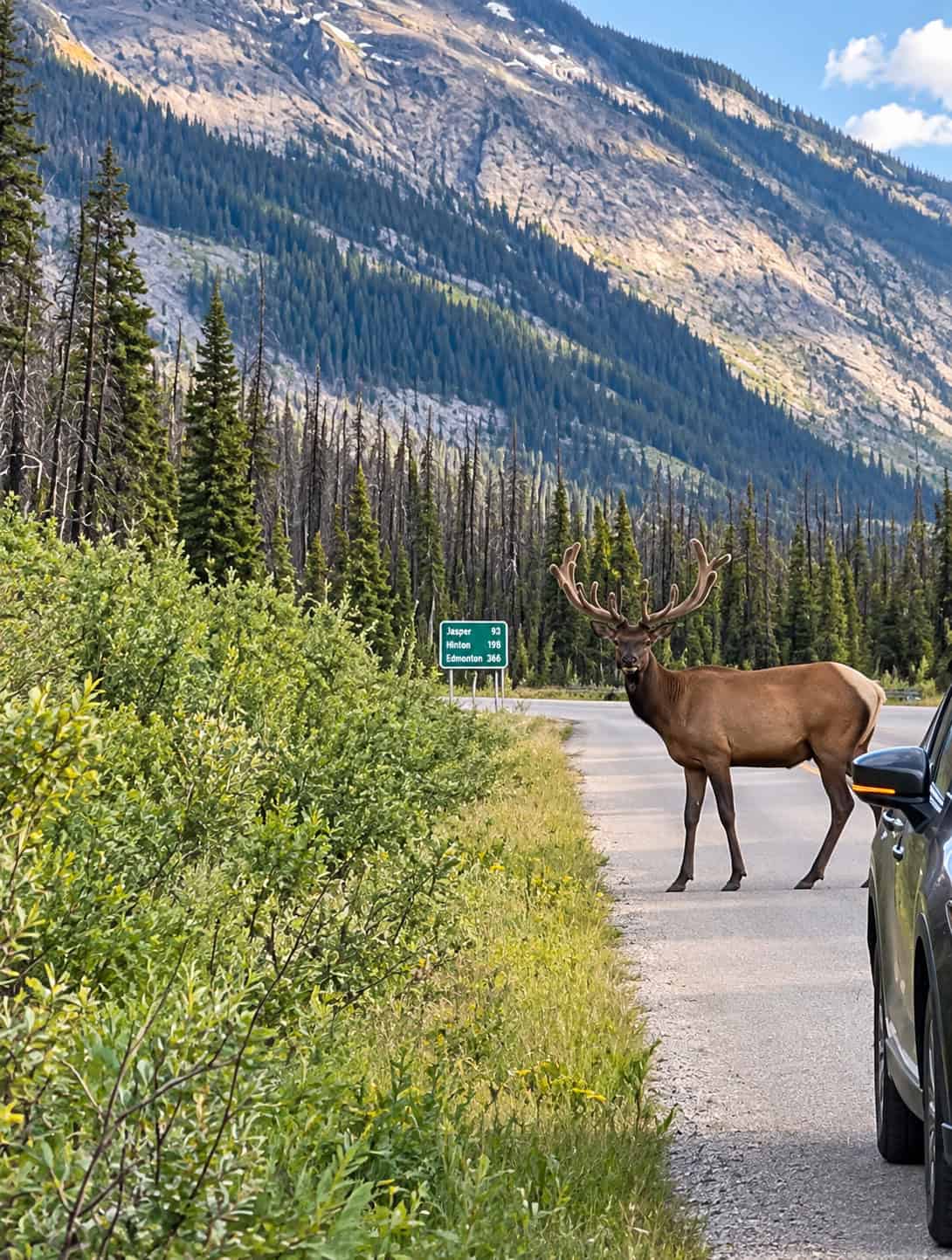
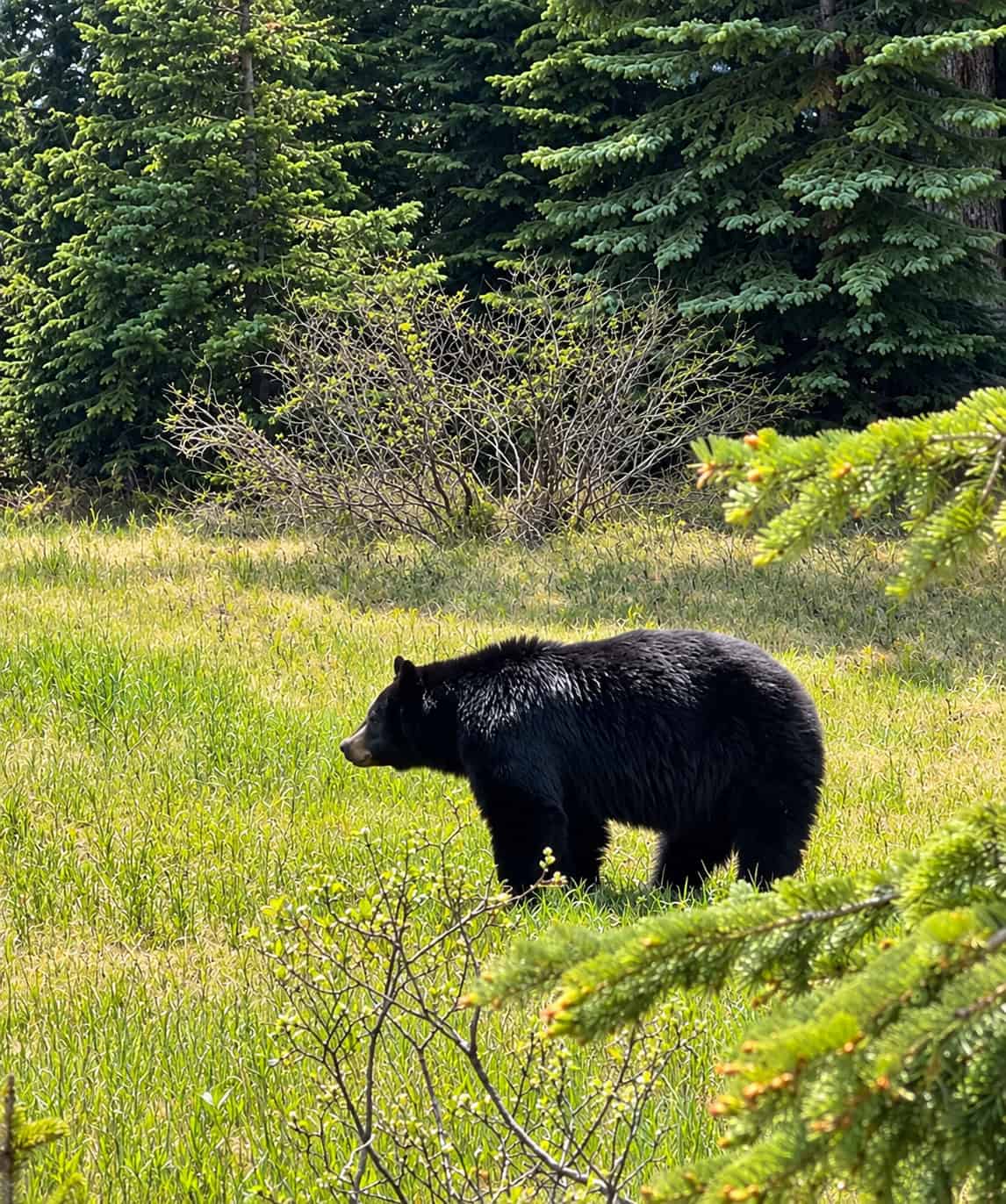
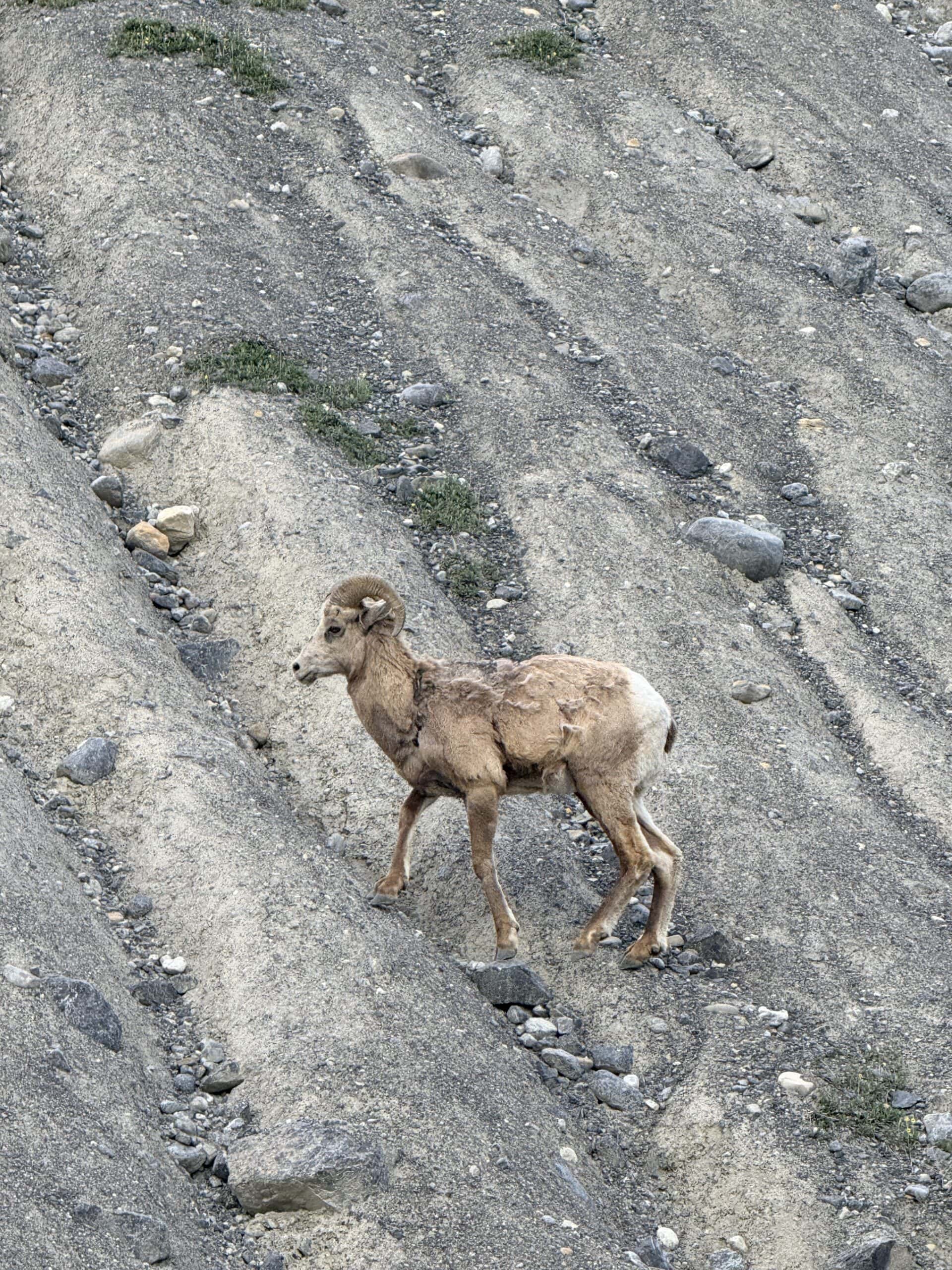
And I swear, this might be one of the only highways where traffic randomly slows down because everyone has spotted wildlife on the side of the road. Black bears, grizzlies, wapiti (elk) and bighorn sheep are just some of the animals you might encounter as you drive through the Rockies.
Some of my favourite moments happened completely unexpectedly – driving along, spotting something in the distance and realizing there was a bear or a herd of wapiti just going about their day beside the highway.
If you do spot wildlife, slow down, give them plenty of space and never approach or disturb them. And of course, have your camera ready. These are wild animals, and we’re the ones travelling through their home.
Here are a few of my favourite wildlife encounters from my own drive along the Icefields Parkway.
Icefields Parkway FAQs
How much time do you need for the Icefields Parkway?
Technically, you can drive the Icefields Parkway much faster than the itinerary in this guide but that really misses the point.
If you want to stop at the lakes, walk to viewpoints, see the Athabasca Glacier, watch for wildlife and actually enjoy the drive, I recommend giving yourself a full day.
I drove it as a one-way sightseeing day toward Jasper, combining roadside stops, hiking, a cold plunge at Bow Lake and plenty of spontaneous stops along the way. Your day could look completely different depending on what interests you most.
If you want to include a longer hike, I’d choose fewer stops rather than trying to squeeze everything in. The Icefields Parkway is one of those places where you really don’t want to spend the entire day checking the time.
Which Icefields Parkway stops should I prioritize if I have less time?
If I had to narrow my drive down, I would prioritize Bow Lake, Peyto Lake and the Athabasca Glacier area. They each give you a completely different experience – lakeshore, elevated mountain views and a chance to get much closer to one of the glaciers that defines this landscape.
If you’re continuing to Jasper, I’d add Athabasca Falls if time allows but don’t completely eliminate the spontaneous roadside stops. Some of my favourite moments from this drive weren’t planned at all.
Do you need to hike to enjoy the Icefields Parkway?
Not at all. That’s actually one of the things I loved about this drive. You can experience some incredible scenery simply by pulling into a viewpoint, while other stops let you walk or hike farther into the mountains.
Hector Lake and Crowfoot Glacier can be very quick stops. Bow Lake lets you wander along the shore, while Peyto Lake and the Athabasca Glacier area involve more walking.
You can make this as active or as relaxed as you want.
Can you see the Athabasca Glacier without booking a tour?
Yes. You can visit the designated viewing area and walk toward the toe of the Athabasca Glacier without booking an excursion onto the ice.
What was the Icefields Parkway like at the end of June?
I drove it at the end of June, and one of the things that surprised me was how much conditions changed with elevation.
At lake level, it felt like summer. Higher into the mountains, I was still walking through snow near Peyto Lake. That’s the Rockies for you.
Bring layers, comfortable shoes and a rain jacket even if the weather looks beautiful when you leave Banff. Conditions can vary significantly throughout the day and from one elevation to another.
Do you need a Parks Canada pass to drive the Icefields Parkway?
The Icefields Parkway runs through Banff and Jasper national parks, so normally you’ll need appropriate Parks Canada admission.
There was one important exception during my own 2026 trip: Parks Canada offered free admission from June 19 through September 7, 2026 as part of the Canada Strong Pass. That promotion has now ended, and regular admission fees resumed September 8, 2026.
Because admission programs can change, check Parks Canada admission and passes when planning your own trip.
Should I check road conditions before driving?
Absolutely. Mountain conditions can change, and closures can affect your plans.
Before leaving, I recommend checking both the Parks Canada Icefields Parkway guide and Alberta 511 for current road information. Parks Canada specifically directs drivers to Alberta 511 for provincial highway conditions.
Is there cell service on the Icefields Parkway?
This was honestly part of what made the drive feel so wild to me: there is no cell service along the Icefields Parkway. Parks Canada specifically warns visitors about the lack of coverage.
Download your maps before leaving, save your stops offline and screenshot anything important – campground information, reservations, directions and your planned viewpoints.
Then enjoy being unreachable for a while. Where do you even find that anymore?
What should I bring for an Icefields Parkway day trip?
I wouldn’t overcomplicate it. Bring water, lunch and snacks, comfortable walking shoes, warm layers, a rain jacket, sun protection, offline maps and a charged phone or power bank.
If you’re looking for a portable charger, my travel tech essentials guide includes the power bank I use for road trips and days away from an outlet.
If you’re hiking, bring the appropriate hiking equipment for your trail and conditions, including bear spray and knowing how to use it.
Most importantly, don’t plan your day assuming you’ll simply stop somewhere whenever you’re hungry. I much preferred having food with me and being able to stop when I found somewhere beautiful.
What about gas or EV charging on the Icefields Parkway?
Plan this before you start driving.
I drove across Canada in my Mustang Mach-E, so charging was already a normal part of my road-trip planning. On a remote drive like the Icefields Parkway, I definitely wouldn’t leave your fuel or battery strategy until the last minute.
If you’re doing this trip in an EV, make sure you know where you’re charging before and after the Parkway and give yourself a comfortable battery buffer.
I learned a lot about this over two months on the road, which I share in my 10 Lessons Learned From My Road Trip Across Canada in an EV.
Can you drive the Icefields Parkway from Jasper to Banff instead?
Absolutely. You can reverse this entire itinerary and drive south from Jasper toward Lake Louise and Banff.
The experience will obviously unfold in the opposite order, but you aren’t missing the Parkway by driving it in that direction. Check current access and road conditions before leaving and make sure you’re entering viewpoints and pullouts safely from your direction of travel.
Is the Icefields Parkway worth driving?
For me, the Icefields Parkway was one of the most memorable drives of my entire two-month road trip across Canada.
It wasn’t just Peyto Lake or the glaciers or any single viewpoint. It was the combination of everything – losing cell service, pulling over because someone spotted a bear, walking through snow at the end of June, jumping into Bow Lake, seeing how far the Athabasca Glacier has retreated and watching the landscape change again as I approached Jasper.
Final Thoughts on Driving the Icefields Parkway
I’ve driven a lot of roads across Canada, but the Icefields Parkway is one of those experiences that genuinely stayed with me.
Yes, the lakes are ridiculously blue. The glaciers are massive. The mountains somehow keep getting more dramatic around every corner. It’s also a drive that makes you realize just how small you are out there. For 232 kilometres, nature is very much in charge and with barely any cell service, there isn’t much competing for your attention.
So plan your must-see stops, download your maps and give yourself the full day. But leave some room for the unexpected. Pull over when something catches your eye. Stay a little longer when you don’t feel ready to leave. Don’t rush to Jasper just because your GPS tells you when you’ll arrive.
The Icefields Parkway isn’t a road you take simply to get from Banff to Jasper.
It’s the kind of road that reminds you why you wanted to travel in the first place.
The Icefields Parkway was one section of my much bigger journey across the country – you can see how it fit into my complete Quebec-to-Vancouver Canada road trip itinerary.