

Getting Around Lisbon: A First-Timer’s Guide
Getting around Lisbon is relatively easy once you understand how its public transportation works. Between the metro, trams, buses, trains, and ride-sharing apps, you can explore most of the city without renting a car.
During my month in Portugal, I stayed in Cascais and regularly travelled into Lisbon by train. I spent hours walking through Baixa, Chiado, and Alfama, but quickly learned that Lisbon’s hills can turn a short walk into quite the workout!
Here’s everything you need to know about getting around Lisbon, from transport tickets and costs to the easiest ways to explore each neighbourhood.
This post contains affiliate links. If you make a booking or purchase through one of these links, I may earn a small commission at no additional cost to you. Your support helps me continue creating honest, firsthand travel guides—thank you! Read my full affiliate disclosure for more information.
What’s the Best Way to Get Around Lisbon?
The best way to explore Lisbon is by combining walking with public transportation. Most of the historic neighbourhoods are enjoyable on foot, but the metro, buses, and trams make longer journeys and steep climbs easier.
Here’s a quick breakdown:
| Transportation | Best for |
|---|---|
| Walking | Baixa, Chiado, Alfama, historic streets |
| Metro | Longer journeys and airport transfers |
| Trams | Historic routes and travelling to Belém |
| Buses | Neighbourhoods not directly served by metro |
| Uber or Bolt | Hills, luggage, late evenings |
| Trains | Cascais, Sintra, and coastal day trips |
My recommendation is to explore one neighbourhood at a time rather than constantly travelling across the city.

For a ready-made route, check out my 3 days in Lisbon itinerary, which groups nearby attractions together.
Walking Around Lisbon: Expect Hills!
Lisbon is one of those cities where walking is part of the experience. Between colourful tiled buildings, narrow cobblestone streets, and viewpoints overlooking the Tagus River, there is plenty to discover along the way.
However, the terrain changes considerably between neighbourhoods.
Baixa is relatively flat and ideal for walking. Chiado sits higher up, while Alfama and Graça involve steep streets and staircases.

I absolutely loved exploring Alfama. I spent hours wandering through its narrow streets and lingering at Miradouro de Santa Luzia, one of my favourite viewpoints in Lisbon. My guide to Lisbon’s best viewpoints groups scenic stops into walks you can enjoy without repeatedly crossing the city.
A few practical tips:
- Wear comfortable shoes with good grip. The polished cobblestones can be slippery.
- Check elevation on Google Maps before deciding to walk.
- Take transportation uphill and explore downhill whenever practical.
- Group nearby attractions to avoid unnecessary climbing.
If you’re planning to explore this part of the city, my guide to things to do in Alfama covers my favourite discoveries.
Lisbon Public Transportation Tickets and Prices
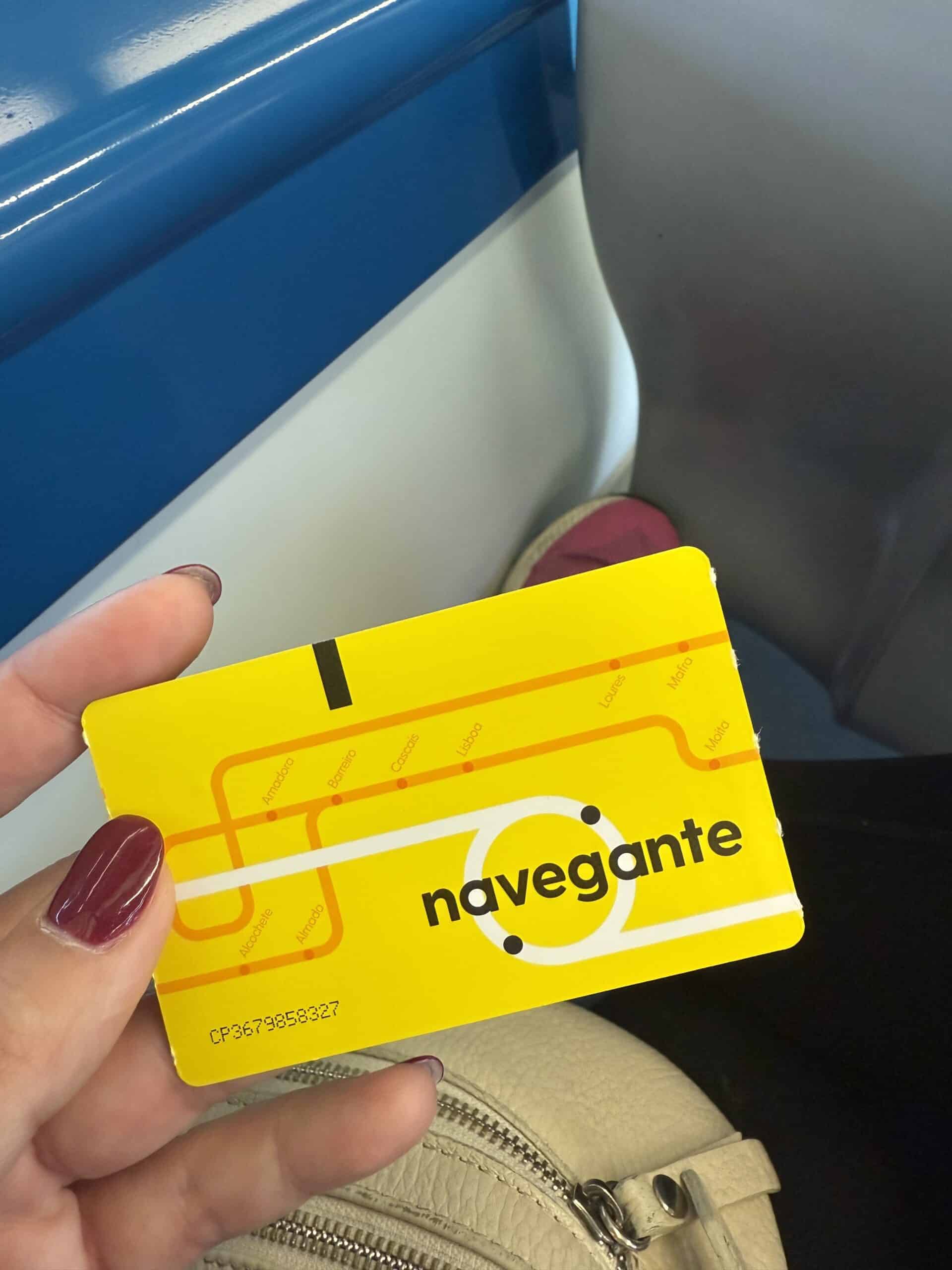
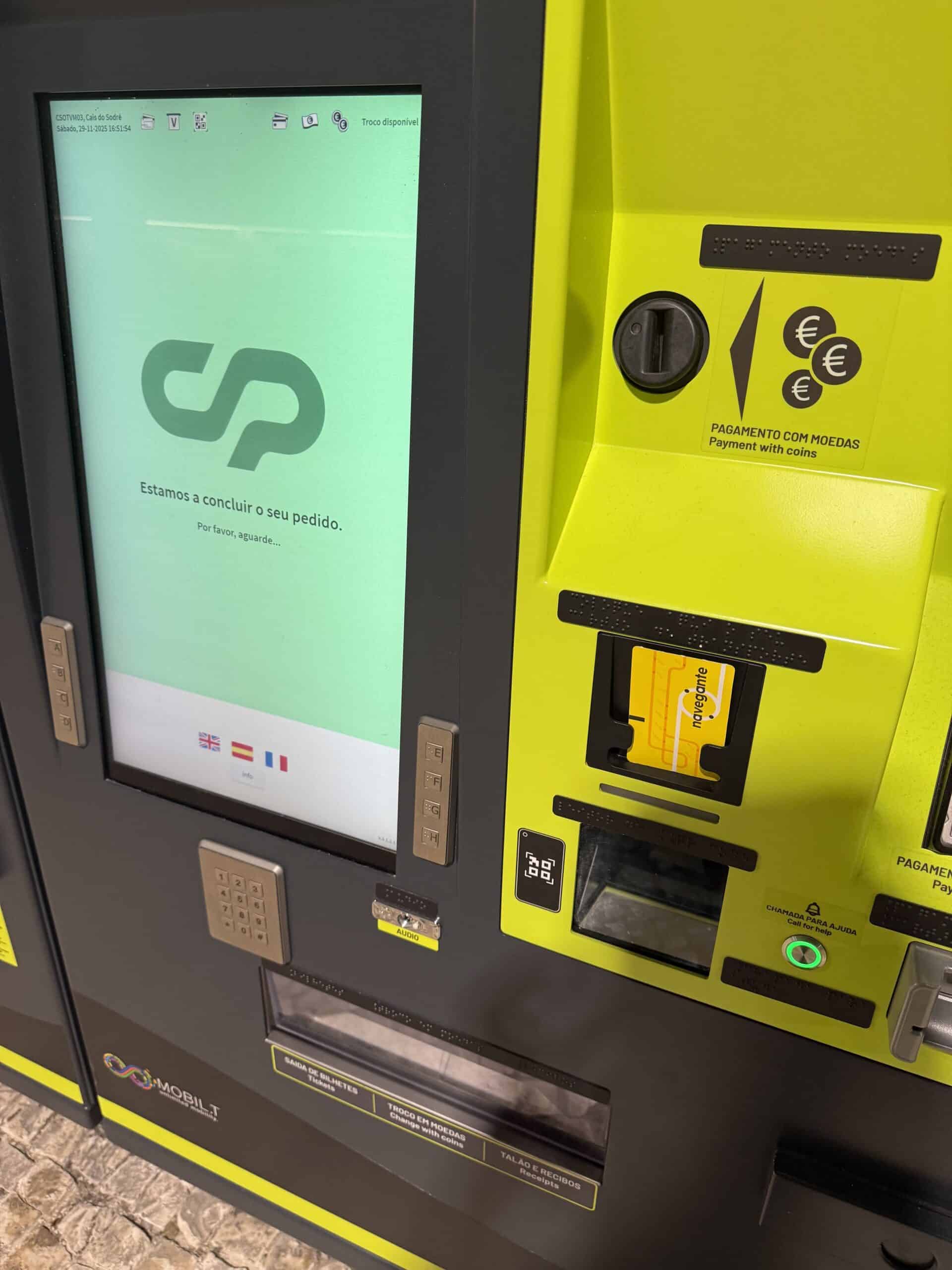
Lisbon uses a rechargeable card called navegante occasional. The card costs €0.50, and each traveller needs their own. You can purchase it at metro station ticket machines and load it with individual tickets, prepaid credit, or a 24-hour pass.
Lisbon Transport Prices in 2026
| Ticket or payment method | Price | When to choose it |
|---|---|---|
| Navegante occasional card | €0.50 | The reusable card you buy first. Load it with zapping credit, single tickets, or a 24-hour pass. The card itself doesn’t include any rides. |
| Single ticket (Carris/Metro) | €1.90 | Load onto your navegante card for occasional bus, tram, or metro journeys. |
| Zapping (prepaid credit) | €1.72 per metro ride | Load money onto your navegante card. Each journey is deducted from your balance. Ideal for a few rides throughout your stay. Fares vary by operator. |
| 24-hour Carris/Metro pass | €7.25 | Load onto your navegante card for unlimited travel on Carris buses, trams, and the metro for 24 hours. Best for busy sightseeing days. |
| 24-hour Carris/Metro/CP pass | €11.40 | Load onto your navegante card. Includes Carris, metro, and covered CP urban trains, including Cascais and Sintra. Worth considering when combining train travel with city sightseeing. |
| Contactless bank card | €1.92 per metro ride | Tap your bank card directly at metro gates. No navegante card required. Best for occasional metro journeys. |
Prices checked November 10, 2026. Verify current fares on the Lisbon Metro and Carris websites.
Which Lisbon Transport Ticket Should You Choose?
For most first-time visitors, I’d recommend buying a €0.50 navegante occasional card and loading it with zapping credit. It’s a flexible, pay-as-you-go option if you’re planning to walk around Lisbon and occasionally use public transportation.
However, the best option depends on your plans:
- A few rides throughout your stay: Choose zapping. Load prepaid credit onto your navegante card, and the fare is deducted each time you travel.
- A busy sightseeing day: Consider the €7.25 Carris/Metro 24-hour pass. Five metro journeys using zapping would cost €8.60, making the daily pass better value. It’s valid for 24 hours from your first use, not just until midnight.
- Only one or two metro rides: Pay directly with a contactless bank card. No navegante card required.
- Visiting Cascais or Sintra: Compare the regular train fare with the €11.40 Carris/Metro/CP 24-hour pass, which includes covered CP urban trains alongside city transportation.
Good to know: Each traveller needs their own navegante card. You can load it with zapping credit, individual tickets, or a 24-hour pass, but you generally need to use your existing ticket or credit before switching to another type.
Is the Lisboa Card Worth It?
The Lisboa Card is different from a regular transportation card. It combines public transportation with free or discounted admission to selected attractions.
It can be worthwhile if you’re planning several paid attractions over a short visit, but I wouldn’t recommend buying it before planning your itinerary.
Compare the cost of the attractions you actually want to visit, check their opening days, and consider how much you’ll use public transportation. If you prefer exploring neighbourhoods, viewpoints, and cafés, regular transport tickets may be sufficient.
For more practical advice, including why buying the Lisboa Card too early can be a mistake, read my guide to 10 mistakes to avoid in Lisbon on your first visit.
Getting Around Lisbon by Metro
The metro is one of the easiest ways to travel longer distances across Lisbon.
It has four colour-coded lines:
- Blue: Serves locations including Baixa-Chiado, Restauradores, and Marquês de Pombal.
- Green: Connects Cais do Sodré, Rossio, Baixa-Chiado, and other stops.
- Yellow: Useful for travelling through central and northern Lisbon.
- Red: Connects Lisbon Airport with the metro network.
The metro normally operates from 6:30 a.m. to 1 a.m. daily. You can pay using your navegante card or a supported contactless bank card directly at the gates. If paying with a bank card, remember to use the same card or device when entering and exiting.
The metro is convenient, but it won’t take you everywhere. Historic Alfama, many viewpoints, and Belém require additional walking or another mode of transport.
Check the official Lisbon Metro website for maps and operating updates.
Taking Lisbon’s Famous Trams
Lisbon’s yellow trams are almost as famous as the city’s viewpoints. They’re part of the public transportation network, but certain routes have become tourist attractions in their own right.
Is Tram 28 Worth Taking?
Tram 28 travels through several historic parts of Lisbon, including areas around Graça, Alfama, and Chiado.

It’s a scenic experience, but it’s also popular, and queues can be long.
My advice? Don’t plan your entire day around riding Tram 28.
You can enjoy the atmosphere of Lisbon’s historic streets without necessarily boarding the tram. If you do want the experience, try travelling outside the busiest sightseeing hours.
Keep your belongings secure on crowded services and check the Tram 28E route before visiting.
How to Get to Belém
Belém is located west of Lisbon’s historic centre and isn’t served by the metro.
Two practical options are:
- Tram 15E: Connects central Lisbon with Belém.
- CP train: Departs Cais do Sodré, with services stopping at Belém.
The best option depends on where you’re staying. Once you arrive, you can explore Jerónimos Monastery, Belém Tower, and the waterfront on foot.
Lisbon’s Funiculars and Santa Justa Lift
Lisbon is known for its historic funiculars, designed to help passengers navigate steep streets. The best known include Elevador da Glória, Elevador da Bica, Elevador do Lavra, and Santa Justa Lift.

Important 2026 update: As of November 10, Carris listed its historic funiculars and Santa Justa Lift as temporarily out of service while testing was underway.
Check the official Carris service notice before planning around any of these routes.
Getting from Lisbon Airport to the City Centre
Lisbon Airport is connected to the city’s metro network, making it relatively straightforward to reach your accommodation.
Option 1: Metro
The airport station is on the red line. Depending on your destination, you’ll likely need to transfer to another line. This is generally the most economical option if you’re travelling light and arriving during metro operating hours.
Option 2: Uber or Bolt
Both apps operate in Lisbon and can be convenient when arriving with luggage. Check the price in the app before booking, as fares vary depending on traffic and demand.
Option 3: Taxi
Official taxis are available at the airport.
They can be convenient, particularly if you prefer not to use an app. Confirm the payment options and make sure the meter is operating.
My recommendation: Before choosing your transport, check the actual walking route to your accommodation. Some hotels and apartments in Alfama and other historic neighbourhoods are located on steep or pedestrian-only streets.
If you’re still deciding where to book, my guide to where to stay in Lisbon compares the best areas for first-time visitors.
Using Uber or Bolt in Lisbon
Uber and Bolt are convenient alternatives to public transportation in Lisbon, especially when dealing with steep hills, luggage, or longer journeys.
I recommend downloading both apps. I kept both on my phone throughout my stay because driver availability and prices varied between them.
From my experience, Bolt was often cheaper than Uber, although it usually took a little longer to find a driver. It’s worth comparing both apps before booking to get the best combination of price and waiting time.
One thing to keep in mind: Lisbon’s narrow streets and pedestrian areas sometimes mean walking a short distance to meet your driver.
Taking the Train from Lisbon to Cascais and Sintra
One of Lisbon’s biggest advantages is how easy it is to explore nearby destinations without renting a car. I spent an entire month based in Cascais, using public transportation to explore Lisbon and the surrounding region.
Lisbon to Cascais
Departure: Cais do Sodré station
Journey : Approximately 40 minutes under normal service
Cascais is an easy coastal escape with beaches, charming streets, cafés, and waterfront walking paths. This was the route I regularly used while staying in Cascais. I loved having the ocean as my everyday backdrop while still being able to explore Lisbon.

If you have extra time, my favourite things to do in Cascais covers the places I enjoyed most during my stay.
Lisbon to Sintra
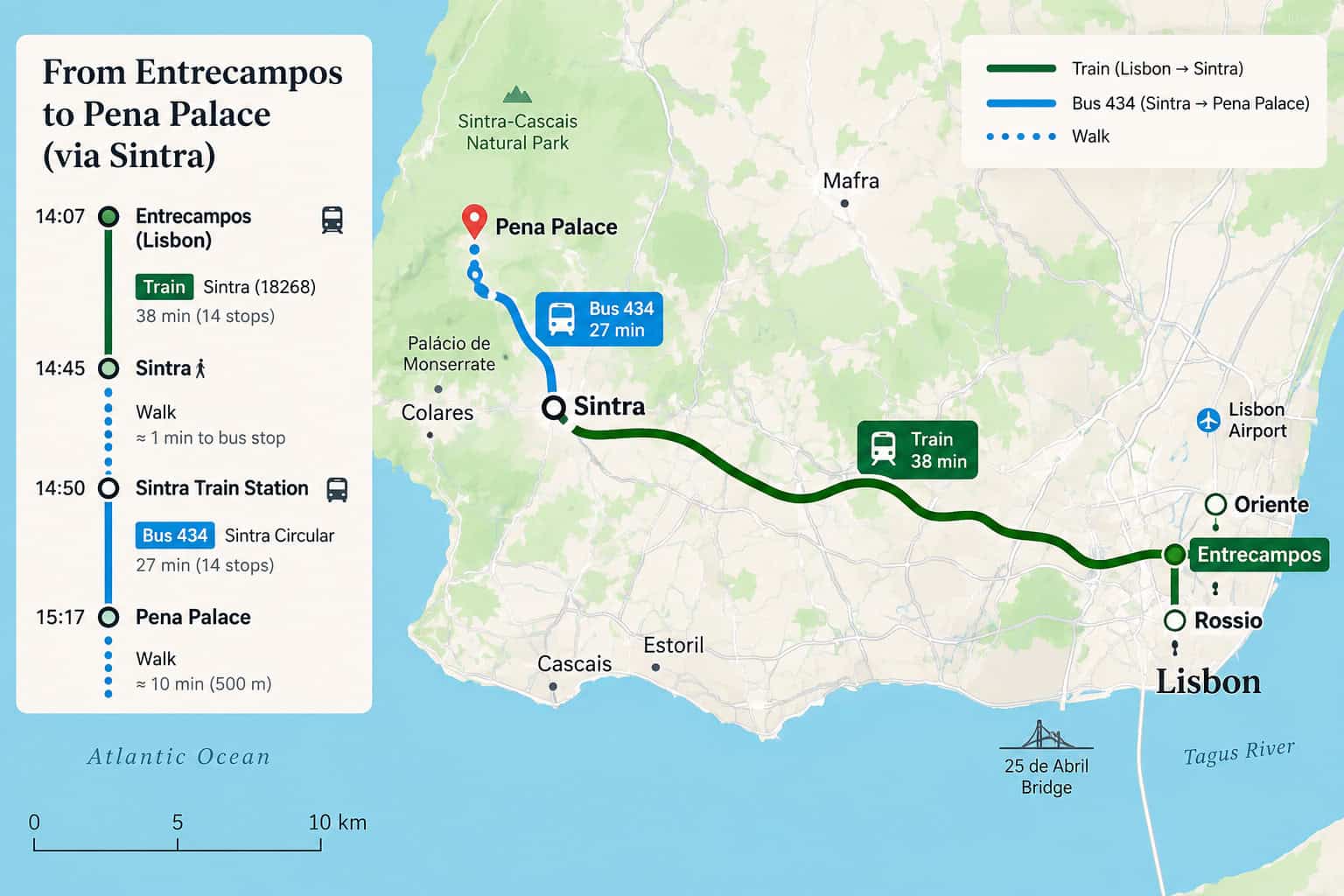
Departure: Rossio railway station
Journey: Approximately 40-45 minutes
Sintra is one of the most popular day trips from Lisbon, famous for its palaces, gardens, and forested hills. Once you arrive, you’ll need additional transportation or a substantial walk to reach attractions such as Pena Palace.
I particularly enjoyed hiking through Pena Park and exploring its gardens. My Sintra day trip guide explains how I organised my visit.
If you’re spending a full week in Lisbon, consider dedicating separate days to Cascais and Sintra rather than combining them. My 7-day Lisbon itinerary shows how I’d spread those outings across a week.
For more coastal options, including Ericeira, Nazaré, Cabo da Roca, and Sesimbra, explore my 9 best day trips from Lisbon.
Do You Need to Rent a Car in Lisbon?
No, I wouldn’t recommend renting a car to explore Lisbon. Between the narrow streets, limited parking, and traffic, having a car would probably be more of a hassle than a convenience.
During my month in Portugal, I relied entirely on public transportation and occasional rideshares to explore the region. I took the train between Cascais, Lisbon, and Sintra, and even used FlixBus for my day trip to Nazaré.
A rental car might be worth considering if you’re planning to visit remote beaches or smaller towns that are harder to reach by public transportation. For Lisbon and popular day trips to Cascais, Sintra, Ericeira, and Nazaré, renting a car isn’t necessary. Public transportation makes exploring the region easy and affordable.
Frequently Asked Questions
Can You Explore Lisbon Entirely on Foot?
You can explore much of central Lisbon on foot, particularly Baixa, Chiado, and Alfama. However, expect steep hills and stairs. Combining walking with public transportation is more comfortable.
Is Public Transportation in Lisbon Expensive?
Lisbon’s public transportation is relatively affordable. A standard Carris/Metro ticket costs €1.90 in 2026, while a 24-hour pass costs €7.25.
Can You Pay with a Credit Card on Lisbon Public Transportation?
You can use supported contactless bank cards at Lisbon Metro gates. For buses, trams, and other services, check the operator’s accepted payment methods or use a rechargeable navegante card.
Is Lisbon Safe to Explore Using Public Transportation?
Public transportation is generally a practical way to explore Lisbon. As in other major tourist destinations, keep an eye on your belongings, particularly on crowded trams and metro services.
Final Thoughts: Getting Around Lisbon Is Easier Than You Think
Lisbon is a wonderful city to discover on foot, but you don’t need to climb every hill or walk everywhere to enjoy it. My favourite moments were often the simplest: wandering through Alfama, stopping at a viewpoint, or discovering a street I hadn’t planned to visit.
Use public transportation to connect neighbourhoods, leave room for spontaneous discoveries, and enjoy exploring at your own pace.
If you’re still planning your visit, my 3-day Lisbon itinerary and best day trips from Lisbon will help you make the most of your time in Portugal.
Now I’d love to hear from you! Have you visited Lisbon before? Did you explore mostly on foot, take the famous yellow trams, or discover another convenient way to get around? Share your experience or questions in the comments below. I’d love to hear your tips and help you plan your visit!
For more ideas to plan your trip, explore my Portugal travel guides, with firsthand itineraries, coastal escapes and practical tips from my month exploring the region.