

How to Start a Travel Fund: An Expert’s Guide to Saving
What if your next adventure didn’t have to begin with wondering whether you could afford it? I’ve always believed that travelling more isn’t necessarily about earning more money. It’s about understanding your priorities, making intentional financial decisions, and creating room for the experiences that matter most to you.
As a corporate finance professional with a background in financial planning and treasury, budgeting has been part of my professional life for years. But I’ve also put those skills into practice personally, funding extended trips to Portugal, the Philippines and across Canada while maintaining a full-time career.
Over time, I’ve developed a practical approach to saving for travel without sacrificing the everyday life I enjoy. Here’s how to start a travel fund, build a realistic savings plan around your paychecks, and make your travel goals happen without relying on debt.
This post contains affiliate links. If you make a booking or purchase through one of these links, I may earn a small commission at no additional cost to you. Your support helps me continue creating honest, firsthand travel guides—thank you! Read my full affiliate disclosure for more information.
How to Start a Travel Fund, Even Without a Trip Planned
One of the biggest mistakes people make is waiting until they’ve chosen a destination before thinking about saving. But if travel is something you genuinely value, why not make room for it in your financial plan today, even if you don’t know where you’ll go next?
Think about how you approach other financial priorities. You might contribute to retirement savings every payday without knowing exactly how you’ll spend that money decades from now. Your travel fund can follow a similar principle, although the money should be kept in savings appropriate for a shorter timeline.
Start with an amount you can comfortably afford, whether that’s $25, $50 or $100 per paycheck. Saving $50 every two weeks adds up to $1,300 annually, before any interest. Increase that to $100, and you’re looking at $2,600.

That money might not cover an entire international adventure, but it could pay for flights, accommodation deposits or several memorable activities. More importantly, you’re creating flexibility for opportunities you haven’t even imagined yet.
Some of my most meaningful experiences came from deciding that an opportunity was too important to keep postponing. I shared one of those moments in Make Time for What Matters: Book the Flight, a personal reminder of why I don’t want to keep putting meaningful experiences off until someday.
Save for Travel Without Sacrificing Everyday Life
Here’s where my approach might differ from traditional money-saving advice: I don’t believe you should spend your everyday life feeling deprived just to afford a vacation.
I enjoy my morning coffee, staying active and the little routines that make ordinary days enjoyable. Those moments matter to me just as much as my adventures, and I wouldn’t want to give them all up to finance my next trip.
Instead, think about what genuinely brings value to your life. Maybe making coffee at home a few mornings a week feels like an easy adjustment, or perhaps you’d rather spend less on clothing or subscriptions because travel brings you more joy.
There’s no universal list of expenses you need to eliminate. The goal isn’t to spend as little as possible, but to spend more intentionally on what matters to you.
It’s also why I believe you don’t need to quit your job to travel more. You can build a meaningful career, enjoy your everyday routines, and still create room for adventures. Thoughtful financial planning is one of the tools that makes that balance possible.
Estimate Your Travel Costs Before Setting a Savings Goal
Once you have a destination in mind, your travel fund needs something more specific than saving as much as possible. You need a realistic estimate of your trip’s total cost, and that means looking beyond flights and accommodation.
I’ve planned everything from a month in Portugal to three weeks exploring the Philippines and a nearly two-month road trip across Canada. Each experience required a different budget because my transportation, activities and travel style varied considerably.
In Portugal, I needed to consider accommodation, local transportation, day trips and everyday living expenses. My three-week Philippines itinerary involved domestic flights, ferries, scuba diving and island-hopping excursions, while my Canadian road trip presented entirely different transportation costs.

These experiences taught me why generic daily travel estimates rarely tell the whole story.
Don’t Forget the Hidden Costs of Travel
When estimating trip costs, I separate expenses into three categories: costs paid before departure, everyday expenses during the trip, and often-overlooked extras.
Flights, accommodation deposits, insurance and advance reservations usually fall into the first category. Meals, attractions and local transportation make up everyday expenses, while airport transfers, baggage fees, mobile data, ATM withdrawals, equipment rentals and even pet care back home are easy to underestimate.
Transportation is one expense I particularly encourage people to research carefully. A destination might appear affordable until you realize that visiting its attractions requires expensive taxis, rental cars or multiple transfers.
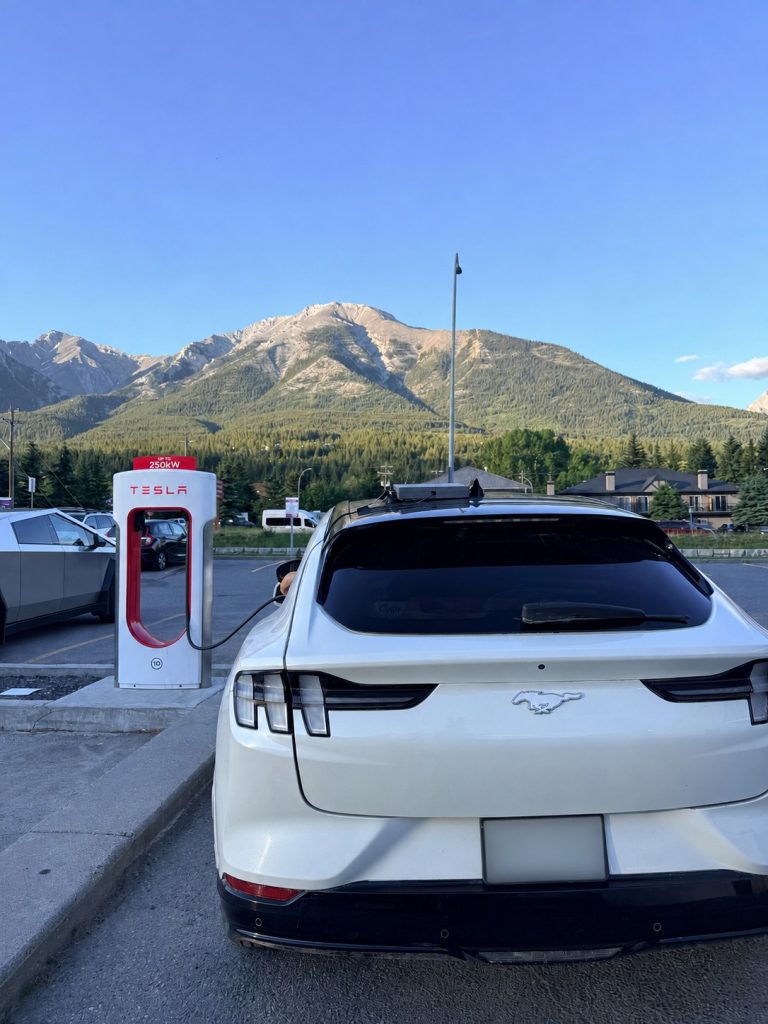
During my 12,941-kilometre road trip across Canada in my electric Mustang Mach-E, I spent approximately CAD $1,900 on charging, including electricity used while camping. But planning went beyond the charging bill, with route availability, infrastructure and driving conditions also influencing my decisions.
I share more of those considerations in my 10 lessons learned from driving across Canada in an electric vehicle.
The same applies to activities. As a scuba diver, I know that an advertised dive price doesn’t always include equipment rentals, transportation or additional fees. And if you’re working remotely while travelling, reliable connectivity and the travel tech essentials you need can become additional expenses.
Ultimately, a realistic travel budget should reflect how you intend to experience a destination, not simply how much it costs to get there.
How I Use AI to Build My Travel Budgets
Over the past year, AI has become one of my favourite travel-budgeting tools. Instead of researching every possible expense from scratch, I use it to create an initial estimate based on my dates, accommodation preferences, transportation, activities and travel style.
I’ve used this approach for Portugal, the Philippines and my cross-Canada road trip. When I compared my budgets with my actual expenses afterward, I found the estimates remarkably accurate.
The key is knowing what to ask and verifying the results. AI can underestimate expenses or rely on outdated information, so I always validate major costs using actual flight searches, accommodation listings and transportation providers.
Here’s a prompt you can adapt:
I’m planning a [number of days] trip to [destination] in [month]. My travel style is [budget, mid-range or comfortable], and I’ll be staying in [accommodation type]. My priorities include [activities].
Create a realistic travel budget separating one-time and daily expenses. Include flights, accommodation, transportation, meals, activities, insurance, hidden fees and a contingency. Consider seasonal pricing, exchange rates and expenses payable before departure. Clearly identify estimates requiring verification.
If you’re curious about how AI can simplify your travel planning, I’ve also shared my nine favourite AI prompts for travel planning. They’re a great starting point for exploring how AI can help you organize your next adventure.
How Much Should You Save for Travel Each Paycheck?
Once you know your estimated trip cost, you can turn that larger number into smaller contributions tied to your pay schedule.
Rather than focusing on a $3,000 or $5,000 trip, I prefer knowing exactly how much I need to set aside every payday.
Here’s the formula I use:
Savings per paycheck = (Remaining unpaid trip costs − Savings already available) ÷ Remaining paychecks before payment is needed
Let’s say you’re planning a trip with $3,000 in remaining expenses. You’ve already saved $600 and have twelve paychecks available before the money is needed.
($3,000 − $600) ÷ 12 = $200 per paycheck
Suddenly, that $3,000 expense becomes a much more manageable savings goal of $200 each payday.
Plan Around Booking Deadlines, Not Just Departure
There’s one important detail people often overlook: just because your trip is six months away doesn’t mean you have six months to save for everything.
Flights might need to be purchased much earlier, while accommodation deposits and activities could have separate payment deadlines.
Imagine you have $600 saved and contribute $200 per paycheck. After four paychecks, you’ll have $1,400, but if your flights cost $1,500 and need to be booked then, you’re still $100 short.
You could temporarily increase your contribution to $225 for those four paychecks, assuming that amount comfortably fits your budget. After purchasing the flights, you’d recalculate your contributions for the remaining expenses.
This is why I recommend creating a simple schedule of upcoming payments alongside your overall savings target.
And remember, just because the math tells you to save a certain amount doesn’t mean it’s financially realistic. Your contributions should fit your everyday expenses and other priorities.
Keep Your Travel Savings Separate and Make Saving Automatic
Personally, I manage my finances through an Excel spreadsheet I’ve developed over time. I allocate money to categories such as travel, emergencies and everyday spending, even when those funds are held in the same bank account.
However, while helping friends budget for their own trips, I’ve realized that opening a separate savings account dedicated to travel is often the simplest solution.
Giving it a name like Travel Fund or Next Adventure creates a clear distinction between money intended for experiences and money needed for everyday life. Some people might even prefer keeping that account at another bank to reduce the temptation to dip into it.
Once you’ve chosen an amount to save, consider setting up an automatic transfer around payday. Instead of relying on whatever remains at the end of the month, your contribution becomes part of your regular financial routine, provided your essential expenses are covered.
One important distinction: your travel fund and emergency fund should serve different purposes. Travel is a planned expense, while emergency savings protect you when unexpected expenses arise.
I wouldn’t recommend financing an adventure by putting the money you might need for a genuine emergency at risk.
Where Should You Keep Your Travel Fund?
With my background in financial planning, I follow one simple principle: where you keep your savings should depend on when you’ll need the money.
For upcoming trips, I generally prioritize low-risk savings accounts that provide easy access to my funds. A regular or high-interest savings account can be a practical option, especially if it offers a competitive rate without restrictive withdrawal conditions.
Earning interest is nice, but flexibility matters more to me. I want my money available when it’s time to book flights, pay deposits or take advantage of an unexpected opportunity.
Fixed-term products, such as GICs in Canada or certificates of deposit in the United States, can offer predictable returns. However, some restrict access until maturity or impose conditions on early withdrawals.
Personally, that lack of flexibility makes them less appealing for travel savings, particularly when booking dates are uncertain.
For travel goals several years away, investments with higher potential returns might be an option, but they also introduce the possibility of losses. You need to be comfortable potentially delaying your trip if markets don’t perform as expected.
For me, the closer I get to needing my money, the more important protecting it becomes. Your travel fund should create freedom, not financial stress.
Make Your Travel Budget Go Further Without Saving More
Being intentional about spending can be just as valuable as increasing how much you save. Before booking, I always look for opportunities to stretch my travel budget without compromising the experiences that matter most.
Account for Seasonal Prices and Exchange Rates
Accommodation and activity prices can change considerably depending on the season. That’s why I research costs for my actual dates rather than relying on general destination averages.
When prices vary widely, I tend to budget toward the higher end of a realistic range. For international travel, I also consider exchange rate fluctuations and include a small contingency for unexpected expenses.
I’d rather return home with money left in my budget than feel financially stretched halfway through an adventure.
Use Credit Card Rewards and Loyalty Programs Strategically
One of my favourite ways to reduce travel costs is through loyalty programs and credit card rewards. By strategically using points earned from everyday purchases, I’m often able to cover one or two flights per year.
Before booking, I compare available rewards with cash prices to determine whether redeeming points makes sense, accounting for taxes and fees that may still apply.
One of the programs I use is Aeroplan, and I’ve created a free beginner’s guide to travelling smarter with Aeroplan to help travellers better understand how points and benefits work.
However, I wouldn’t recommend spending more simply to earn rewards. Credit card interest can quickly outweigh the value of accumulated points, particularly when you carry a balance.
For me, rewards programs are a way to make the money I’m already spending work harder, not an excuse to spend beyond my means.
Spend More on What Matters, Less on What Doesn’t
Not every expense contributes equally to your travel experience. Some people love beautiful boutique hotels, while others prefer simple accommodation and spending more on activities.
Personally, I often prioritize experiences. If I’m visiting a destination known for incredible scuba diving, I’d rather allocate more money to diving and compromise on accommodation or expenses that matter less to me.
It’s not about always choosing the cheapest option. It’s about understanding what makes the experience worthwhile to you and allocating your budget accordingly.
What If Your Travel Fund Falls Behind?
Even with careful planning, there may be times when your travel savings don’t grow as quickly as expected. Perhaps an unexpected expense came up, airfare increased, or your original savings target no longer fits your circumstances.
When that happens, I recommend revisiting the numbers rather than turning to credit.
First, calculate your shortfall and divide it by your remaining paychecks. If increasing your contributions would comfortably close the gap, that might be an option.
Otherwise, consider adjusting the trip itself. Could you shorten your stay, choose less expensive accommodation, change your dates or replace one costly activity with something simpler?
The key is protecting the experiences that matter most while finding compromises elsewhere.
And if the numbers still don’t work, there’s nothing wrong with postponing the trip until you’ve saved enough.
There’s also an important difference between using a credit card as a payment method and borrowing money to finance a vacation. When I use a credit card, my goal is to already have the funds available so I can pay the statement balance in full by the due date.
Travel should leave you with incredible memories, not financial stress when you return home.
Frequently Asked Questions About Travel Savings
How Much Should I Save for Travel Each Month?
Estimate your total trip cost, subtract the amount you’ve already saved, and divide the remainder by the months or paychecks available before payment is needed. Make sure the contribution fits your everyday expenses and other financial commitments.
Can I Start a Travel Fund Without a Trip Planned?
Absolutely! If travel is a priority, contributing a manageable amount regularly gives you a head start. Once you choose a destination, you can adjust your savings target around the actual costs and booking deadlines.
How Far in Advance Should I Start Saving for a Vacation?
As early as your financial situation comfortably allows. For a specific trip, work backward from major booking deadlines, since flights and deposits may need to be paid months before departure.
Final Thoughts: Make Travel Part of the Life You Already Have
Travelling extensively while maintaining a full-time career has taught me that experiencing more of the world doesn’t necessarily require leaving everything behind. It requires understanding what matters to you, making intentional decisions and building those experiences into the life you’re already living.
For me, travel is a priority, but it’s not the only one. I care about my career, financial well-being and the everyday routines that keep me grounded. I don’t want to sacrifice those things to experience the world; I want to create a life where they can coexist.
Starting a travel fund doesn’t require a perfect financial plan, an enormous salary or even a destination in mind. It begins with deciding that travel matters to you and consistently setting aside what you can comfortably afford.
Because sometimes, the first step toward your next adventure isn’t booking a flight. It’s making a little room for it in your budget today.
A good travel budget isn’t about sacrificing your everyday life. It’s about finding the balance between the life you enjoy today and the experiences you want to live during your trip.
For more practical tools and inspiration, explore my Travel Planning Resources to help turn your travel goals into real adventures.
Disclaimer: This article shares my personal experience and general financial education, not individualized financial or investment advice.